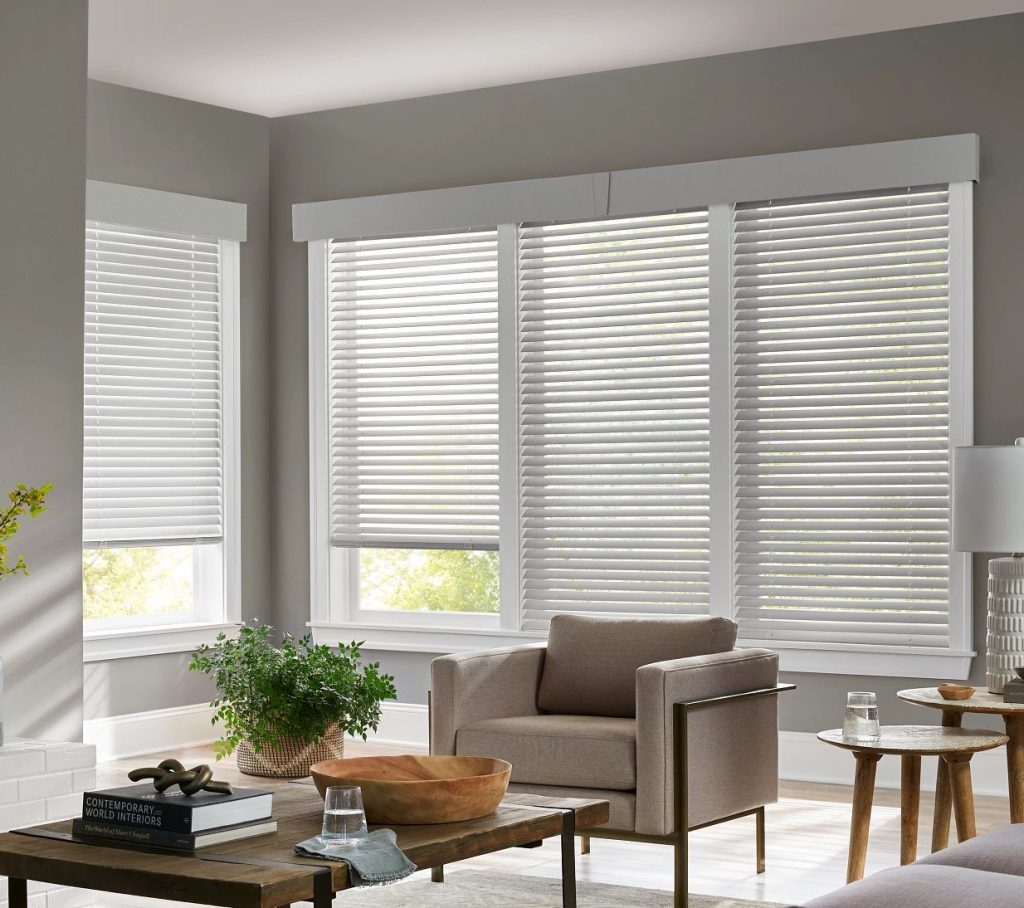
Moving into a brand new home comes with a strange in-between moment. The walls are fresh, the floors are spotless, and every single window is completely bare. If you are searching for the best window treatments for new construction, you are not just picking a style; you are making decisions that will shape how your new home actually lives day to day, from the amount of morning sun in your kitchen to how private your bedroom feels at night. Here is what to know as you walk through your new Raleigh house room by room.
Why New Construction Windows Are Their Own Challenge
Newer Raleigh homes tend to come with taller windows, wider sliding glass doors, and open floor plans that connect several rooms visually. That is beautiful for natural light, but it also means standard off-the-shelf blinds rarely fit properly, and a mismatched style in one room can throw off the sightline through three or four others. Builder-grade coverings, if your home even came with any, are usually a placeholder rather than a long-term solution.
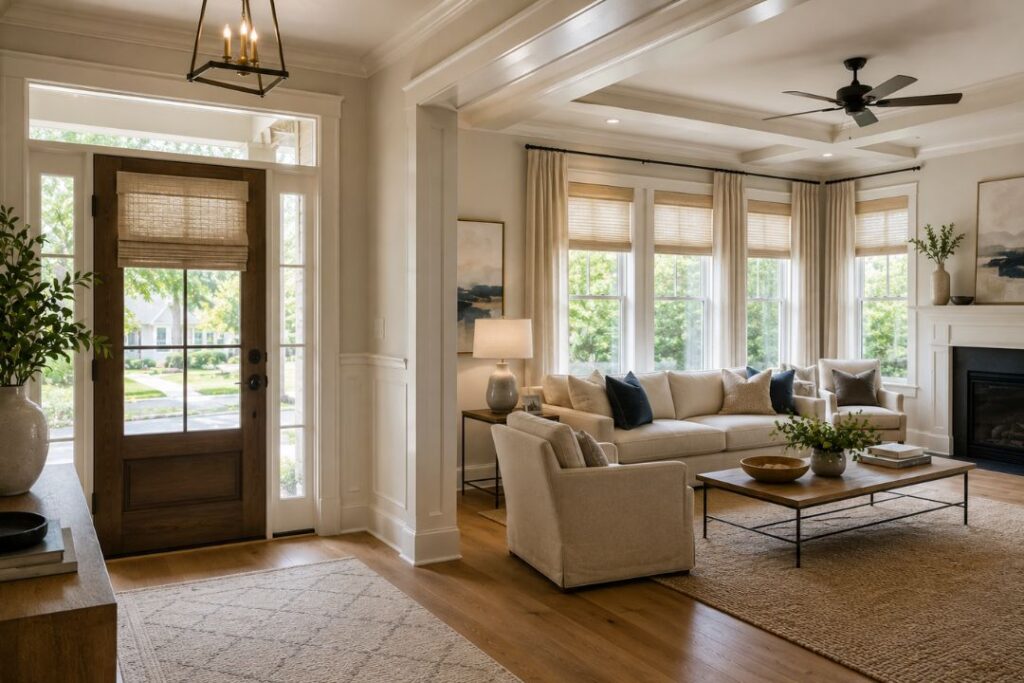
Starting at the Front Door and Living Areas
Open concept living rooms are one of the biggest hallmarks of new construction in the Triangle. Because these spaces are often visible from the kitchen, dining area, and even the foyer, consistency matters more here than almost anywhere else in the house. Plantation shutters or clean-lined roller shades tend to work beautifully across connected spaces, giving every window the same polished look without feeling repetitive or flat.
If your living area faces west or gets strong afternoon sun, cellular shades add a helpful layer of insulation on top of their light control, which matters more than you might expect with the larger glass panels common in modern builds.
Outfitting the Kitchen and Dining Windows
New construction kitchens often include a window over the sink or a full wall of glass leading to a patio. Both spots deal with steam, splashes, and daily wear, so moisture-resistant window treatments like faux wood blinds or specially finished roller shades hold up far better than delicate fabrics in this part of the house.
For sliding glass doors leading outside, a wider vertical blind or a sliding panel track keeps operation smooth without bunching fabric awkwardly at one side.
Choosing Treatments for the Primary Bedroom
A new bedroom deserves genuine darkness and quiet, especially if your new neighborhood is still finishing construction nearby. Cellular blackout shades or blackout roller shades are a common choice for primary bedrooms in new builds, and pairing them with a soft drapery panel adds warmth while still delivering full light control at night.
Planning for Secondary Bedrooms and a Home Office
Secondary bedrooms and home offices in newer floor plans often serve double duty, especially with more homeowners working remotely. Light filtering shades strike a nice middle ground here, letting in natural light during work hours while still offering privacy whenever the room is in use. If a secondary bedroom will become a nursery down the road, cordless or motorized options are worth planning for early since they remove cords entirely from the equation.
What About Bathrooms
Bathrooms in new construction frequently include larger windows than older homes, which is wonderful for natural light but requires more thoughtful privacy planning. Moisture-friendly shades or faux wood blinds handle humidity from daily showers without warping, keeping their finish and function intact for years.
A Note on Smart Home Integration
Many new Raleigh homes are pre-wired with smart home systems from the builder, which makes this an ideal moment to consider motorized shades and blinds. Scheduling your window treatments to open and close automatically pairs naturally with a home that already supports that kind of connected living, and it is often easier to plan for during initial setup than to retrofit later.
Budgeting Room by Room Instead of All at Once
Outfitting an entire new home at once can feel overwhelming, both in decision fatigue and in cost. Many of our Raleigh clients tackle the most visible living spaces first, then move through bedrooms and bathrooms over the following months. A phased approach still lets you enjoy a finished, cohesive look without feeling pressured to furnish every window in a single visit.
Final Walkthrough Tips
Before you finalize anything, walk each room at different times of day to see how the sunlight actually behaves. A window that feels bright and welcoming in the morning might feel harsh by late afternoon, and that detail changes which window treatments for new construction truly make sense for that specific spot.
Frequently Asked Questions
Do new construction homes usually come with window treatments already installed?
Rarely. Most builders leave windows bare or include basic temporary coverings, leaving homeowners to select permanent treatments after move-in.
What is the best starting point for a newly built home?
Start with your most visible, connected living spaces, since those set the tone for the rest of your home’s window treatment style.
Are motorized shades worth it in a new build?
Often, yes, especially since many new homes already have supporting wiring or smart home systems that make integration simpler from day one.
How soon after move-in should I schedule window treatments?
As soon as possible for privacy and sun protection, though many homeowners plan the exact styles over the first few weeks in the space.
Can I mix different window treatment styles throughout a new home?
Yes, as long as similar tones or materials connect open, visible areas so the overall look still feels cohesive room to room.
Ready to Dress Your New Windows
Your new home deserves window treatments that are chosen just as carefully as your flooring or paint colors. Schedule a free in-home design consultation with our Raleigh team, and let us help turn those bare new construction windows into one of the best finished details in your entire house.