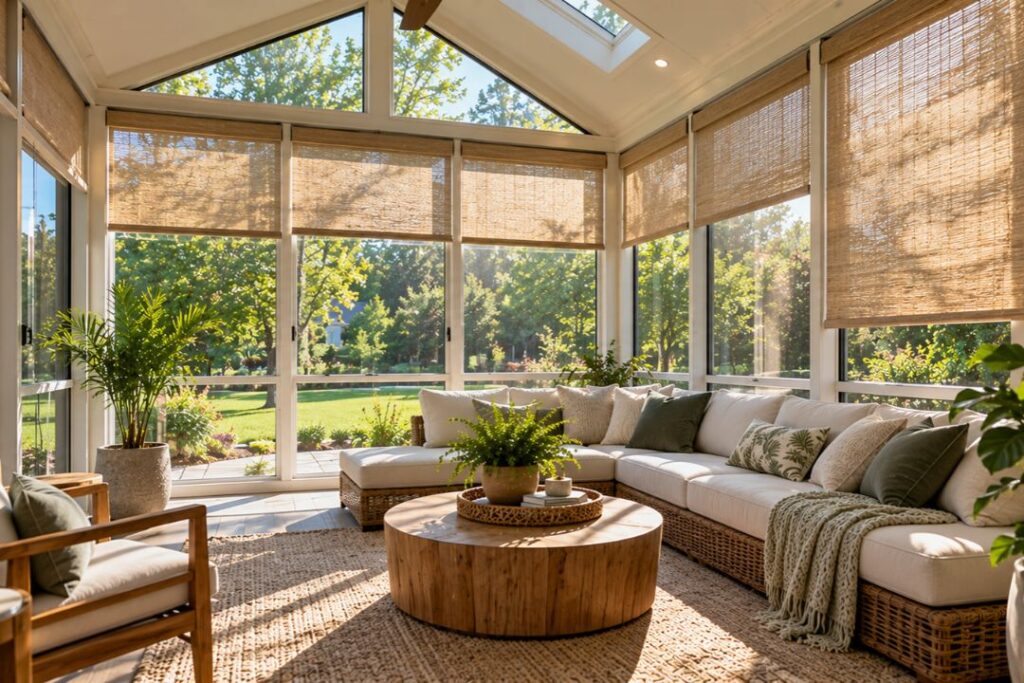
The best window coverings for sunrooms in Greenville are cellular shades for heat, light-filtering or sheer shades for glare, and top-down bottom-up shades for privacy. Most sunrooms need a mix, because the same glass room faces soft morning light, harsh afternoon sun, and a fishbowl effect after dark.
A sunroom has a split personality. At 8 a.m., it is the best seat in the house. By 4 p.m. in July, many Upstate homeowners avoid it entirely.
The smartest way to choose coverings is to follow the room through a full day and solve each problem as it shows up.
What Does a Sunroom Need in the Morning?
Morning light is usually welcome, so the job is softening glare without blocking the view. Sheer, light-filtering fabrics handle this best on east-facing glass.
Low morning sun comes in almost flat, straight into your eyes at the breakfast table.
Sheer shading diffuses that light into a soft glow while keeping the backyard visible. Light-filteringshades do the same job with a cleaner, simpler look.
How Do You Keep a Sunroom Cool at Midday?
Insulating shades are the most effective interior option for reducing sunroom heat gain. Cellular shades trap air in their honeycomb pockets, slowing heat from moving through the glass into the room.
Greenville summers are long, hot, and humid. A sunroom has far more glass than a typical room, so it heats up faster and holds that heat into the evening.
Cellular shades are our first recommendation for sunrooms that get unbearable by noon. They also help in winter, when glass walls pull warmth out of the room.
What Works Best Against Harsh Afternoon Sun?
For west-facing sunroom walls, the best move is to stop sunlight before it reaches the glass. Exterior shades block heat outside, while interior shades can only manage it once it is already in.
Low, intense late-day sun is why many sunrooms sit empty in summer.
Where the layout allows, exterior shades on the west side take the edge off before the room warms up. Inside, roller shades in a denser fabric give a clean way to cut glare on screens and reading chairs.
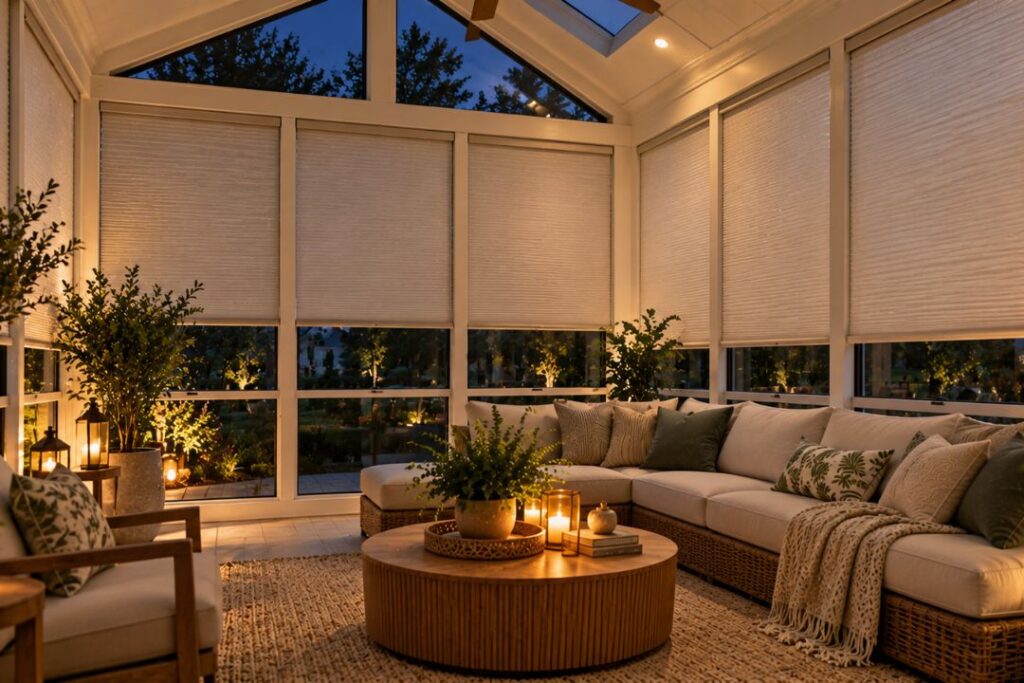
How Do You Get Privacy in a Sunroom at Night?
Top-down bottom-up shades solve sunroom privacy without closing the room off. They cover the lower glass where neighbors could see in, while leaving the upper glass open to the sky.
Here is the problem most people miss until the first evening. Once the lights come on, a glass room turns into a lit display case for the whole street.
Top-down/bottom-upshades let you lower the top and raise the bottom to the exact line you need.
Should You Use Shutters in a Sunroom?
Shutters work well in sunrooms with standard-sized windows and a classic look. In humid, sun-heavy rooms, moisture-resistant materials hold up better over time than natural wood.
PVC shutters resist warping in heat and humidity, which makes them a practical fit for enclosed porches and three-season rooms. Adjustable louvers also let you angle light up toward the ceiling instead of into your eyes. For floor-to-ceiling glass walls, shades are usually the cleaner choice.
What About Angled or Oddly Shaped Sunroom Windows?
Angled, arched, and trapezoid windows need custom-fit coverings, not standard sizes. Left bare, they let in the heat and glare you worked to block everywhere else.
This is the detail most sunroom advice skips. Many Greenville sunrooms have gable-end triangles or angled upper panes that sit above the main windows.
Those shapes often pour in the harshest overhead sun. Specialty shape shades are built to fit them, and precise measuring matters here more than anywhere else in the house.
Frequently Asked Questions
What is the best window covering for a hot sunroom?
Cellular shades are the best interior choice for heat because their honeycomb pockets slow heat moving through the glass.
Do sunroom window coverings prevent furniture fading?
Coverings that block direct sun reduce exposure that causes fading. Denser fabrics and closed shades protect furniture best.
Can you mix different coverings in one sunroom?
Yes. Keep one color family across the room, and choose each covering based on the direction that wall faces.
Are wood shutters a good idea for a sunroom?
Humid, sunny sunrooms are hard on natural wood. PVC shutters give a similar look with better resistance to warping.
Plan Your Sunroom Around the Whole Day
The right window coverings for sunrooms depend on which walls face the sun and when you actually use the room. A covering that fixes the afternoon can ruin the morning if you choose it without that full picture.
Carolina Shutter & Blinds helps homeowners across Greenville and Spartanburg, SC map their sunroom wall by wall during a free in-home design consultation, then installs professional window treatments.
Want a sunroom you can use at 4 p.m. in July? Call (848) 360-3467 or schedule your free sunroom consultation.