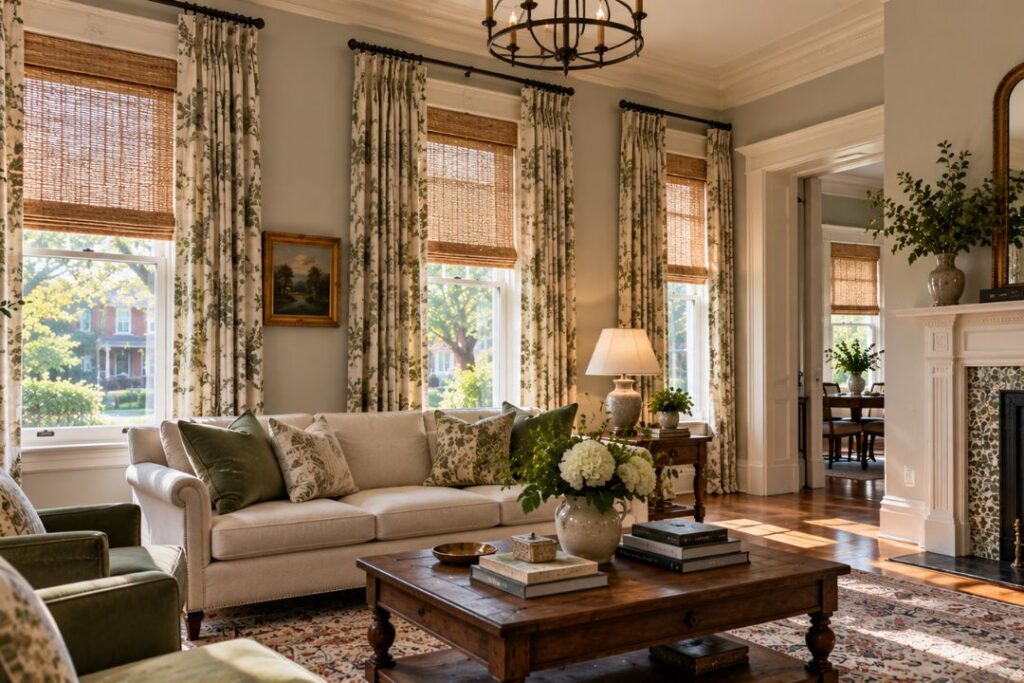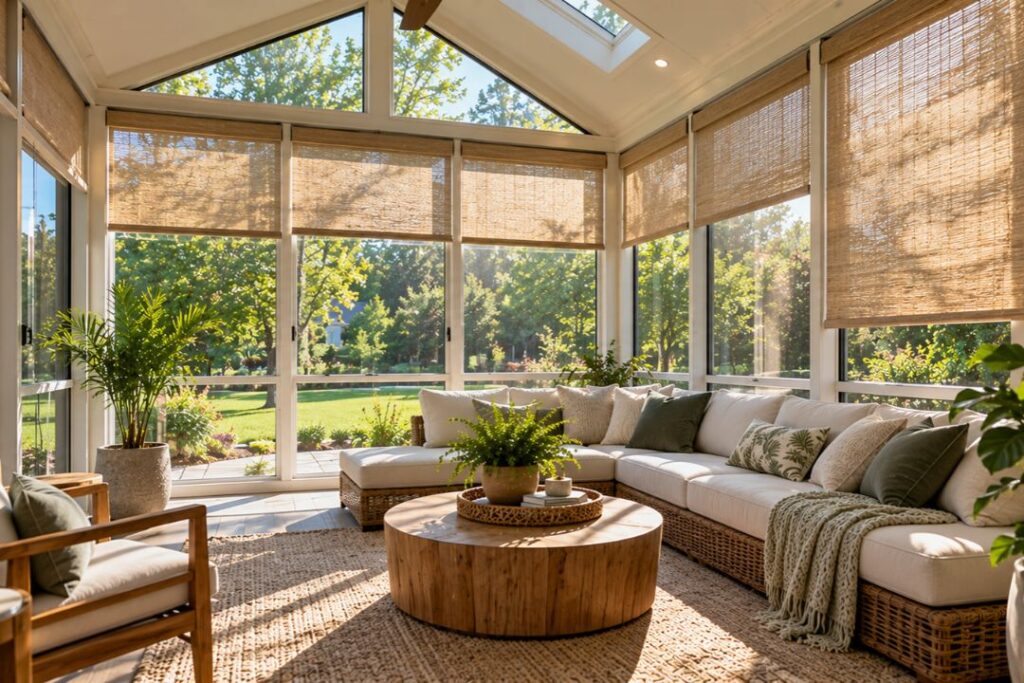
The best window treatment ideas for historic homes start with protecting what is already there. In Greenville’s older neighborhoods, that means inside-mounted shutters or shades that leave original trim untouched, custom sizing for tall or out-of-square windows, and a consistent look from the street.
We have stood in plenty of Hampton-Pinckney and Pettigru Street parlors where the first question is not about style. It is about the trim.
Someone spent a weekend stripping a hundred years of paint off those casings. Nobody wants to drill through it for a curtain rod.
How Do You Hang Window Treatments Without Damaging Original Trim?
Mount inside the window opening whenever the depth allows. Inside-mount window treatments attach within the frame, so the decorative casing stays visible and free of new holes.
Interior shutters are a classic fit here. They sit within the opening and frame the window rather than covering it.
When an outside mount is unavoidable, drapery rods can often be anchored in the wall above the trim instead of the trim itself. It is also worth knowing that homes built before 1978 may have lead paint on old woodwork, so disturbing painted trim deserves care.
What Works on Tall, Narrow Historic Windows?
Tall double-hung windows look best with treatments that follow their vertical lines. Full-length draperies, split-tilt shutters, and Roman shades all respect the proportions instead of cutting them in half.
Many Queen Anne and Craftsman homes have windows far taller than anything in a new build. Standard sizes rarely fit them, and a short shade makes them look stunted.
Plantation shutters with a divider rail let you open the top for light while keeping the bottom closed. Fabric Roman shadesfold neatly and suit the softer interiors of that era.
What If the Windows Are Out of Square?
Out-of-square openings are normal in a house that has settled for a century. Custom-measured window treatmentsaccount for the difference, while off-the-shelf products leave visible gaps or bind when you operate them.
This is where many historic-home projects go sideways. A window can measure differently at the top, middle, and bottom.
That is why we measure every opening in several places before ordering. Professional window treatment installation then makes the final adjustments so everything opens and closes smoothly.
How Can You Fix Drafty Old Windows Without Replacing Them?
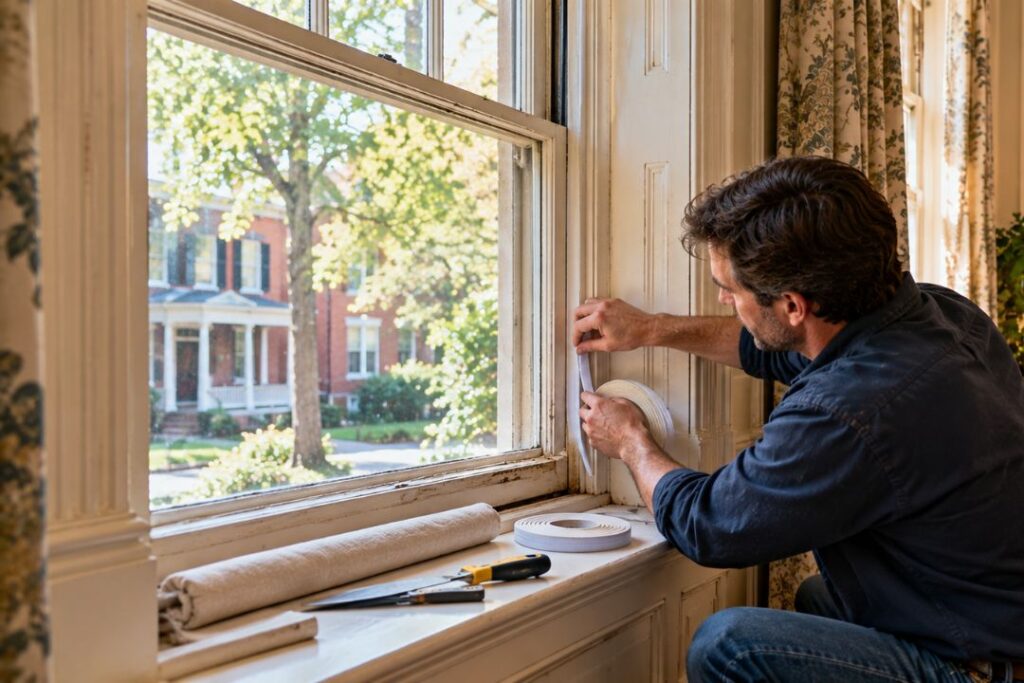
Insulating coverings help seal drafty original windows without losing the historic glass. Cellular shades and lined draperies add a layer that slows heat moving through single-pane sashes.
Many owners keep their original wavy glass on purpose. That glass is part of the character, but it lets summer heat and winter chill through easily.
Cellular shades can tuck inside the frame almost invisibly. For a period look, custom draperies with lining add warmth, both literally and visually.
What About Transoms and Arched Windows?
Leave decorative transoms uncovered if light and privacy allow. When they do need covering, specialty shape shades fit arches and angles without hiding the architecture.
Those glass panels above doors and windows were designed to move light and air. Bulky coverings erase that detail.
Specialty shape shades are made to follow curves precisely, which keeps the shape readable from inside and out.
Why Does the View From the Street Matter So Much?
In a historic neighborhood, your windows are part of the streetscape. Keeping street-facing treatments consistent in color and style helps the front of the house read as one intentional design.
This is the angle most advice skips. A home can have beautiful rooms inside while the front looks like five different decisions.
White or neutral-backed treatments on every front window keep the facade calm, even if each room has its own color inside. Traditional pieces like cornices can add period detail where it suits the room.
Frequently Asked Questions
What window treatments suit a historic home?
Interior shutters, Roman shades, and custom draperies suit most historic homes because they respect tall windows and original trim.
Can shutters be installed in old, uneven windows?
Yes. Custom shutters are measured for each opening, so they can account for windows that have settled out of square.
Do window treatments help drafty historic windows?
Cellular shades and lined draperies add an insulating layer that slows heat loss and gain through single-pane glass.
Should I cover transom windows?
Only if you need privacy or light control there; uncovered transoms show off architectural detail and keep rooms brighter.
Treat the House Like the Original Builder Would
Good window treatment ideas for historic homes begin with respect for the trim, the proportions, and the curb view. Get those right, and style choices become the easy part.
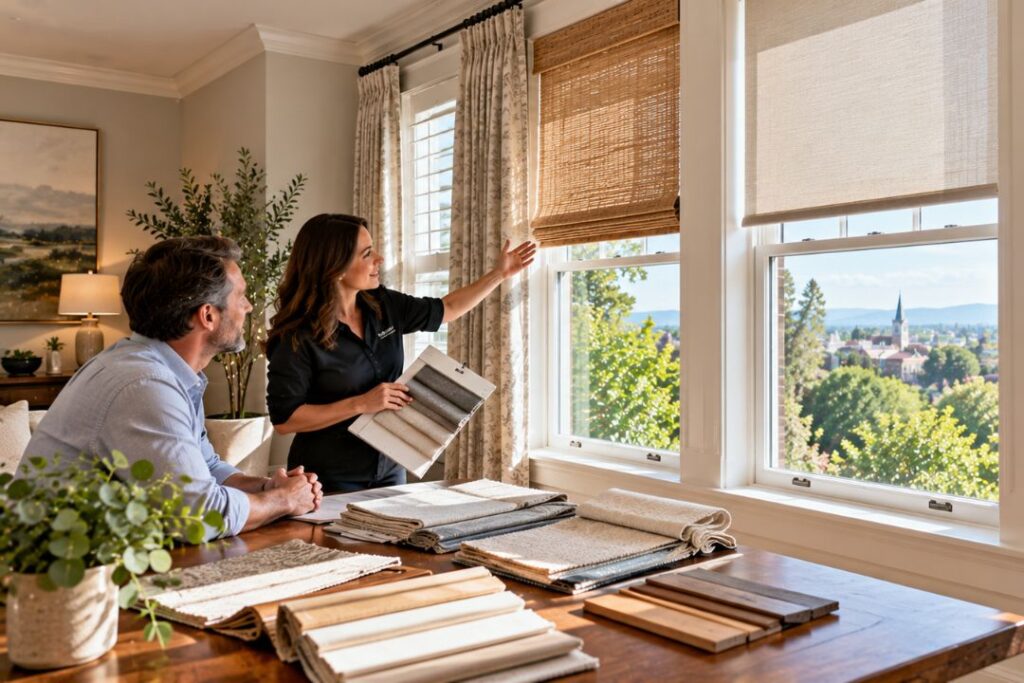
Carolina Shutter & Blinds works with homeowners in Greenville and Spartanburg, SC, offering free in-home design consultations. We measure every opening and talk through what to protect before recommending anything.
Have a home with a story? Call (848) 360-3467 or book a free consultation for your historic home.