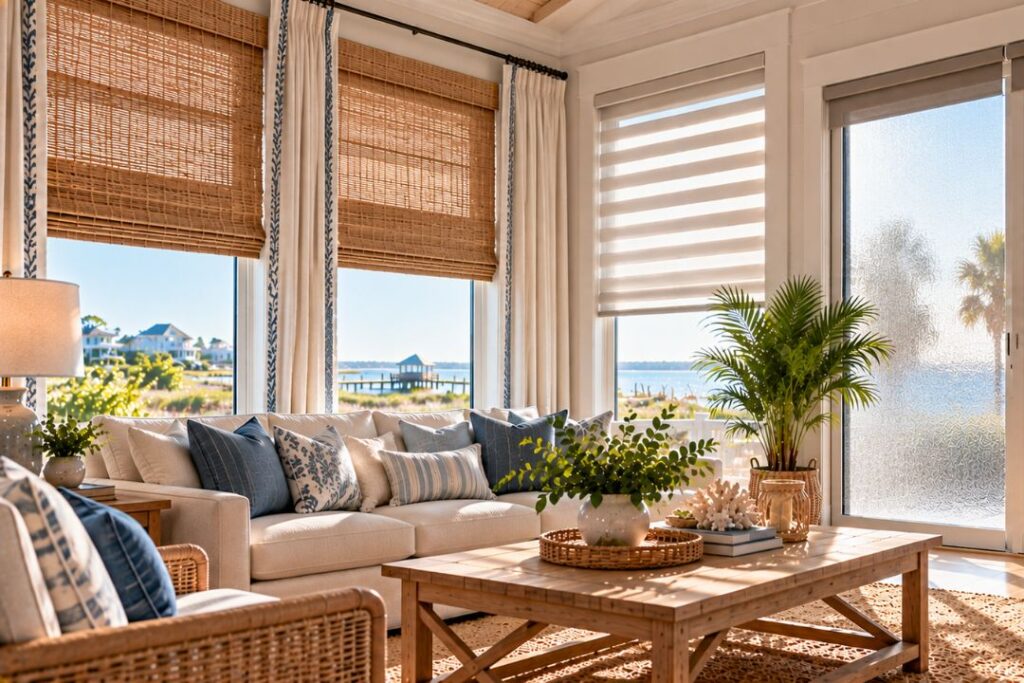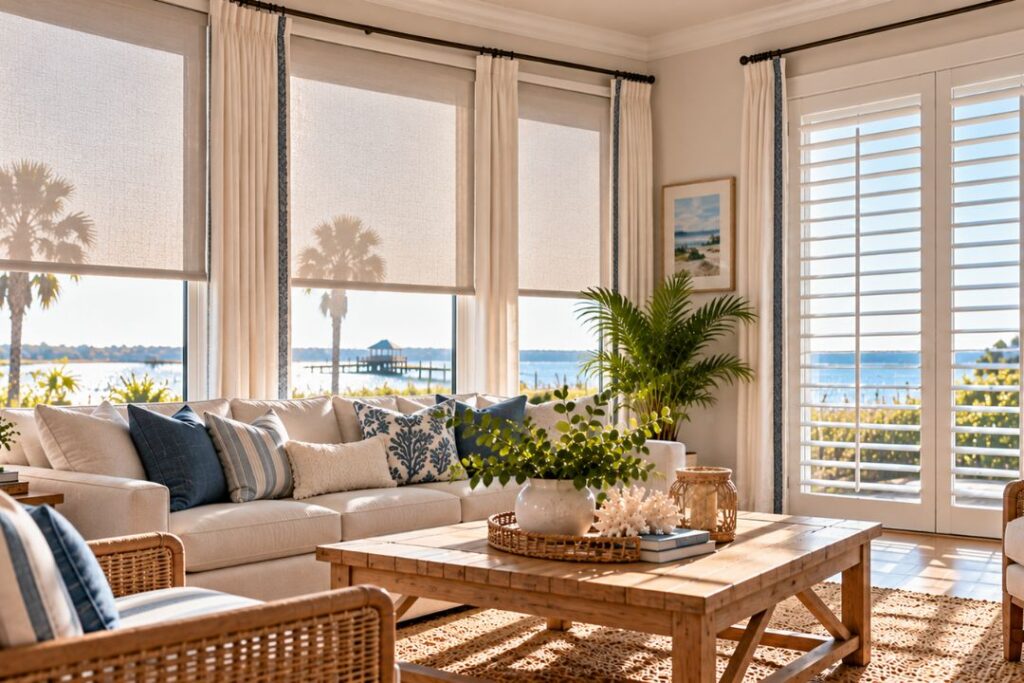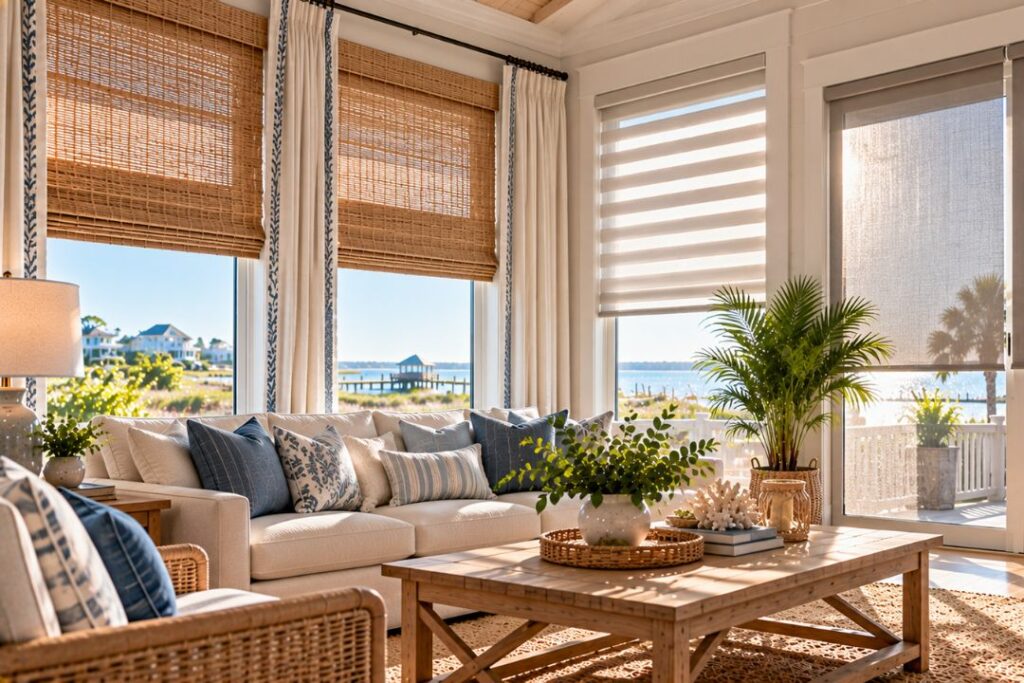
The best privacy window treatment ideas for Wilmington homes pair adjustable control with eye-level coverage. Plantation shutters, faux wood blinds, top-down bottom-up shades, lined draperies, and layered sheers all do this well. The right pick depends on how close your neighbors are and how much daylight you want to keep.
What Kind of Privacy Do You Actually Need?
Most homeowners need daytime privacy, nighttime privacy, or both. Name yours first, because the best covering for each is different.
Daytime Privacy
Daytime privacy mostly depends on slat angle and side gaps. A tight-fitting covering tilted at a right angle keeps passersby from seeing in while still letting sunlight in. Stand outside at midday and look in before you decide.
Nighttime Privacy
At night, interior lights turn windows into stage lighting. Even a well-fitted blind can silhouette movement unless the material blocks light transfer, so choose lined fabric or closed shutters for rooms you use after dark.
Street-Facing and Close-Neighbor Windows
Ground-floor rooms facing a sidewalk or a close neighbor need eye-level coverage. Top-down/bottom-up shades cover the lower half of the window and leave the top open for daylight. Check the sight line from the sidewalk before choosing.
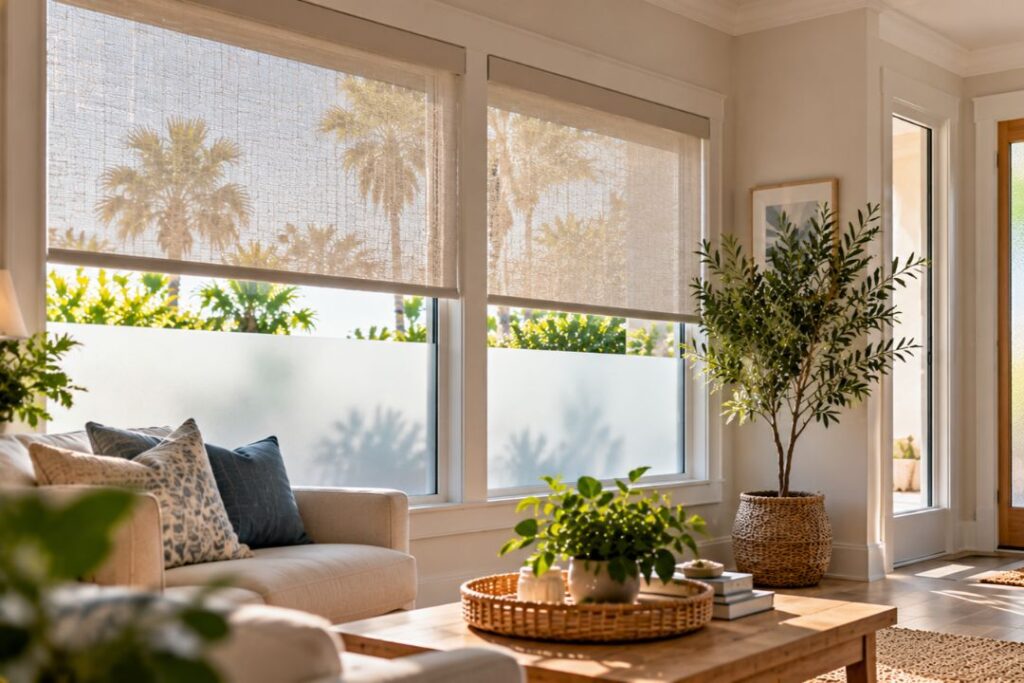
Which Privacy Window Treatment Ideas Work Best in Wilmington?
Plantation shutters, faux wood blinds, top-down/bottom-up shades, lined draperies, and layered sheers all provide dependable privacy. Choose by how much view and light you want to keep.
Plantation Shutters
Shutters give the most adjustable privacy, because you can tilt the louvers or close them fully. Our plantation shutters in Wilmington come in wood, PVC, and specialty finishes made for coastal humidity.
Faux Wood Blinds
Faux wood slats close fully flat, unlike many fabric shades that leave a slight gap. Our window blinds in Wilmington include faux wood, wood, and aluminum options.
Top-Down Bottom-Up Shades
These shades let you lower the top while the bottom stays covered. Our guide to the best blinds for privacy without losing light explains why they suit street-facing rooms.
Lined and Blackout Draperies
Draperies add softness and strong coverage at night. Our Wilmington draperies include thermal linings and blackout options for bedrooms, nurseries, and home theaters. Choose a rod wide enough to cover the frame.
Layered Sheers and Light Filtering Shades
A sheer panel softens the view during the day, and a heavier layer closes it at night. Our ideas for layering sheer curtains with blinds show how to build it. For a single layer, our light-filtering shades soften light and provide daytime privacy.
How Do You Choose Between These Options?
Choose shutters for the most control, blinds for tight, adjustable coverage, shades for clean lines, and draperies for soft nighttime privacy. Most homes mix them room by room.
- Shutters: The most adjustable choice, well suited to street-facing living rooms and bedrooms.
- Faux wood blinds: Tidy, adjustable coverage for kitchens, offices, and smaller windows.
- Top-down bottom-up shades: Daylight from above and cover below, ideal near sidewalks.
- Draperies: The strongest after-dark coverage, especially in bedrooms.
- Sheers: Daytime softness, best paired with a heavier layer.
How Do You Get Privacy in Bathrooms and Door Windows?
Choose moisture-resistant materials that filter light, like PVC shutters or treated fabrics. Narrow door glass usually suits a fitted shade.
Our guide to the best shade for a bathroom window covers moisture-resistant materials and light filtering options. For entry doors, see our ideas for shades for small door windows. For patio doors, our guide to window treatments for sliding glass doors covers privacy, glare, and heat gain.
What Mistakes Weaken Privacy?
The most common mistakes are side gaps, the wrong opacity, and ignoring evening lighting. Each one is easy to avoid with a plan.
- Side gaps: A good covering still leaks views when it is too narrow for the frame.
- Too-sheer fabric: Sheers soften daytime views but offer little cover after dark.
- Forgotten side windows: Narrow panes beside doors are often left bare.
- Evening lamps: Lights behind you can turn a thin covering into a screen.
Does Wilmington’s Coastal Climate Change the Choice?
Yes. Coastal humidity and salt air favor shutters and moisture-resistant blinds, while fabric works best when it is lined and durable.
Our Wilmington pages note that shutters resist humidity and salt air better than fabric coverings. Privacy window treatment ideas still work in fabric, as long as the material is built to last.
Fit matters for privacy too. A small gap at the edge lets people see in and light spill out, so precise measurements help. Our article on custom versus ready-made blinds explains why. If children use the room, our guide to child-safe window treatments covers cordless options.
Conclusion
Carolina Shutter and Blinds offers custom window treatments, precise measurements, and professional installation in Wilmington, NC. Book a free in-home window treatment consultation to see how each option looks in your home.
You can also contact our team to discuss your options. With the right privacy window treatment ideas, your Wilmington rooms can feel private.
Frequently Asked Questions
What is the best window treatment for privacy?
Plantation shutters offer the most adjustable privacy because you can tilt the louvers or close them completely. Faux wood blinds and lined draperies are also strong choices. We can show you each option in person.
How can I get privacy without blocking light?
Use top-down bottom-up shades or tilted shutter louvers. Both cover the view at eye level while letting daylight in from above or through the slats. You can also layer a sheer for daytime softness.
Which window treatments give privacy at night?
Lined draperies, blackout fabrics, and closed shutters offer the best nighttime privacy. Thin blinds can silhouette movement when interior lights are on. Close them before lamps come on.
What is the most private covering for a street-facing room?
Top-down bottom-up shades or shutters suit street-facing rooms well. They block direct eye-level views while keeping the room bright.
Are privacy window treatments safe for humid bathrooms?
Yes, when the material is moisture-resistant. PVC shutters and treated fabrics are common choices, and professional installation helps them last longer. Avoid heavy untreated fabric near showers and tubs.