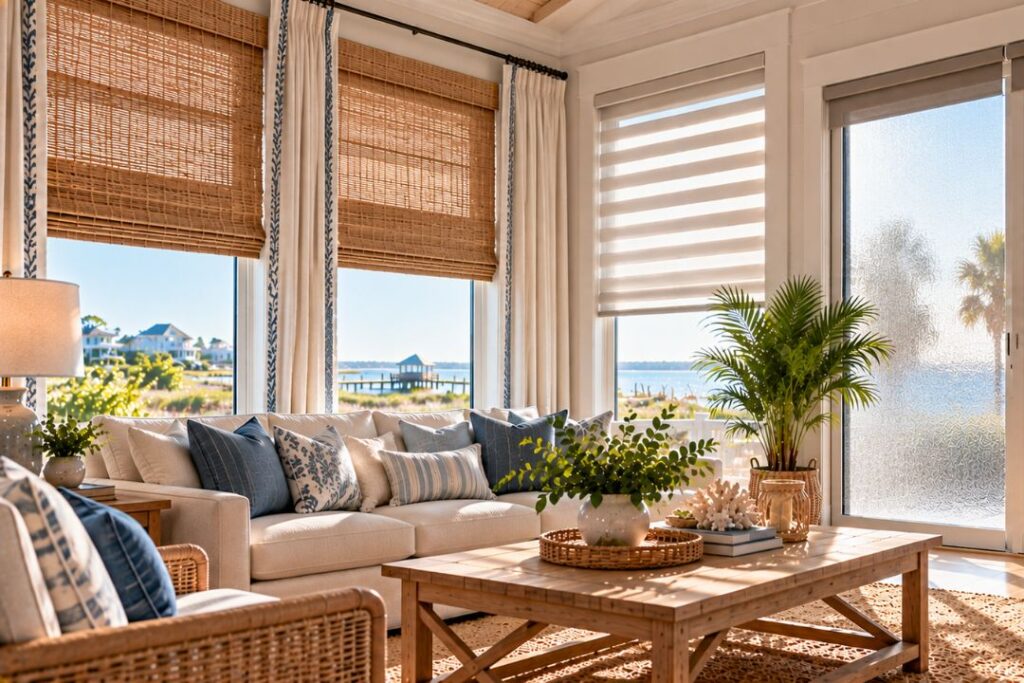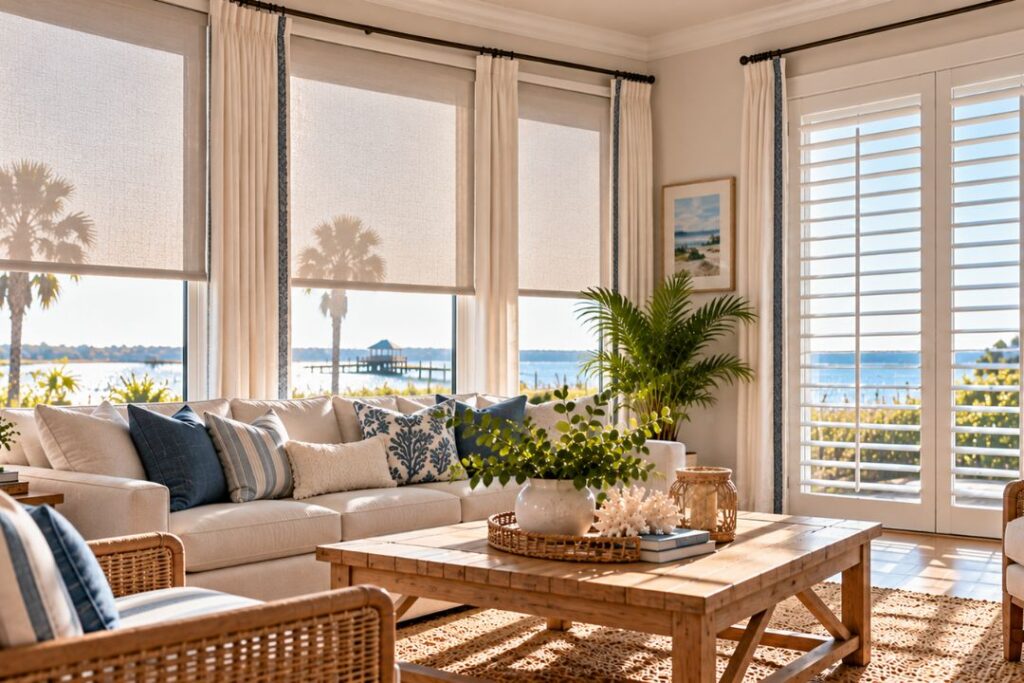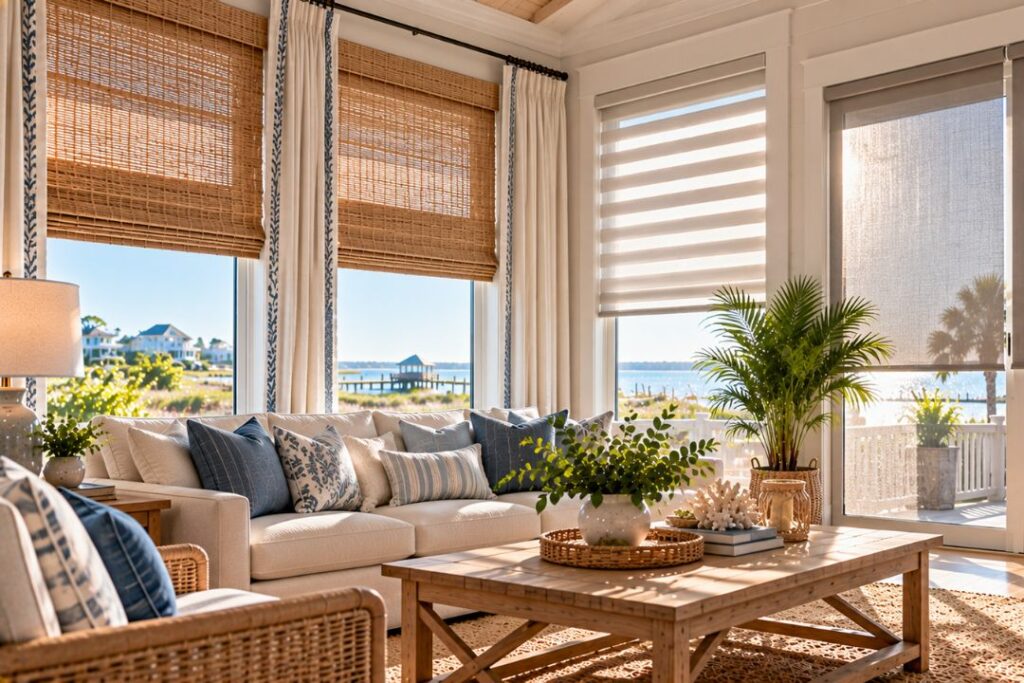
The best window treatment color ideas start with what already fills the room: your wall color, furniture, flooring, and natural light. Then consider how you use the room, the window treatment style, and your own taste. Test samples at the window before you commit.
How Do You Choose the Right Window Treatment Color?
Start with the largest fixed elements in the room: walls, flooring, and big furniture. Build a color palette from them, then choose window treatment colors that match, blend, or contrast on purpose.
Start with your rug, sofa, and floor. Treat the window as part of the same interior color scheme, not an afterthought. Updating one room? Work around what stays. Planning a new interior? Start from the window.
Should Window Treatments Match the Walls?
They can, but they do not have to. Matching creates a calm, continuous look, coordinating adds gentle variety, and contrasting makes the window a focal point.
Matching suits small rooms where you want fewer visual breaks. Many window treatment color ideas come down to one choice: the role the window should play. For fabric that coordinates rather than matches, custom draperies are planned with colors, textures, linings, and hardware chosen together.
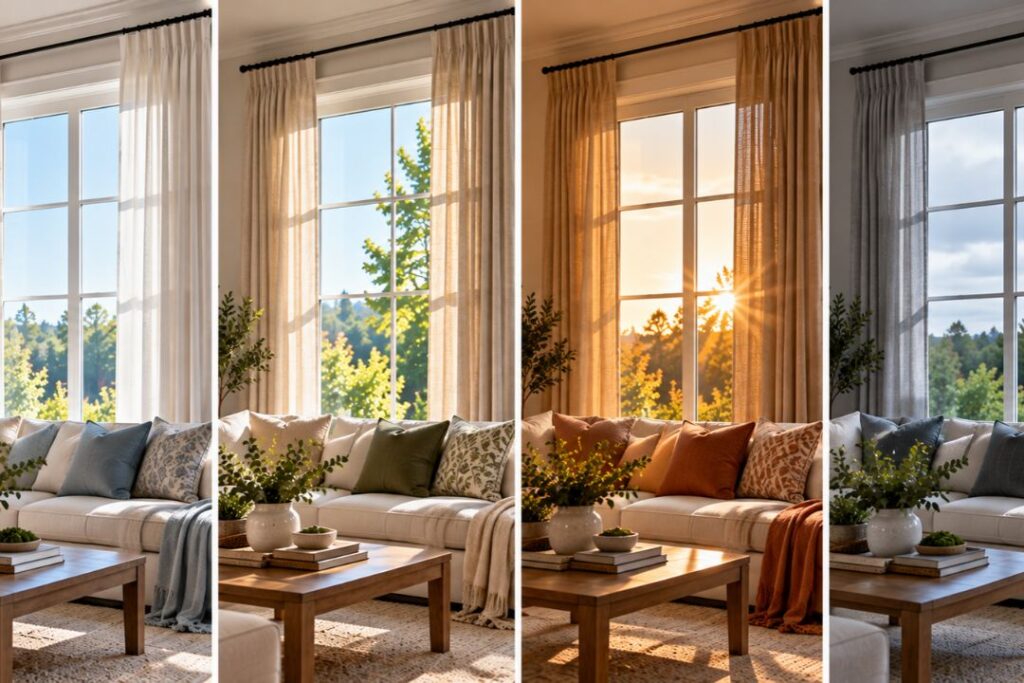
How Does Natural Light Affect Window Treatment Colors?
Daylight changes how every color looks. View samples in the actual room at several times of day.
Rooms with strong afternoon sun often show color differently than rooms with softer light. Our light-filtering shades use sheer fabric with different opacity levels to soften sunlight, which changes how color appears at the glass.
Which Colors Work Best in Different Rooms?
It depends on how you use each room. Calm tones often suit bedrooms, while living rooms and kitchens can carry more energy.
- Living rooms: Layered neutrals or one muted accent keep seating areas flexible.
- Bedrooms: Deeper or cooler tones can feel restful, and blackout fabric adds darkness.
- Dining rooms: Richer tones can add warmth for evening meals.
- Kitchens: Lighter, easy-to-clean finishes often work well. Window blinds come in a range of materials, colors, and finishes.
- Home offices: Softer tones can reduce harsh contrast near screens.
Are Neutral Window Treatment Colors a Good Choice?
Yes, neutrals are a dependable choice. White, cream, beige, taupe, and gray coordinate with most furniture and adapt when you repaint or change décor.
Texture adds depth, and our Roman shades range from soft linens and woven textures to richer velvets. A stronger color makes sense when the walls are neutral, and the room feels flat. The best window treatment color ideas often mix a neutral base with one deliberate accent.
Should You Choose Bold or Subtle Colors?
Choose bold colors when the rest of the room is quiet. Choose subtle colors when walls, rugs, or art already carry strong color. The goal is visual balance.
Pattern counts as color, so a patterned shade can act as your accent. Our roller shades offer bold patterns for statement rooms and subtle neutrals for minimal ones.
How Do You Match Colors With Your Home’s Style?
Let the home’s style guide the palette. Traditional rooms often suit warm tones and richer fabrics, contemporary rooms suit clean neutrals, and coastal-inspired rooms suit light, airy shades.
Homes across North Carolina range from traditional to coastal-inspired, so start with your own house, not a trend. Our interior shutters come in paint-grade and stained finishes, with color-matched finishes for interior trim. Our shutter design ideas show how color changes their look.
What Should You Check Before Choosing a Color?
Check wall color, furniture, flooring, natural light, room size, window orientation, privacy, light control, and upkeep. These factors are especially important when window treatment planning for renovations, as changes to paint, flooring, or furniture can affect which colors and styles work best. Then ask if the color will still work if paint or furniture changes.
Lighter colors that match the walls often make a small room feel larger. A color you enjoy living with beats one chosen only to follow window treatment color ideas from a magazine.
Ready to Test Colors at Your Own Windows?
Carolina Shutter and Blinds is based in Winston-Salem and serves homeowners in North Carolina and South Carolina. During a free in-home window treatment consultation, we can talk through colors, samples, and measurements.
You can also contact Carolina Shutter and Blinds online to discuss your window treatment options. The right window treatment color ideas should complement your natural light, room, and personal style.
Frequently Asked Questions
What color should window treatments be?
There is no single best color, so choose one that works with your walls, furniture, and light. Neutrals are the flexible option.
Should window treatments match the walls?
They can, but they do not have to. Matching gives a continuous look, while contrast adds interest.
Are neutral window treatment colors better?
Neutral colors are easier to coordinate, but they are not always better. They adapt well when décor changes, yet a stronger color can suit a plain room that needs a focal point.
Should window treatments be lighter or darker than walls?
Either can work, depending on the effect you want. Lighter treatments keep a room open and bright, while darker ones add depth and contrast.
How do I choose a window treatment color for my room?
Start with your walls, flooring, and furniture, then test samples in the room’s natural light. A consultation can help narrow the options.