Blinds vs shades vs shutters is one of the most common comparisons homeowners make when choosing new window coverings. Each option offers different levels of light control, privacy, durability, and cost, which makes the decision more complex than it first appears.
Many homeowners begin by reviewing a window blinds cost breakdown to understand pricing differences before comparing functionality. The challenge is not just about cost. It is about selecting a solution that works for your daily routine, your home’s layout, and long term maintenance.
Across North Carolina and South Carolina, changing weather conditions, humidity, and strong sunlight make it important to choose window treatments that perform well in real life. The wrong choice can lead to glare issues, poor insulation, or higher maintenance over time.
This guide breaks down the differences between blinds, shades, and shutters so you can make a confident decision based on your needs. When evaluating shutters vs blinds vs shades, homeowners often consider not only aesthetics but also long-term performance and maintenance needs.
Blinds vs Shades vs Shutters: What’s the Difference?
Understanding how each option works is the first step in choosing the right window treatment.
Blinds
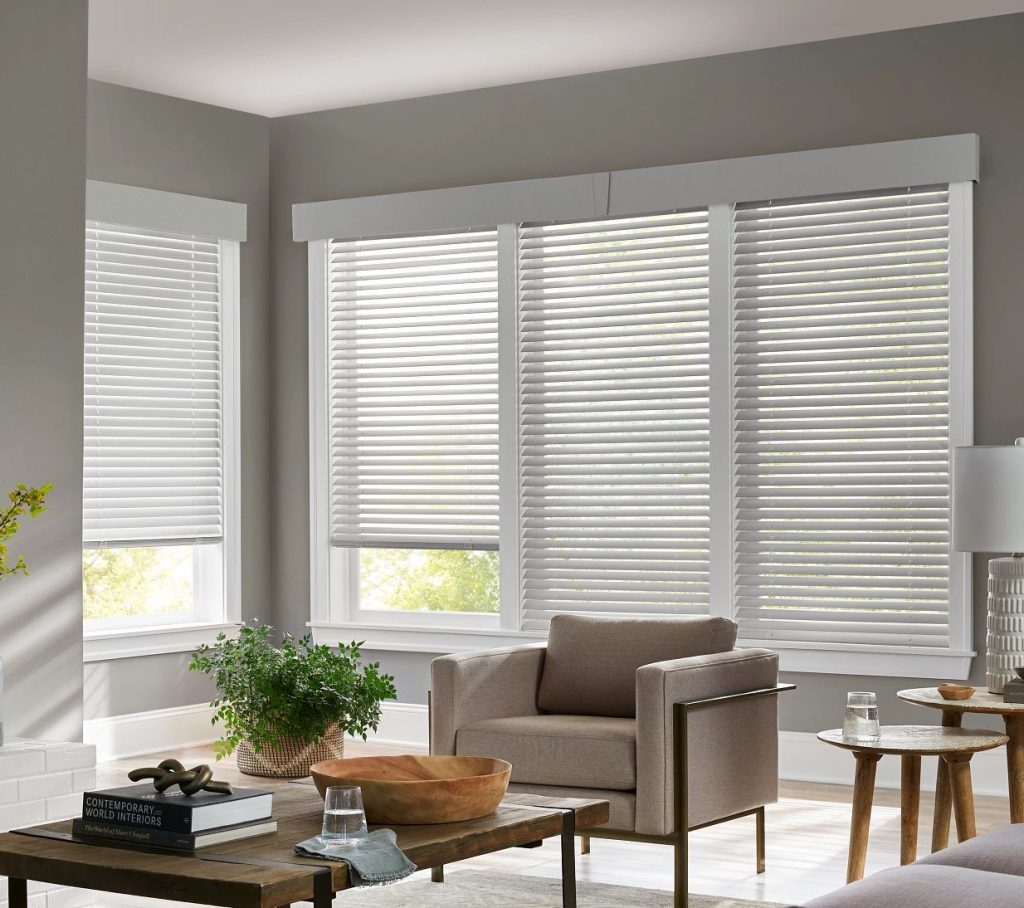
Blinds are made of horizontal or vertical slats that can be tilted to control light and privacy.
Common types include:
- Faux wood blinds
- Aluminum blinds
- Vertical blinds
Blinds allow precise light control because you can adjust the angle of the slats. They are also one of the most budget-friendly window covering options.
Many homeowners explore window blinds services when looking for flexible and affordable solutions that work in multiple rooms. For households seeking the best blinds and shades for homes, factors like room usage, sunlight exposure, and privacy requirements play a major role in selection.
Shades
Shades are made from continuous fabric material that rolls, folds, or stacks when raised.
Popular types include:
- Roller shades
- Cellular shades
- Roman shades
Shades provide a softer appearance and are often used to filter light rather than fully block it. They are ideal for homeowners who want a clean and minimal look.
Shades also offer better insulation compared to basic blinds, especially cellular designs. This makes them a popular choice for homeowners looking to improve home energy efficiency by reducing heat gain in summer and retaining warmth during colder months.
Shutters
Shutters are solid window coverings installed within or over the window frame. Plantation shutters are the most common style used in residential homes.
Key features include:
- Fixed panels with adjustable louvers
- Durable construction
- Built-in appearance
Homeowners often review plantation shutters pricing and installation costs when considering shutters as a long term investment.
Shutters are known for their durability and ability to improve home value. When comparing plantation shutters vs blinds, many homeowners find shutters offer better insulation, durability, and a more premium built-in appearance.
Pros and Cons of Blinds, Shades, and Shutters
Each window covering option has strengths and limitations. Choosing the right one depends on how you plan to use your space.
Blinds Pros and Cons
Pros:
- Affordable and widely available
- Easy to adjust for light control and privacy
- Suitable for most rooms
Cons:
- Less insulation compared to other options
- Slats may bend or wear over time
- Can require frequent cleaning
Blinds are ideal for homeowners who want simple functionality without a high upfront cost.
Shades Pros and Cons
Pros:
- Soft appearance that complements modern interiors
- Available in light filtering and blackout options
- Better insulation and energy efficiency
Cons:
- Limited adjustability compared to blinds
- Fabric may require more maintenance
- Some styles offer less precise light control
Shades are often chosen by homeowners looking for energy-efficient window treatment options that also enhance interior design.
Shutters Pros and Cons
Pros:
- Long lasting and durable
- Excellent light control and privacy
- Adds value to the home
Cons:
- Higher initial cost
- Requires professional installation
- Less flexibility once installed
Homeowners often explore are plantation shutters worth the investment when comparing shutters to other window coverings.
Shutters are best suited for those looking for a long term solution with minimal maintenance.
Which Window Treatment Is Best for Different Rooms?
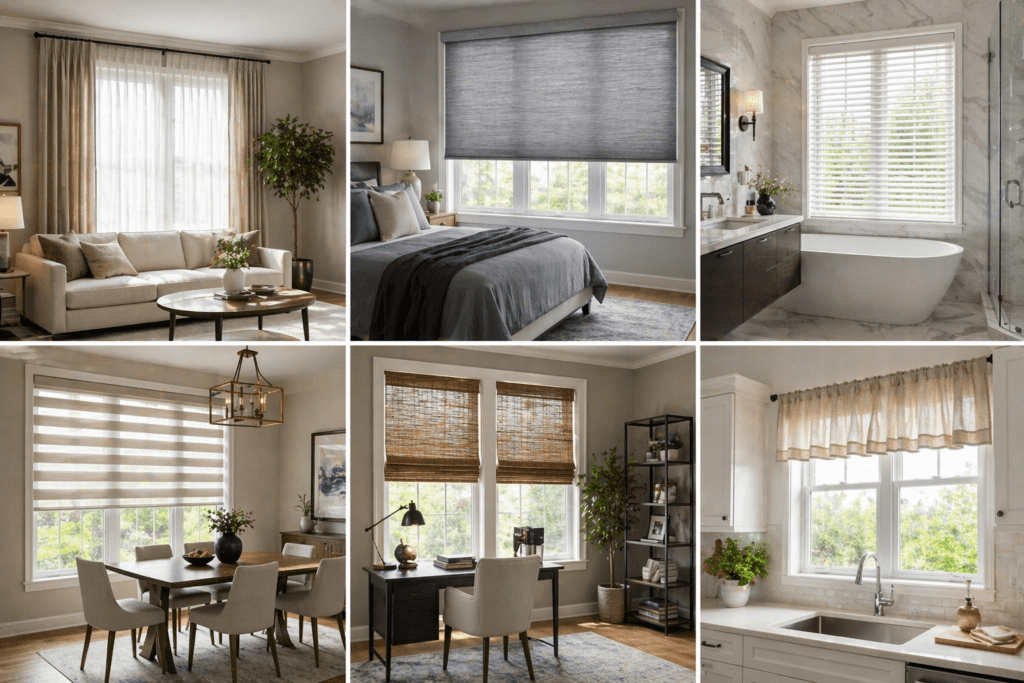
Choosing between blinds, shades, and shutters becomes easier when you consider how each room is used.
Living Rooms
Living rooms often need a balance of light and privacy.
Best options:
- Light filtering shades
- Plantation shutters
- Layered window treatments
For larger spaces, homeowners may explore best window coverings for different home styles to match design and functionality.
Bedrooms
Bedrooms require strong light control and privacy.
Best options:
- Blackout shades
- Cellular shades
- Layered drapery with shades
Shades are often preferred in bedrooms because they can block outside light effectively.
Kitchens
Kitchens require moisture-resistant window treatments.
Best options:
- Faux wood blinds
- Aluminum blinds
These materials perform well in humid and high heat environments.
Bathrooms
Bathrooms require privacy and moisture resistance.
Best options:
- Shutters
- Faux wood blinds
Shutters are often recommended because they resist moisture and provide adjustable light control.
Homeowners looking for durable solutions can explore Window Plantation Shutter options designed for high humidity areas.
Large Windows and Sliding Doors
Large openings require window coverings that are easy to operate and provide consistent coverage.
Best options:
- Vertical blinds
- Panel track shades
- Motorized shades
For wide glass areas, homeowners often look for Window Blinds Services in Charlotte, NC to find custom blinds and professionally installed solutions that provide smooth operation and consistent coverage across oversized windows and sliding doors.
Which Is Best for Your Home: Final Buying Guide
Choosing between blinds, shades, and shutters depends on your priorities. Instead of focusing on one factor, consider how each option performs across multiple areas.
If You Want a Budget Friendly Option
Blinds are typically the most cost effective solution. They provide flexibility and work well in most rooms.
If You Want Better Insulation and Style
Shades are a strong option. They offer improved energy efficiency and a clean appearance.
If You Want Long Term Value
Shutters are the best investment. They provide durability, improve home value, and require less maintenance over time.
Homeowners often compare energy-efficient window treatment options before making a final decision, especially in regions with changing weather conditions.
If You Want Custom Fit and Professional Finish
Professional installation ensures your window coverings are measured and installed correctly.
Working with experienced providers like Carolina Shutter & Blinds helps homeowners choose solutions that match both design and functionality.
For a complete solution, many homeowners combine multiple window treatments such as blinds with drapery panels through Window Draperies Services.
Conclusion
Blinds vs shades vs shutters is not just about comparing products. It is about choosing the right solution for your lifestyle, home design, and long term needs.
Blinds offer flexibility and affordability. Shades provide softness and energy efficiency. Shutters deliver durability and long term value.
Each option has a place depending on how your home is used.
If you are unsure which option is right for your space, professional guidance can make the process easier. You can contact us to explore custom window covering solutions designed for your home and get expert recommendations tailored to your needs.
FAQ
1. What is the main difference between blinds, shades, and shutters?
Blinds have adjustable slats, shades are made of fabric panels, and shutters are solid structures with movable louvers.
2. Which is cheaper: blinds, shades, or shutters?
Blinds are generally the most affordable, while shutters are the most expensive due to their durability and custom installation.
3. Are shutters better than blinds for long term value?
Yes. Shutters last longer and can increase home value, making them a strong long term investment.
4. Which window treatment is best for energy efficiency?
Cellular shades and shutters provide better insulation compared to standard blinds.
5. Are shades better than blinds for bedrooms?
Yes. Shades, especially blackout options, provide better light control for sleeping environments.
6. Do plantation shutters increase home value?
Yes. Plantation shutters are often considered a permanent upgrade that can enhance property value.
7. What is the most durable window covering option?
Shutters are the most durable because they are built from solid materials and designed for long term use.
8. Which window treatment is best for humid areas like bathrooms?
Moisture resistant blinds and shutters are ideal for bathrooms because they can handle humidity without damage.