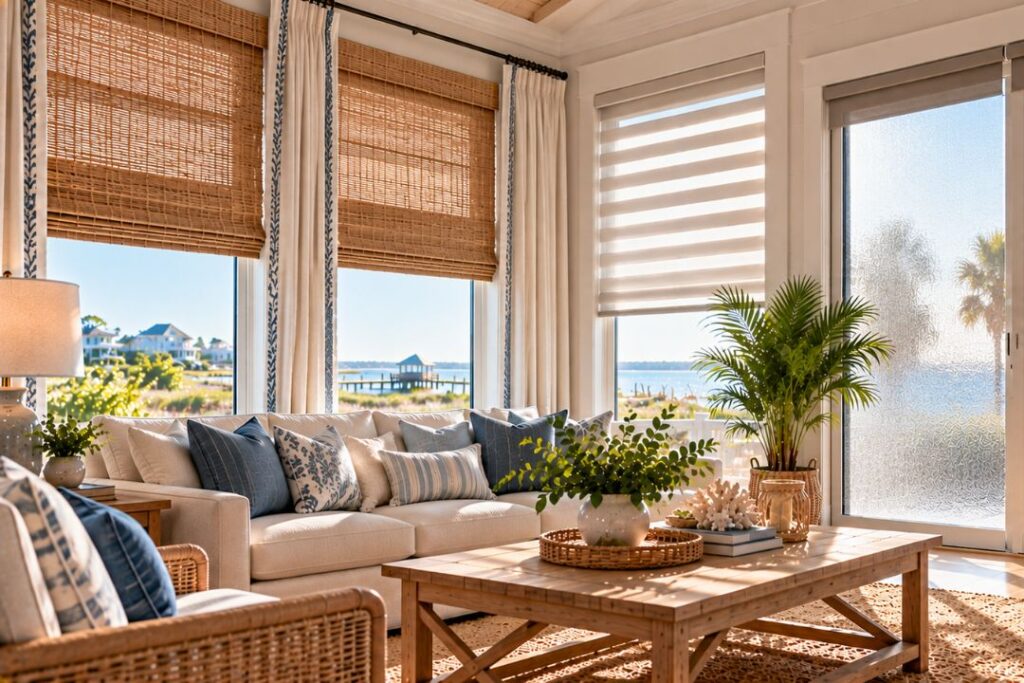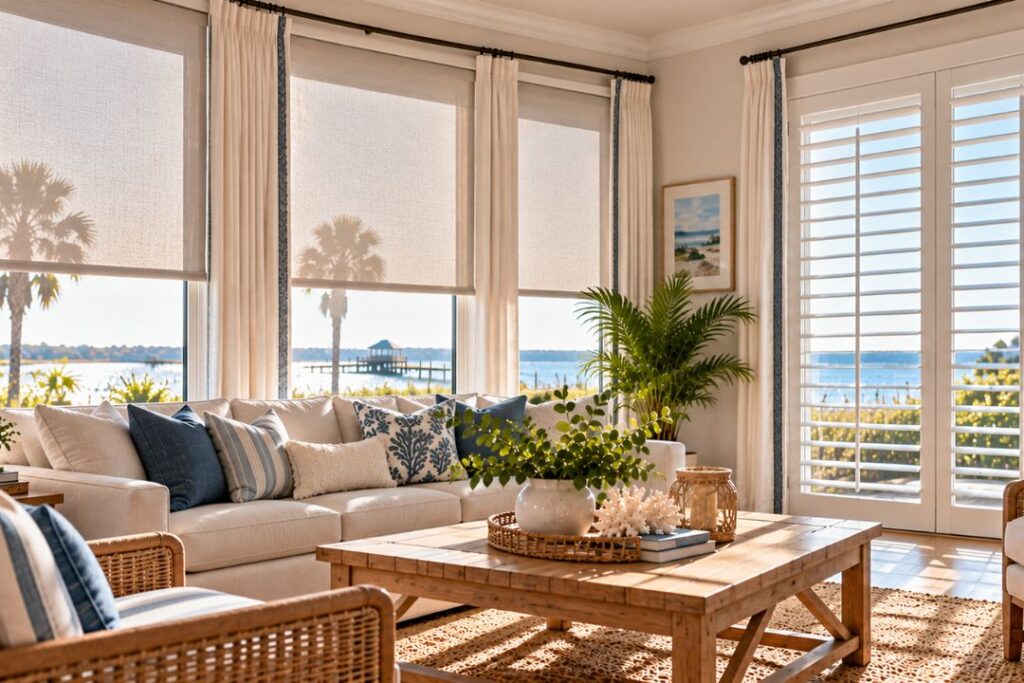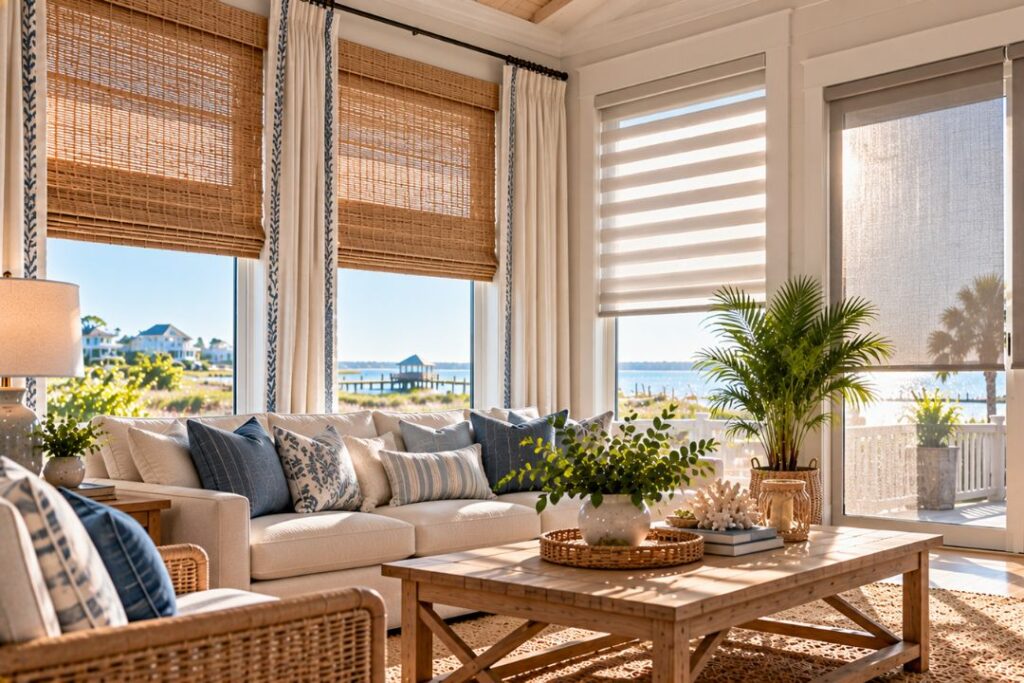
In humid Carolina homes, composite plantation shutters hold up best, resisting warping, cracking, and mildew caused by moisture. Faux wood blinds are the strongest budget alternative, while fabric shades perform well only when made with moisture-resistant materials and kept out of the dampest rooms.
If you live in North Carolina or South Carolina, you know how humidity affects a home, and your window treatments feel it too. That is why homeowners researching shutters vs blinds vs shades want to know which option looks and performs its best over time. This guide compares all three in terms of moisture resistance, longevity, energy efficiency, maintenance, and home value.
Homeowners exploring custom window treatments in Piedmont Triad often prioritize humidity resistance because of the region’s warm, moisture-heavy climate.
Why Does Humidity Matter When Choosing Window Treatments?
Humidity matters because excess moisture degrades many window covering materials faster than expected. In Carolina homes, common humidity-related problems include:
- Warping of natural wood materials
- Mold and mildew growth
- Fabric deterioration
- Hardware corrosion
- A shortened overall lifespan
Choosing moisture-resistant products from the start prevents these problems and protects your investment.
What Is the Difference Between Shutters, Blinds, and Shades?
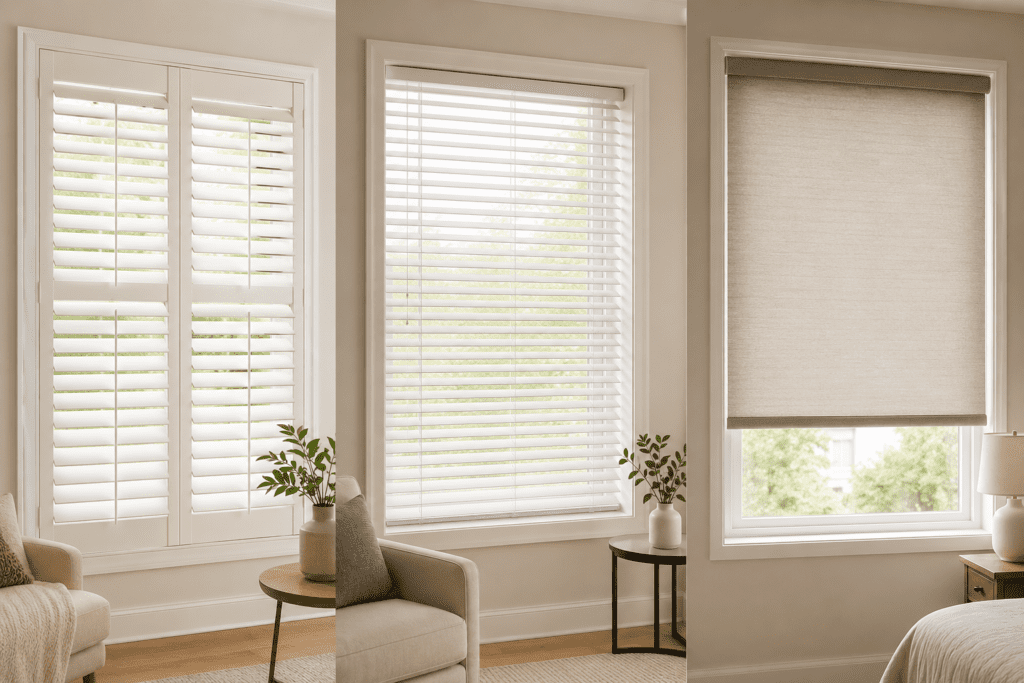
The three differ in construction. Shutters are solid coverings with adjustable louvers mounted within or around the window frame; plantation shutters are the most popular style in Carolina homes for their durability and timeless look. Blinds use horizontal or vertical slats that tilt open and closed, in wood, faux wood, aluminum, or composite. Blinds from trusted brands such as Winston-Salem Hunter Douglas blinds are especially popular for combining durability with advanced light control. Shades use a continuous fabric panel that raises and lowers, available in styles such as roller, cellular, Roman, and blackout.
Shutters vs Blinds vs Shades: Which Performs Best in Humidity?
Composite plantation shutters perform best in high humidity, followed by faux wood blinds, while fabric shades require the most care.
Why Composite Shutters Win
Composite shutters are engineered for challenging conditions in a way that natural wood is not. They offer:
- Excellent moisture resistance
- No warping or cracking
- Easy cleaning
- A long lifespan
- A consistent appearance year after year
That makes them ideal shutters for humid climates, including bathrooms, kitchens, and other damp spaces where natural wood treatments may fail.
How Faux Wood Blinds Handle Humidity
Faux wood blinds resist moisture while keeping the look of traditional wood, making them the strongest practical alternative. Advantages include:
- Budget-friendly pricing
- Moisture and warp resistance
- Easy maintenance
- Good privacy control
- Durable construction
They suit homeowners looking for blinds that perform well in NC humidity without the investment that shutters require. Many homeowners also compare faux wood options with stylish natural materials like bamboo shades in Winston-Salem when balancing moisture resistance and aesthetics.
Can Shades Handle Carolina Humidity?
Yes, with the right materials and placement. Cellular and roller shades made with moisture-resistant fabrics perform well in most living spaces and offer energy efficiency, light control, and soft modern styling. Products like Honeycomb Shades Winston-Salem are especially valued for their insulating design, helping reduce heat transfer while maintaining comfort indoors. However, fabric-based shades require more maintenance in rooms with high moisture exposure, so they are better suited to bedrooms and living areas than to bathrooms.
Which Option Lasts the Longest?
Ranked by typical lifespan in a humid climate:
- Composite plantation shutters: can stay functional and attractive for decades with basic care
- Faux wood blinds: durable for years, though slats and mechanisms eventually wear
- High-quality shades: reliable performance, with fabric life depending on moisture and sun exposure
Shutters’ solid construction makes them the strongest long-term investment of the three, especially when products are selected for local conditions.
Which Option Is the Most Energy Efficient?
Plantation shutters and cellular shades lead in energy efficiency. Shutters create an insulating barrier at the window that regulates indoor temperatures year-round, while cellular shades trap air in honeycomb pockets to reduce energy loss. Faux wood blinds provide moderate insulation but do not match the thermal performance of the other two. Since Carolina humidity usually arrives with heat, this difference shows up on cooling bills.
Which Option Is Easiest to Maintain?
Shutters are the easiest to maintain: a simple dusting or occasional wipe-down keeps them looking new. Blinds need regular dusting across their slats, but remain straightforward. Fabric shades may require more specialized cleaning depending on the material, dust, and moisture exposure. For busy households, that maintenance gap often settles the decision.
Which Window Treatments Work Best Room by Room?
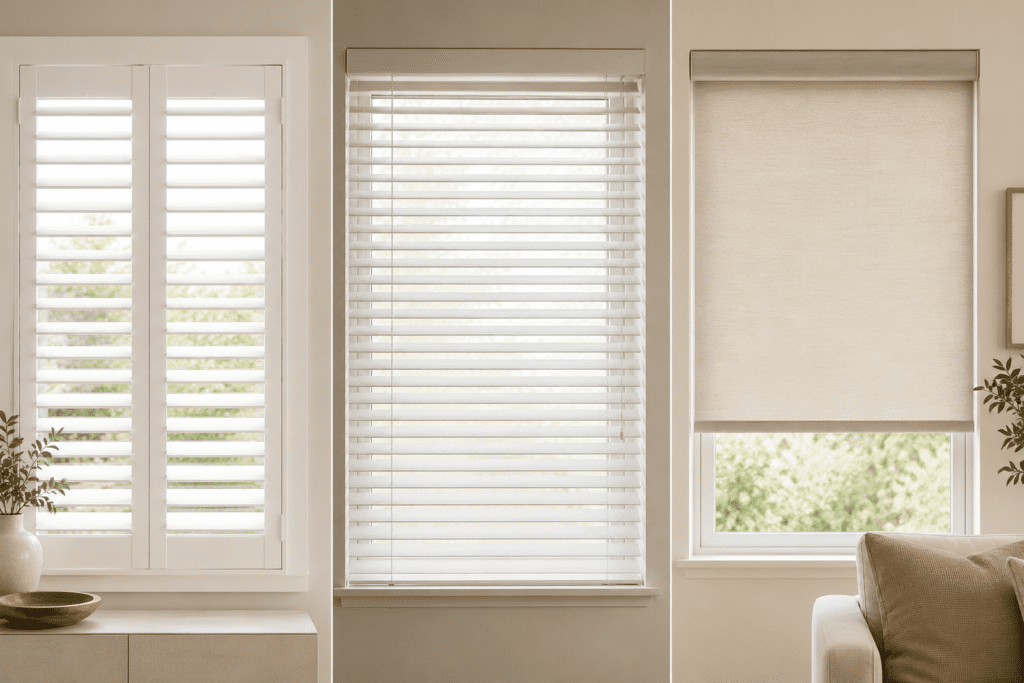
Match the product to each room’s moisture level and purpose:
- Bathrooms: composite shutters or faux wood blinds
- Kitchens: composite shutters or faux wood blinds
- Bedrooms: blackout shades or plantation shutters
- Living rooms: plantation shutters, layered shades, or motorized treatments
- Sunrooms: UV-resistant shades or plantation shutters
For living rooms and modern spaces, Roller Shades Winston-Salem are increasingly popular because they offer sleek styling, clean lines, and excellent light control.
For patios and sunrooms exposed to direct sunlight, Exterior Shades Winston-Salem provide added UV protection, glare reduction, and improved outdoor comfort.
Room-specific choices improve both daily performance and product longevity.
Which Option Adds the Most Value to the Home?
In the shutters vs blinds vs shades comparison, plantation shutters add the most value to a home. Because they are custom-built and permanently installed, buyers and real estate professionals treat them as home improvements rather than furnishings. Their value comes from:
- Increased buyer appeal
- Improved curb appeal
- Enhanced interior aesthetics
- Long-term durability
- Potential resale advantages
Blinds and shades enhance both function and style, but are generally considered removable furnishings.
Conclusion
When comparing shutters, blinds, and shades for Carolina homes, humidity resistance drives long-term performance. Modern blinds and shades hold up well in the right rooms, but composite plantation shutters deliver the best combination of moisture resistance, durability, energy efficiency, and lasting value. The right choice for you comes down to budget, room requirements, and design preferences.
Ready to find the ideal solution for your home? The team at Carolina Shutter & Blinds can help you compare options built specifically for Carolina living. Contact us today to schedule a consultation and find window treatments that withstand humidity year after year.
Frequently Asked Questions
Are plantation shutters better than blinds in humid climates?
Yes. Composite plantation shutters offer superior moisture resistance and longer-term durability than most blind materials.
What type of blinds work best in humid rooms?
Faux wood blinds are the best choice because they resist moisture, warping, and cracking at an affordable price.
Can shades develop mold in humid environments?
Some fabric shades can develop mold or mildew with heavy moisture exposure. Moisture-resistant materials and smart room placement reduce the risk.
Which window treatment lasts the longest?
Composite plantation shutters typically offer the longest lifespan, lasting decades with proper care.
Are shutters worth the higher investment?
Yes, for most homeowners. Their durability, energy efficiency, low maintenance, and impact on home value justify the higher upfront cost.