Choosing between composite and wood shutters looks simple at first, but it gets complicated quickly when you factor in budget, room conditions, and North Carolina’s specific climate challenges. If you have been going back and forth on this, doing your research first is absolutely the right move.
Homeowners researching Plantation Shutters Services Charlotte, NC often compare these materials to find the best balance between durability, appearance, and long-term performance. The right choice depends on where in your home the shutters will go, how much humidity they will face, and what kind of long-term performance you expect. Here is a clear breakdown to help you decide with confidence.
What Are Composite Shutters?
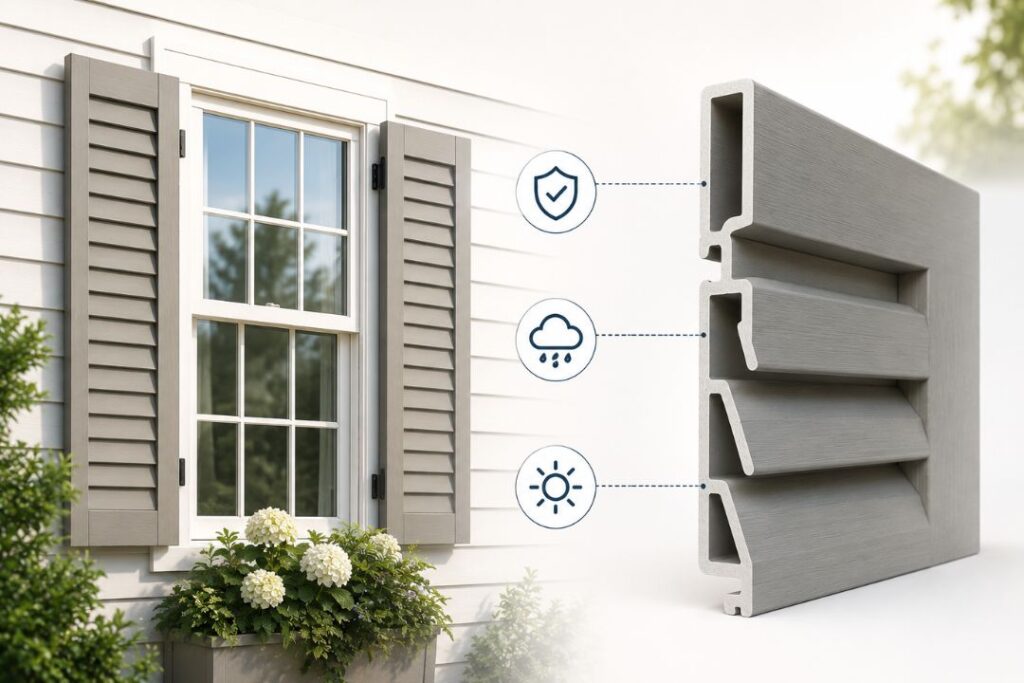
Composite shutters, often called PVC or faux wood shutters, are made from engineered materials that combine wood particles, synthetic polymers, or solid PVC to mimic the look of real wood.
Key characteristics:
- Moisture-resistant and warp-proof
- Consistent color and finish that does not fade quickly
- Heavier than real wood in some configurations
- More affordable than solid wood shutters
- Ideal for high-humidity rooms and exterior-facing windows
Explore our PVC shutters collection for a full range of composite options designed for North Carolina homes.
What Are Wood Shutters?
Wood shutters are crafted from natural hardwood species such as basswood, poplar, or cedar. They are a premium product known for their warm, authentic appearance and the natural character that only real wood can provide.
Key characteristics:
- Rich natural grain and texture with genuine warmth
- Lighter in weight than composite, making the operation smooth
- Available in a wide range of stains, paints, and finishes
- Require climate-controlled environments to perform well in the long term
- Higher price point reflecting the quality of natural material
Our wood shutters and custom shutters collections showcase the full range of hardwood options available through Carolina Shutter & Blinds.
Composite Shutters vs Wood: Head-to-Head Comparison
1. Performance in NC’s Humid Climate
This is the most critical comparison for North Carolina homeowners. During window shutters services Charlotte consultations, humidity resistance is one of the first factors professionals discuss because it directly affects shutter longevity. NC’s humid subtropical climate, especially in summer, subjects interior spaces to significant moisture swings. Real wood expands and contracts with changes in humidity, which can cause warping, cracking, or panels that no longer close evenly over time.
Composite shutters are built to resist exactly this kind of stress. They maintain their shape and finish through humidity fluctuations, making them the more reliable long-term performer in NC’s climate, particularly for bathrooms, kitchens, and any room with inconsistent temperature control.
2. Cost Comparison
Composite shutters are generally more budget-friendly. Because they are engineered products made from less expensive base materials, the per-panel cost is lower than solid hardwood. For homeowners covering multiple windows or an entire home, that difference adds up quickly.
Wood shutters carry a higher price point that reflects the quality, character, and craftsmanship of natural hardwood. They are an investment best reserved for spaces where the look truly warrants the premium.
3. Durability and Longevity
In stable, climate-controlled rooms, wood shutters can last decades with proper care. They are a durable and long-lasting product when placed in the right environment.
Composite shutters outperform wood in environments with moisture exposure or temperature variability. They simply do not have the same vulnerabilities as natural wood, which makes them the more durable choice across a broader range of rooms.
4. Aesthetics and Finish Quality
Wood shutters win on authentic appearance. The natural grain and depth of a hand-applied stain deliver visual richness that composite materials approximate but do not fully match. That said, high-quality composite shutters have improved dramatically and most guests cannot tell the difference in a well-finished room.
5. Weight and Operation
Real wood is lighter than solid PVC, making wood shutters easier to operate with less stress on hinges. For wide or tall panels, that lighter weight is a genuine advantage.
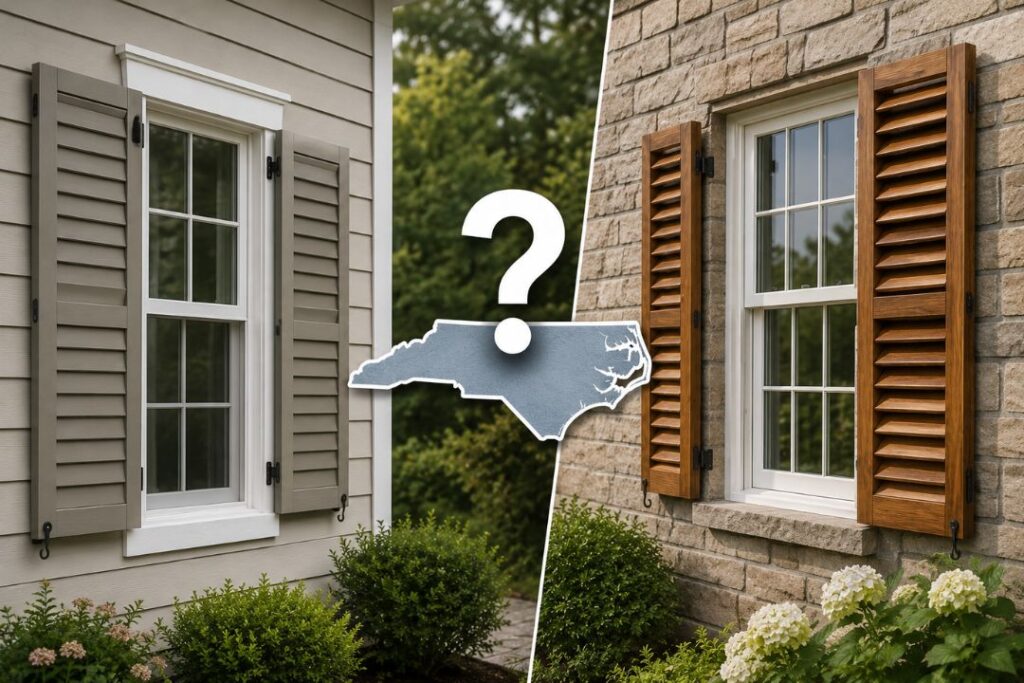
Which Is Right for Your NC Home?
- Choose composite shutters for bathrooms, kitchens, basements, sunrooms, or any room with moisture exposure
- Choose wood shutters for living rooms, master bedrooms, formal dining rooms, and climate-controlled spaces
- Choose composite for whole-home coverage where budget is a primary factor
- Choose wood for select high-impact rooms where premium aesthetics are the priority
Our team at Carolina Shutter & Blinds helps NC homeowners find the right balance across every room. We also carry louvered shutters and interior shutters in both composite and wood configurations.
Conclusion
In the composite shutters vs wood debate, there is no single winner. Both materials serve NC homeowners well when matched to the right rooms and environments. Composite delivers durability and moisture resistance across challenging spaces, while wood brings unmatched warmth and authenticity to premium interior areas.
Not sure which direction to go for your home? Get personalized guidance with a free in-home consultation from Carolina Shutter & Blinds. Contact our NC team today and let us help you make the right call for every window in your home.
Frequently Asked Questions
Do composite shutters look as good as wood shutters?
High-quality composite shutters closely mimic the appearance of real wood. While wood still has an edge in natural texture and authenticity, modern composite products are difficult to distinguish at a glance in most interior settings.
Can wood shutters be used in North Carolina bathrooms?
It is not recommended. NC’s humidity levels, especially in bathrooms, can cause real wood shutters to warp or crack over time. Composite or PVC shutters are the better fit for moisture-exposed spaces.
How long do composite shutters last in NC’s climate?
Quality composite shutters can last 20 years or more, especially in moisture-exposed environments where wood would degrade faster. Their resistance to humidity and temperature changes makes them a durable, long-term investment.
Are wood shutters worth the extra cost?
Yes, in the right rooms. Wood shutters add genuine warmth and premium aesthetic quality to living rooms, bedrooms, and formal spaces. When placed in climate-controlled environments, they hold their beauty and value for decades.
Does Carolina Shutter & Blinds offer both composite and wood shutters in NC?
Yes. Carolina Shutter & Blinds carries a full range of composite and wood shutters across NC, including Winston-Salem, Raleigh, Charlotte, Greensboro, and Asheville.