
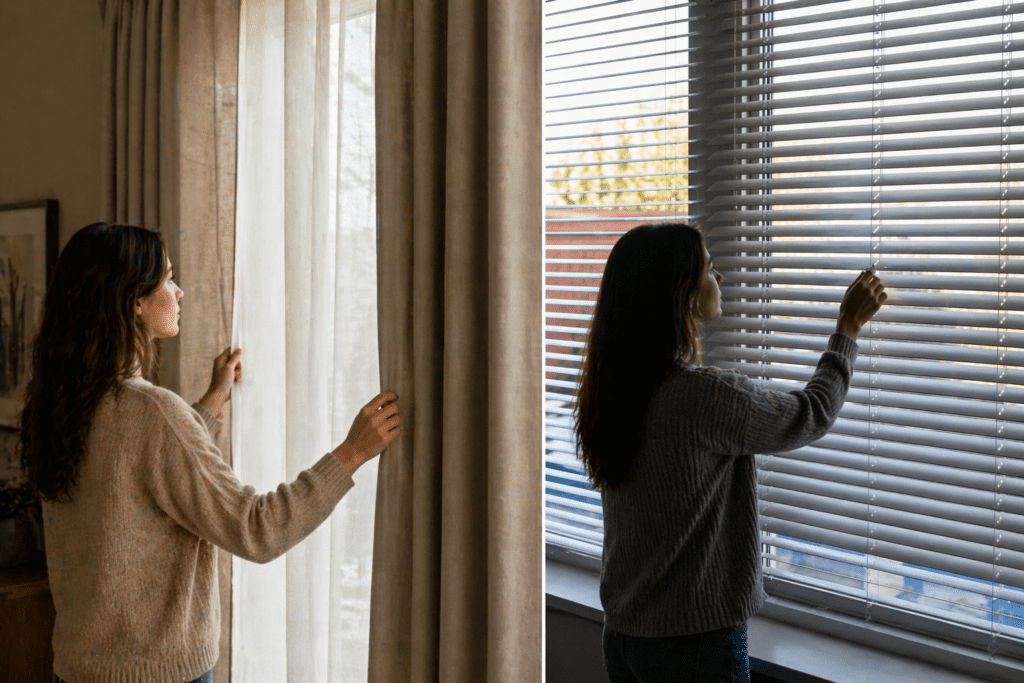
Curtains vs Blinds is a common decision homeowners face when upgrading their window treatments. Both options offer privacy, light control, and style, but they function very differently in everyday use.
Many homeowners begin by exploring the best window coverings for your home to understand which option fits their space, lifestyle, and budget. The challenge is that what looks good in one room may not perform well in another.
Choosing the wrong window covering can lead to problems such as poor light control, higher maintenance, or reduced energy efficiency. At the same time, selecting the right solution can improve comfort, enhance interior design, and even support indoor temperature control.
This guide breaks down the key differences between curtains and blinds so you can decide which option works best for your home.
Curtains vs Blinds: Key Differences in Style, Function & Use Cases
Curtains and blinds differ in how they are designed, installed, and used on a daily basis. Understanding these differences helps you match the right option to each room.
Curtains: Fabric-Based Window Coverings
Curtains are made from fabric panels that hang from rods and can be opened or closed to control light and privacy.
Common features include:
- Available in a wide range of fabrics and colors
- Can be light filtering or blackout
- Often used to enhance décor
Curtains are commonly used in living rooms and bedrooms where softness and visual appeal are important.
Homeowners often explore Window Draperies Services when looking for custom window coverings that match their interior design.
Blinds: Structured Slat Systems
Blinds are made of horizontal or vertical slats that can be tilted to control light.
Common types include:
- Faux wood blinds
- Aluminum blinds
- Vertical blinds
Blinds allow more precise light control compared to curtains because you can adjust the angle of the slats.
Many homeowners consider Window Blinds Services for their flexibility, especially in kitchens, bathrooms, and offices.
Style Comparison
Curtains:
- Softer, more decorative
- Better for traditional or layered designs
Blinds:
- Clean and structured
- Better suited for modern interior design styles
For homeowners comparing broader options, reviewing a blinds vs shades vs shutters comparison guide can provide additional context before making a decision.
Curtains vs Blinds for Privacy, Light Control & Energy Efficiency
Functionality is one of the most important factors when choosing between curtains and blinds. Both options handle privacy, light control, and insulation differently.
Privacy Solutions for Windows
Window coverings for better privacy should match the room’s layout, lighting needs, and level of privacy required. Curtains provide full coverage when closed, making them a strong option for complete privacy.
Blinds, on the other hand, allow adjustable privacy. You can tilt the slats to block direct views while still letting in natural light.
Best use cases:
- Curtains for bedrooms and media rooms
- Blinds for living spaces and offices
Light Filtering vs Blackout
Curtains are available in both light filtering and blackout fabrics. Blackout curtains are often preferred in bedrooms because they block outside light completely.
Blinds provide adjustable light control, allowing you to fine-tune brightness throughout the day.
For example:
- Open slats for daylight
- Tilted slats for reduced glare
- Closed slats for privacy
This flexibility makes blinds a practical choice for rooms that require frequent light adjustments.
Insulation and Thermal Efficiency
Curtains generally provide better insulation due to their fabric thickness. Thermal curtains help reduce heat loss in winter and limit heat gain in summer.
Blinds offer less insulation but still contribute to indoor temperature control when fully closed.
Homeowners looking to improve efficiency often explore the best window treatments for energy efficiency to compare options that reduce energy usage.
UV Protection and Interior Care
Both curtains and blinds can help protect interiors from UV exposure.
- Curtains with thicker fabrics reduce sunlight penetration
- Blinds with UV-resistant materials help minimize glare and fading
UV protection is especially important for preserving furniture, flooring, and décor.
Curtains vs Blinds: Maintenance, Durability & Daily Use
Maintenance and durability are often overlooked but play a major role in long-term satisfaction.
Cleaning and Dust Accumulation
Curtains tend to collect dust, allergens, and odors over time because of their fabric material. They require periodic washing or professional cleaning.
Blinds are easier to maintain. Most can be wiped clean with a cloth or duster.
Key comparison:
- Curtains: Higher maintenance, deeper cleaning required
- Blinds: Easier routine cleaning
This makes blinds a practical choice for busy households or homes with pets.
Durability and Longevity
Blinds are generally more durable because they are made from materials like aluminum, vinyl, or composite wood.
Curtains may wear out faster depending on fabric quality and exposure to sunlight.
For homeowners evaluating costs over time, reviewing a window blinds cost idea can help understand the long-term value of blinds.
Moisture Resistance
Blinds perform better in humid environments such as kitchens and bathrooms.
Curtains may absorb moisture and develop issues like mold or mildew if used in these areas.
Blinds are often the preferred choice for:
- Kitchens
- Bathrooms
- Laundry rooms
Curtains vs Blinds: Which Adds More Value to Your Home?
Homeowners often consider how window treatments impact property value and overall appeal.
Visual Appeal and Interior Design
Curtains enhance interior design by adding texture, color, and softness. They are often used to create a finished and layered look.
Blinds provide a clean and minimal appearance that aligns with modern interior design styles.
Homeowners interested in contemporary designs often explore modern window blinds trends to find styles that match current aesthetics.
Long-Term Value
Blinds tend to offer better long-term value due to their durability and lower maintenance requirements.
Curtains may need replacement more frequently depending on fabric quality.
Custom Window Coverings
Custom solutions can increase both functionality and visual appeal.
Homeowners seeking tailored solutions often rely on providers like Carolina Shutter & Blinds for made-to-measure window treatments that fit their space precisely.
For larger projects or full home upgrades, exploring Window Covering Raleigh services helps ensure consistency across all rooms.
Which One Should You Choose?
Choosing between curtains and blinds depends on your priorities.
Choose curtains if you want:
- A softer, decorative look
- Better insulation
- Full light blocking in bedrooms
Choose blinds if you want:
- Easy maintenance
- Adjustable light control
- Durable and moisture-resistant materials
Many homeowners combine both options for better performance. For example, blinds for light control paired with curtains for design and insulation.
Conclusion
Curtains vs Blinds is not about choosing one universally better option. It is about selecting the right solution for each room and lifestyle need.
Curtains offer comfort, insulation, and visual appeal. Blinds provide flexibility, durability, and easier maintenance.
Understanding how each option performs in real conditions helps you make a confident decision that improves both comfort and functionality.
If you are planning to upgrade your window treatments, you can Contact Us to explore customized solutions and get expert guidance for your home.
FAQ
Are blinds easier to clean than curtains?
Yes. Blinds are easier to clean because they can be wiped down, while curtains often require washing or professional cleaning.
Do curtains or blinds provide better insulation?
Curtains generally provide better insulation due to their thicker fabric materials.
Which is better for privacy: curtains or blinds?
Curtains offer full privacy when closed, while blinds provide adjustable privacy through slat control.
Are blinds or curtains better for modern homes?
Blinds are often preferred for modern homes due to their clean and minimal design.
Do blinds last longer than curtains?
Yes. Blinds typically last longer because they are made from durable materials.
What is best for bedrooms: curtains or blinds?
Blackout curtains are often better for bedrooms because they block light completely.
Can you combine curtains and blinds together?
Yes. Combining both provides better light control, insulation, and design flexibility.