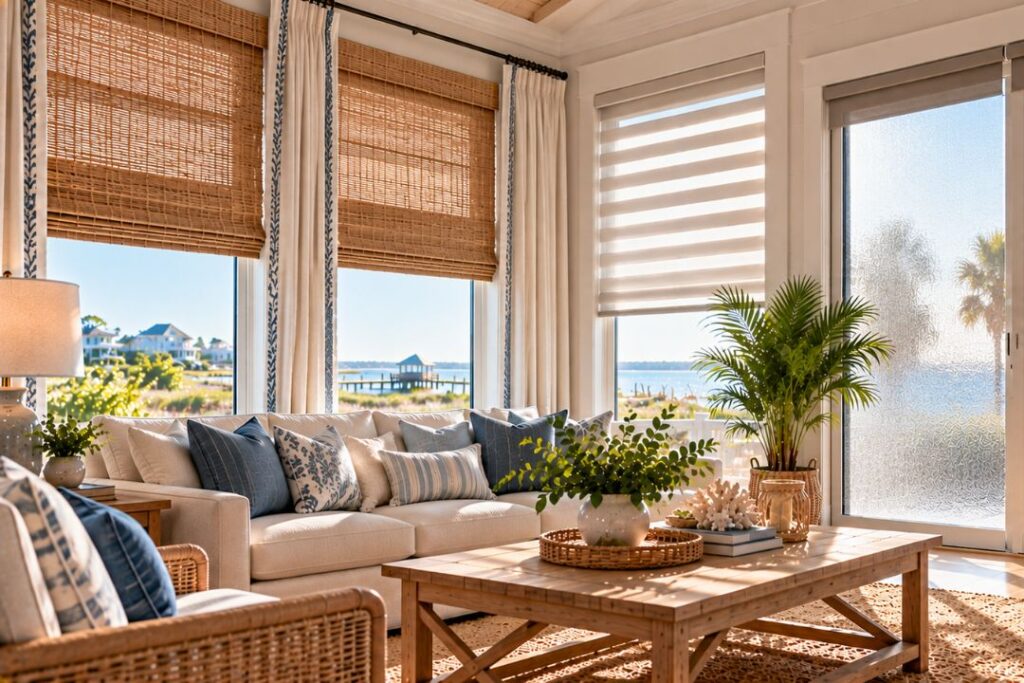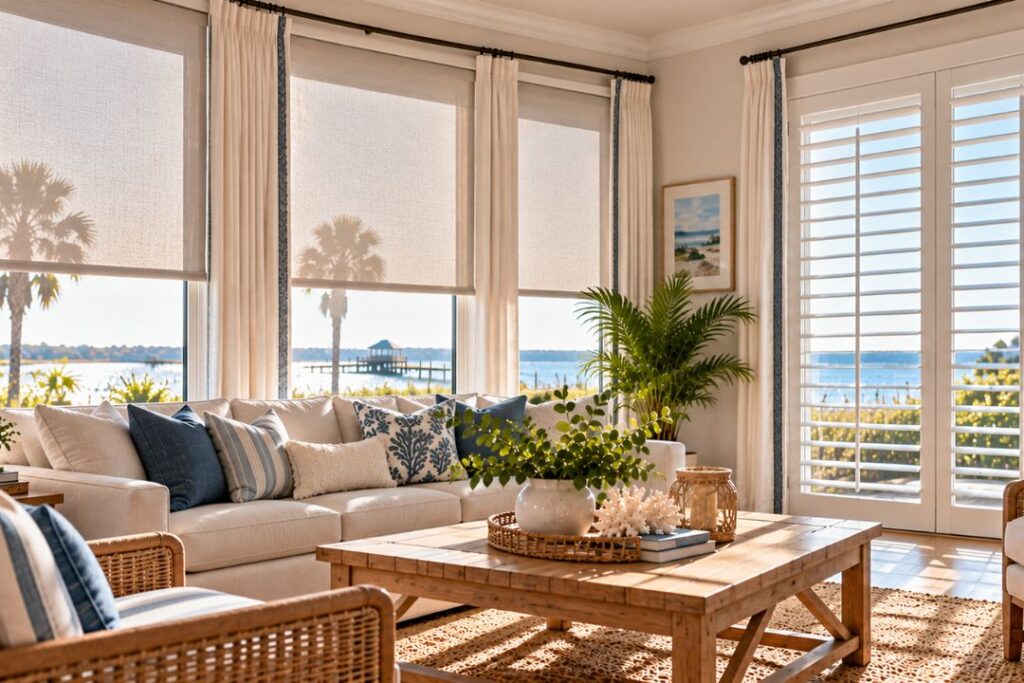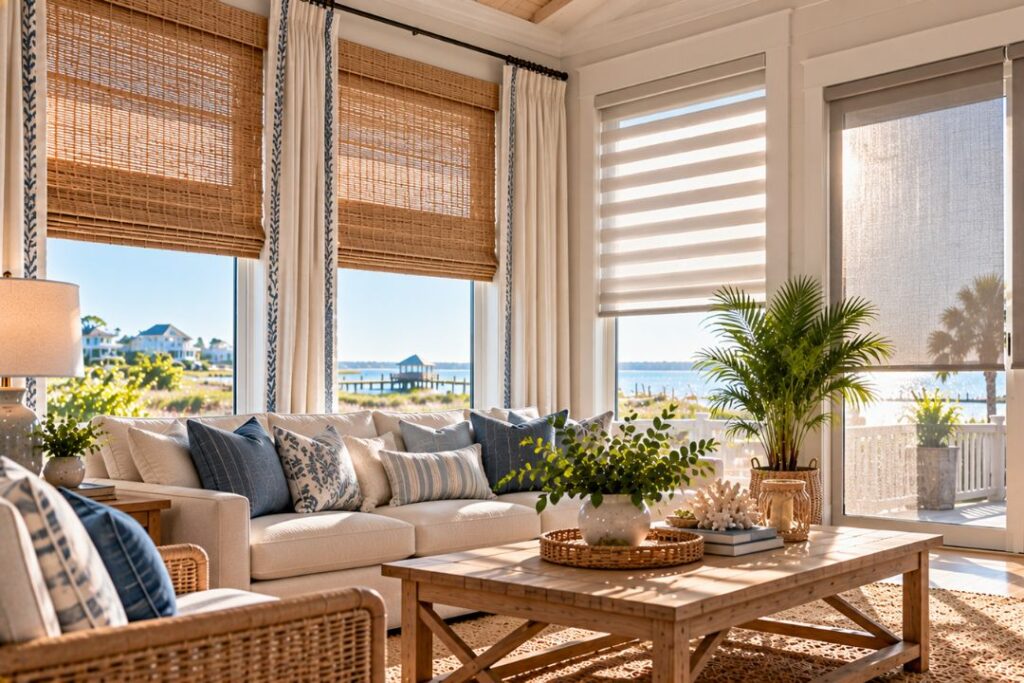
Motorization used to be a luxury reserved for high-end builds. Now it shows up in ordinary living rooms, nurseries, and hard-to-reach kitchen windows across North Carolina, and pricing has widened to match that broader demand.
That range is exactly what makes motorized shades cost so confusing to research. A single search can turn up numbers from a couple hundred dollars to well over a thousand per window, with little explanation of why.
Most of that gap comes down to a handful of specific choices rather than random pricing variation. Once those pieces are broken out individually, the numbers start making a lot more sense.
What You’re Actually Paying For
Total price breaks down into four separate pieces, and understanding each one explains most of the variation you’ll see between quotes.
Shade Type and Fabric
The base shade itself, whether it’s a roller, cellular, or Roman style, sets the starting price before motorization even enters the picture. Premium fabrics with UV blocking or blackout properties cost more than standard light filtering options.
Fabric quality also affects how well the motor performs over the long run, since heavier or larger panels put more demand on the lift mechanism than lightweight fabric typically does.
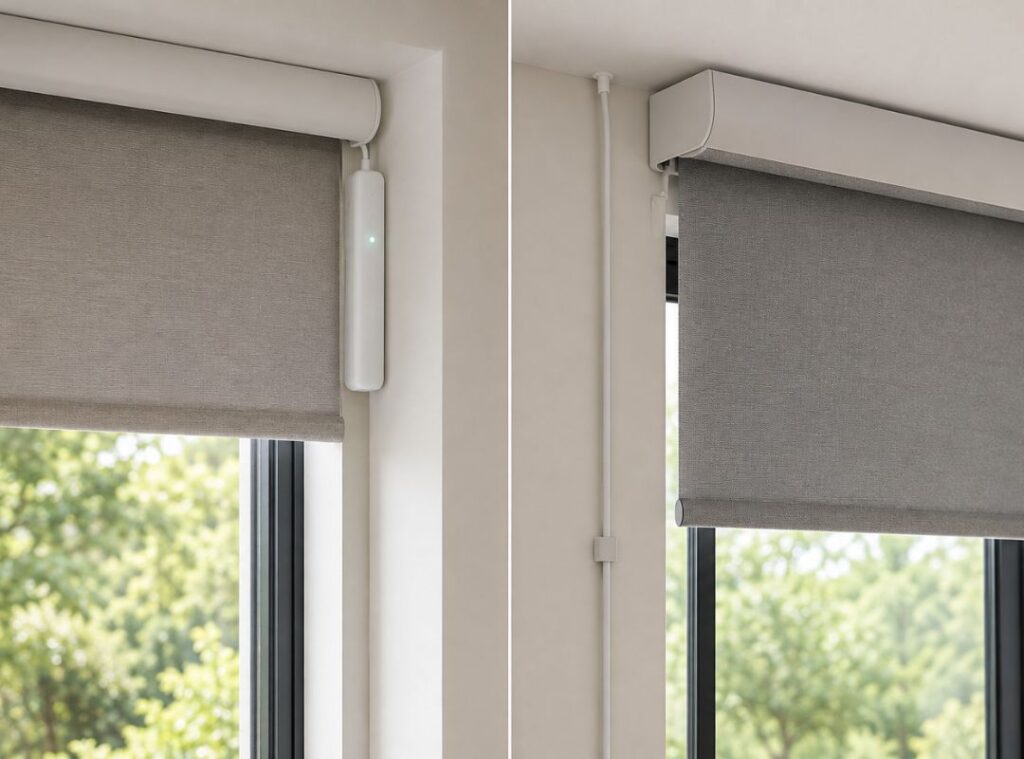
Motor Type: Battery or Hardwired
Battery-powered motors cost less upfront and skip the need for an electrician, making them the more affordable entry point into motorization. Hardwired motors cost more to install but eliminate battery changes entirely, which matters most for windows used constantly throughout the day.
Neither option is objectively better than the other. The right choice comes down to how the room is wired already and how much daily use that particular window sees over the course of a year.
Control System
A basic remote comes standard with most motorized shades. Adding app control through a bridge or hub raises the price, and full smart home integration with a voice assistant or whole-home system adds further cost on top of that.
Many homeowners start with a basic remote and decide later whether app or voice control is worth adding, rather than paying for full integration on day one before knowing how much they’ll actually use it.
Professional Installation
Manual shades install quickly and cheaply. Motorized systems, especially hardwired ones, require more precise mounting and sometimes minor electrical work, which adds noticeably to the labor portion of the total.
This is also where a professional measurement pays off the most. Motors and headrails need to align correctly with window dimensions, and a poor fit can cause a motor to strain or wear out well before its expected lifespan.
Typical Motorized Shades Cost by Project Size
For a single standard window, expect somewhere between roughly $300 and $800 installed for a mid-range battery or hardwired system with a basic included remote. Simple battery-powered options can start closer to $200 for smaller windows.
Outfitting a full room, such as a living room with five or six windows, generally lands in the $2,000 to $4,500 range depending on fabric and motor choice selected. Whole-home projects covering many windows often see per-window pricing drop slightly through combined labor efficiency.
Premium systems with designer fabric, hardwired motors, and full smart home integration can push well past $1,000 per window. That tier makes the most sense for homeowners already investing in a broader smart home setup.
Treat any general range as a planning reference rather than a firm quote. Window size, quantity, and the specific fabric chosen all shift the final number more than any single factor on its own.
Ways to Manage Cost Without Cutting Corners
A few practical choices keep motorized shades cost reasonable without sacrificing the parts that actually matter long term.
- Reserve motorization for genuinely hard-to-reach or frequently used windows, keeping manual lift for easier windows
- Choose battery-powered motors for rooms where wiring would be disruptive or expensive to add
- Start with basic remote control and add app integration later if it turns out you actually want it
- Bundle several windows into one project to reduce per-window installation labor
Skipping the motor and fabric quality entirely to save money upfront often costs more later through early replacement, since budget motors tend to wear out faster under regular daily use.
Is Motorization Worth the Extra Cost
For hard-to-reach windows, such as those above a stairwell or behind furniture, motorization solves a real daily problem rather than just adding convenience for its own sake. The cost premium tends to feel justified almost immediately in these spots.
For easily accessible windows, manual shades remain a perfectly practical choice. Motorization there is more about preference and daily convenience than solving an actual access problem, which makes it a more optional upgrade to budget around rather than a functional necessity. Carolina Shutter & Blinds helps North Carolina homeowners compare motorized shade options based on window size, room use, fabric preferences, and desired control features.
Frequently Asked Questions
Are battery-powered motorized shades cheaper than hardwired?
Yes, battery-powered options typically cost less upfront since they skip electrical work, though batteries need periodic replacing or recharging.
Does smart home integration significantly raise the price?
Yes, adding a hub or bridge for app and voice control adds cost beyond a basic remote-controlled system.
Is it cheaper to motorize a whole room at once?
Often, yes. Combining several windows into one installation visit typically reduces the per-window labor cost noticeably.
Do motorized shades need much maintenance after installation?
Minimal. Battery models need occasional charging or replacement, while hardwired systems generally run reliably with little upkeep required.
Which windows benefit most from motorization?
Hard-to-reach or frequently adjusted windows see the clearest value, since motorization solves a real daily access problem there.
Budgeting for Your Project
Understanding what drives motorized shades cost, from fabric and motor type to control system and installation, makes it much easier to budget accurately before requesting quotes for your own home.
If you’re researching motorized shades cost for your North Carolina home, Carolina Shutter & Blinds can help you compare shade styles, motor options, fabrics, and control systems based on your specific windows. Schedule a consultation to discuss your project and get a more accurate estimate.