The best window coverings for difficult windows are custom-made to the window’s shape and how you use it. Arched and angled windows need specialty shape shades, bay and corner windows need coordinated panels, sliding doors need side-stacking draperies, and tall windows need treatments you rarely have to reach.
Almost every North Carolina home has one. The half-moon over the front door. The trapezoid in the bonus room. The two-story wall of glass that turns the living room into a sauna by August.
Most homeowners leave these windows bare, not by choice, but because nothing on a store shelf fits them.
This is why custom window coverings matter. They can be measured and designed to fit unusual shapes, improve light control, and complement the home’s architecture where standard products fall short.
Here is how we choose window coverings for difficult windows, shape by shape.
What Works on Arched Windows?
Arched windows need coverings built to follow the curve, either as a separate shaped piece or a treatment that covers the full window. Standard rectangles leave the arch uncovered and glaring.
The arch often lets in more sun than people expect, especially above a west-facing door.
Specialty shape shades are made to match the exact arc. Paired with a matching shade or shutter on the rectangle below, the whole window reads as one design.
How Do You Cover Angled or Trapezoid Windows?
Angled windows need custom-cut treatments measured along every edge. These shapes are common in gable ends, bonus rooms, and vaulted great rooms.
The angle is where light and heat pour in hardest, usually high on the wall. Leaving it open undoes the work of covering the windows beneath it.
Custom-fit specialty shades follow the slope so the top of the room gets the same light control as the bottom.
What Is the Best Option for Bay Windows?
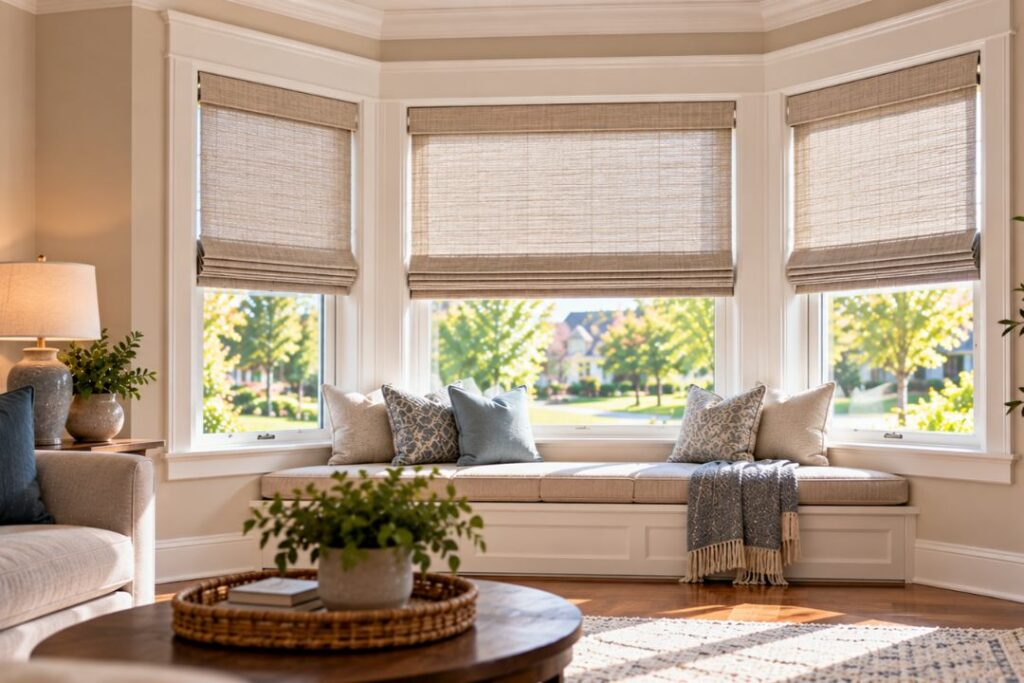
Bay windows work best with separate coverings for each pane that share one height and color. Individual panels let each section open and close on its own without gaps where the angles meet.
A single curtain across a bay usually blocks the seat and the view. Separate treatments keep the nook usable.
Plantation shutters are a classic bay window choice because each panel can be tilted independently. Cellular shades are a lighter, softer alternative.
How Do You Handle Corner Windows?
Corner windows need treatments that meet cleanly where the two walls join. Poorly planned coverings leave a bright gap in the corner or collide when both are lowered.
This is a measuring problem more than a product problem. The two pieces must be sized to meet without overlapping or interfering.
That is why precise measurement and professional window treatment installation matter more on corners than on almost any other window.
What Works on Tall or Two-Story Windows?
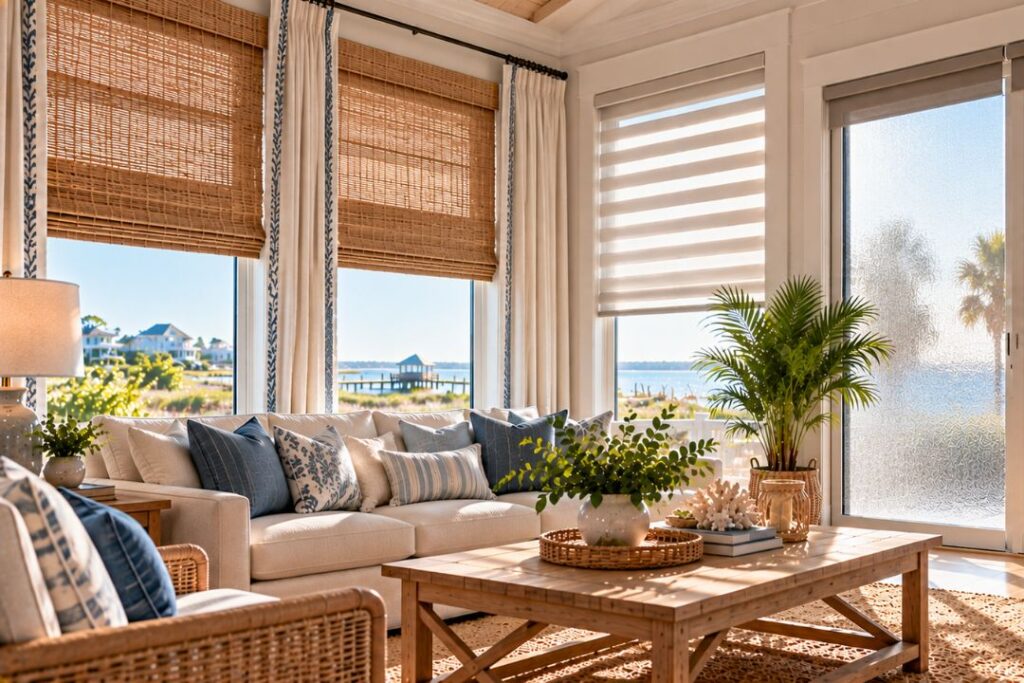
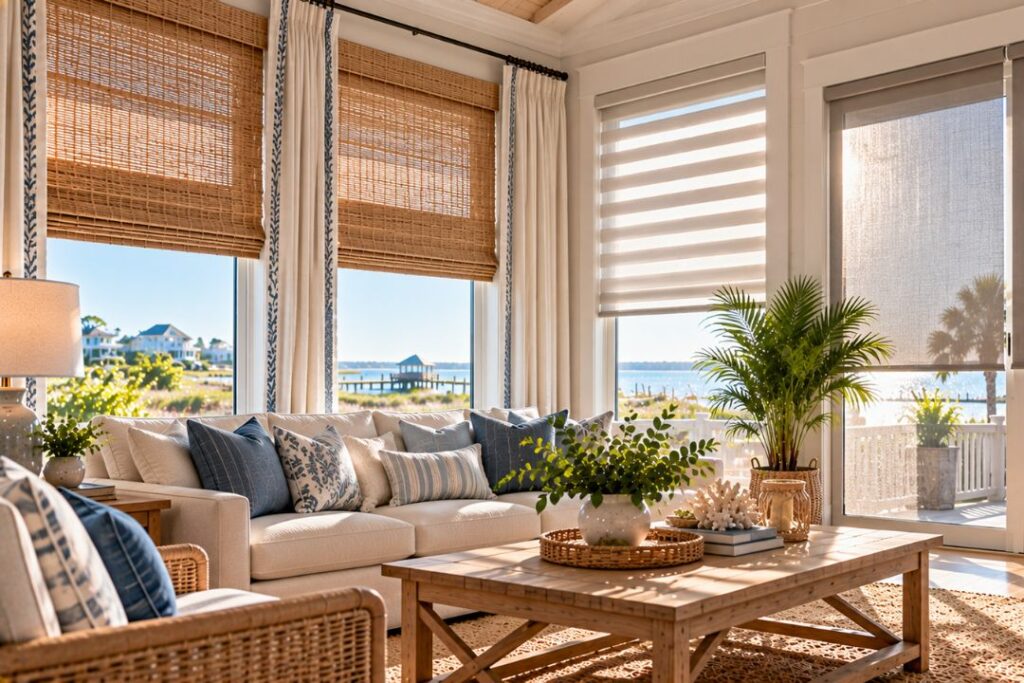
For windows you cannot easily reach, choose coverings you rarely need to adjust. Set-and-leave options like sheer or light-filtering shades control glare without daily adjustment. Some practical ideas for high and tall windows include motorized shades, light-filtering treatments, and custom coverings with convenient operating systems.
Tall glass walls are dramatic, but North Carolina afternoon sun turns them into heat traps. They are also a headache if the covering needs a ladder every time.
Sheer shading softens light while keeping the view. We talk through operating options for high windows during every consultation.
What Covers Sliding Glass Doors Best?
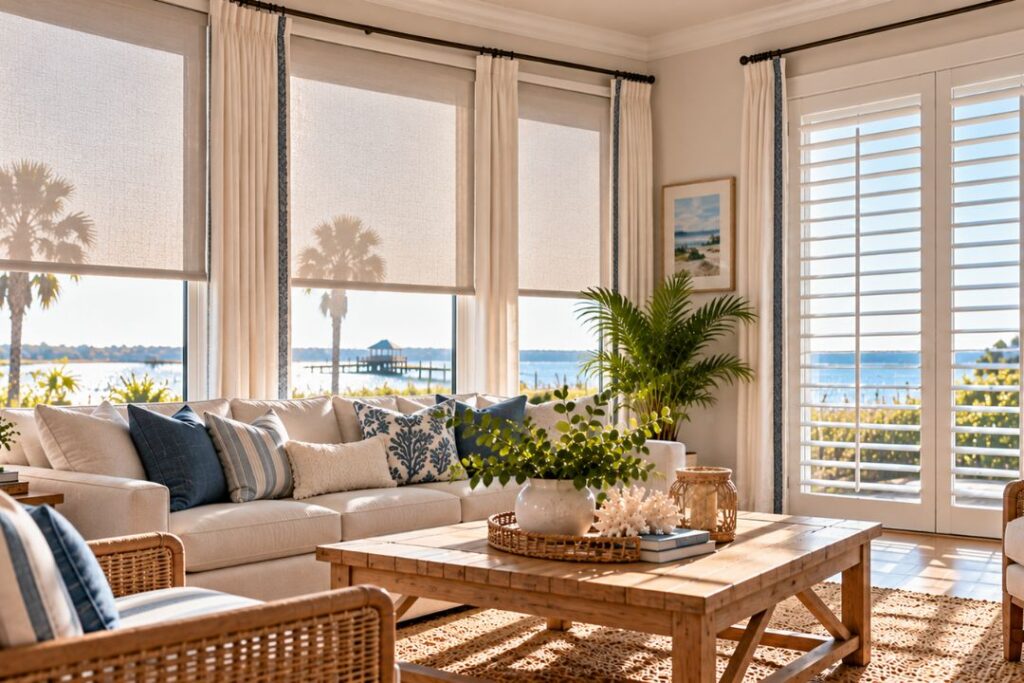
Sliding doors need coverings that fully clear the opening. Side-stacking draperies are a reliable choice because they move out of the way without blocking the walkway.
A shade that must be raised every time the dog goes out usually ends up stuck halfway.
Custom draperies on a traversing rod glide to one side. Sturdy drapery hardware keeps them working through years of daily use.
Should Some Difficult Windows Stay Uncovered?
Sometimes, yes. Decorative transoms and high accent windows that do not cause glare or privacy issues can be left open to show off the architecture.
This is the answer most companies skip. Not every window needs a covering, and we would rather tell you that than sell one you do not need.
Frequently Asked Questions
Can you cover a half-moon window?
Yes. Specialty shape shades are made to follow arched and half-round windows so the curve gets light control too.
What window covering works best on a bay window?
Separate shutters or shades for each pane work best, sharing one height and color for a unified look.
How do you cover very high windows?
Choose coverings that rarely need adjusting, like sheer or light filtering shades, and discuss operating options during a consultation.
Are custom coverings required for odd-shaped windows?
Usually, stock coverings are made for rectangles, so arched, angled, and oversized windows need custom sizing.
Bring Us Your Hardest Window
Every home has that one window everyone gave up on. Good window coverings for difficult windows turn it from a problem into a feature.
Carolina Shutter & Blinds measures and fits unusual windows across North Carolina through free in-home design consultations.
Show us the window you have been ignoring. Call 864) 727-7375 or schedule a free consultation for your difficult windows.