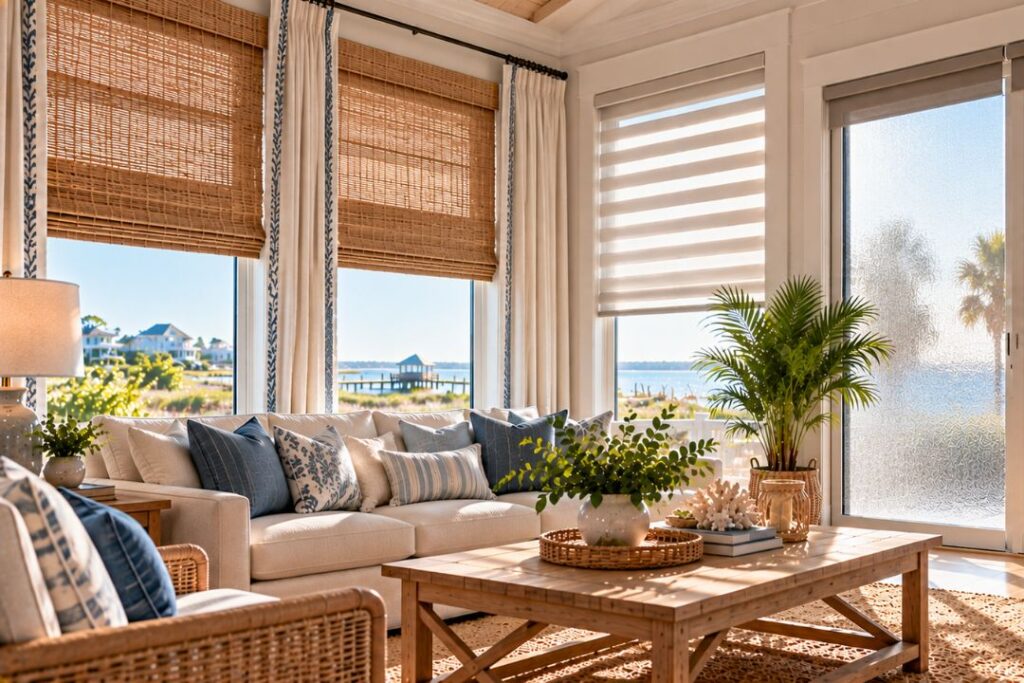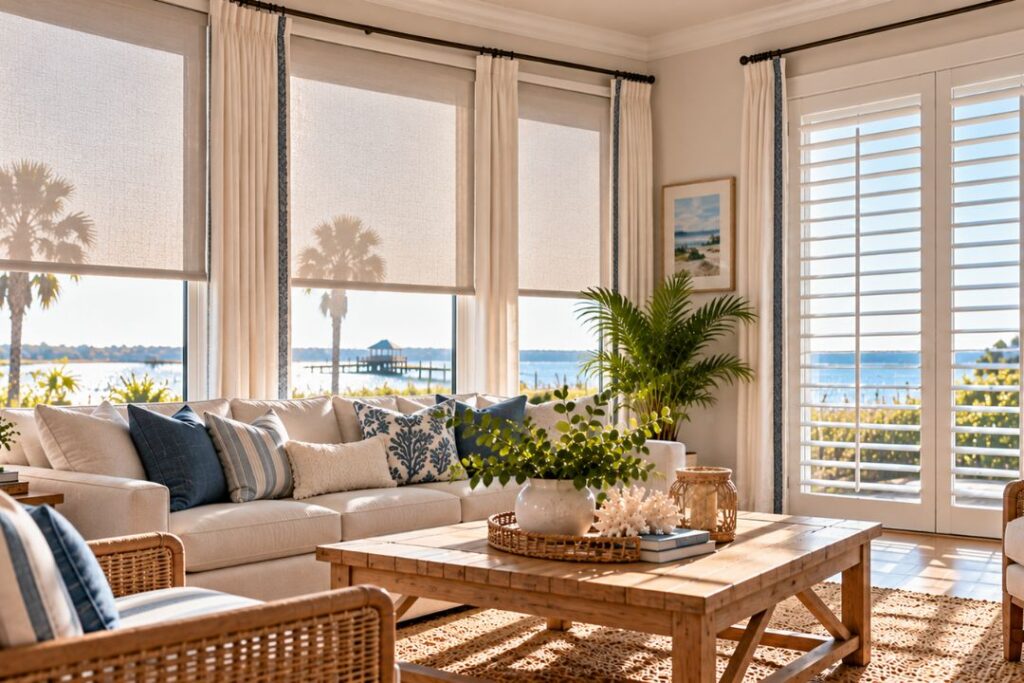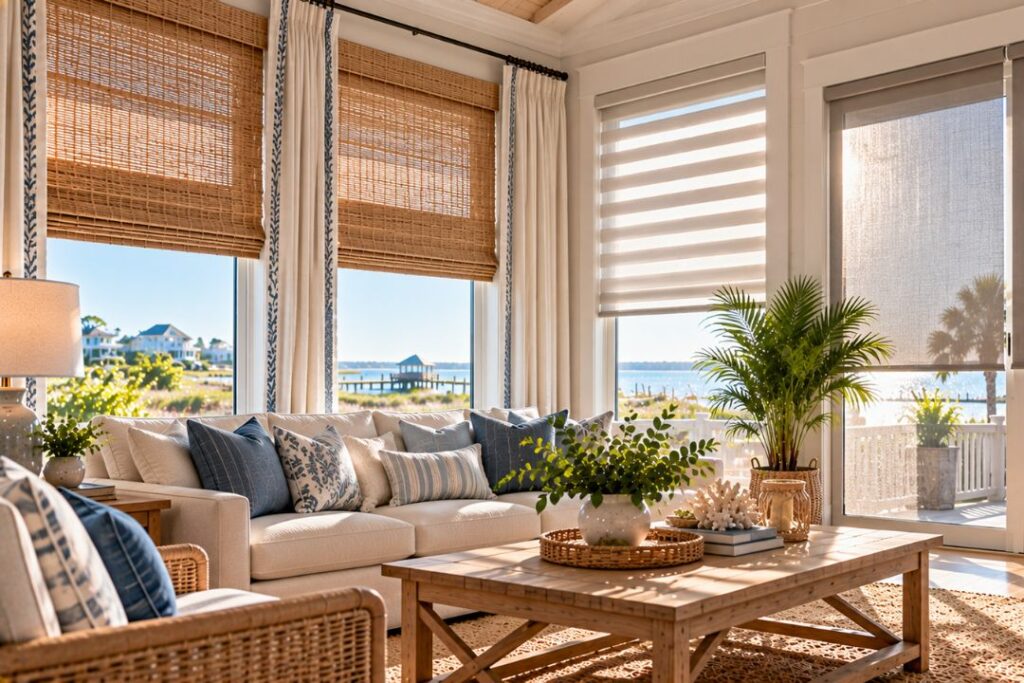
The best window treatments for two-story windows treat the wall as two zones. Lower windows get coverings you adjust daily for privacy and light, while upper windows get set-and-leave coverings for heat and glare. Both rows should share one color and align cleanly so the wall still reads as one design.
Picture the great room that sold the house-twenty feet of glass, sunlight everywhere, a view straight into the trees.
Now picture it at 4 p.m. in July. The sofa is too hot to sit on, the TV is unreadable, and the thermostat has given up.
That gap between the listing photo and real life is what we get called in to fix. Finding practical ideas for hard-to-cover windows can make a big difference, especially when a room has tall glass, difficult-to-reach upper windows, or arched sections. The answer almost always starts by splitting the wall in half.
Why Treat the Upper and Lower Windows Differently?
The two rows do different jobs. Lower windows sit at eye level where people live, so they need privacy and easy daily control. Upper windows sit out of reach, where their main job is managing heat and glare.
Choosing one window treatment for two-story windows usually fails one row or the other.
A treatment that works perfectly at the bottom, opened and closed every day, becomes a chore at the top. Something built for the top feels limiting at the bottom.
What Works Best on the Lower Row?
The lower row needs coverings built for everyday privacy and light control. Shutters, top-down bottom-up shades, and draperies all handle frequent use well.
Plantation shutters let you tilt louvers through the day without raising anything. Top-down/bottom-upshades cover the lower glass for privacy while leaving the upper row open to the sky.
For a softer look, custom draperies can frame the lower row and add warmth to a tall, echoing room.
What Works Best on the Upper Row?
Upper windows need coverings that manage heat and glare without daily adjustment. Insulating and light-filtering shades do the job once and stay put.
In North Carolina, that high glass is often the biggest heat source in the house, especially on west and south walls.
Cellular shades help slow heat moving through the glass. Sheer shading softens harsh light while keeping the view that made the room special.
Motorized lift systems are another option homeowners ask about for high windows. We recommend confirming which operating options fit your chosen product during a consultation.
What About Arched or Angled Tops?
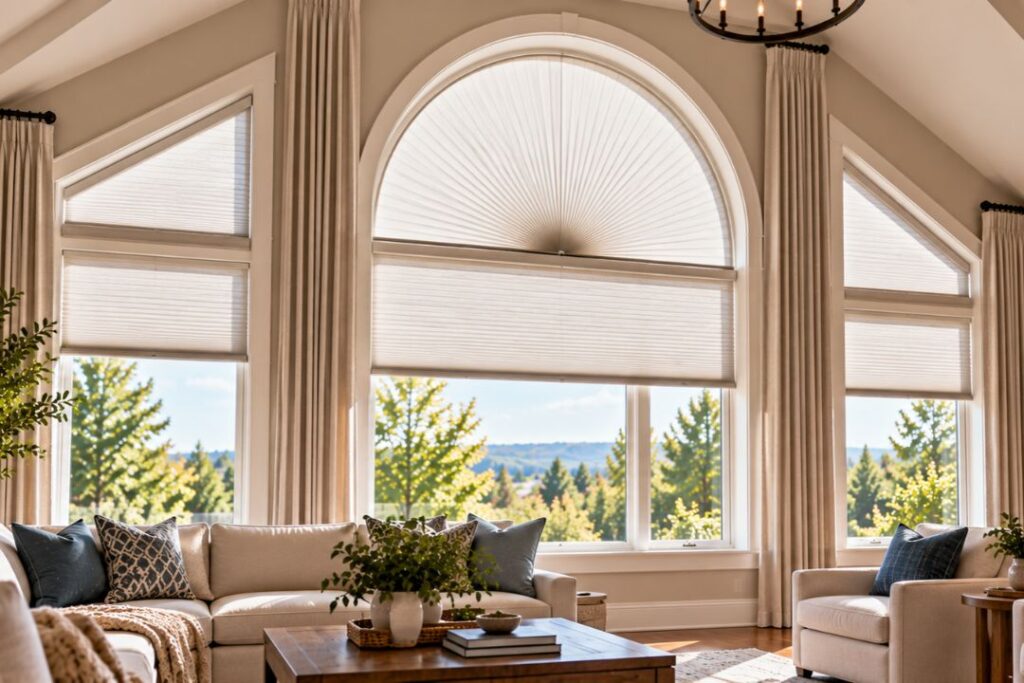
Many two-story walls finish with arched or angled glass at the peak. These need custom-shaped coverings, or the hottest sun in the room stays uncovered.
That top shape sits closest to the roofline and often takes direct afternoon sun.
Specialty shape shades follow the exact curve or angle so the peak gets the same light control as the rest of the wall.
How Do You Make Both Rows Look Like One Design?
Use one color family and aligned mounting lines across both rows. Different products can sit on the same wall comfortably when their color and edges match.
Misaligned headrails are what make a two-story wall look pieced together. The eye catches every uneven line on a wall that big.
Precise measurement and professional window treatment installation keep every edge aligned. Tall walls also need the right equipment for safe installation, which isn’t a job for a stepladder.
What Does the Wall Look Like From Upstairs and Outside?
A two-story wall is seen from the loft, the landing, and the street, not just the sofa. Plan coverings for every viewpoint.
This is the angle most people miss. From an upstairs balcony, you look straight down at the tops of shades and hardware.
At night, a lit two-story window becomes a giant display case for the neighborhood. Coverings on the lower row matter most for evening privacy.
Frequently Asked Questions
Should all two-story windows get the same treatment?
Not always. Lower windows need daily control, while upper windows need set-and-leave heat and glare control in matching colors.
How do you cover windows you cannot reach?
Choose coverings that rarely need adjusting, like cellular or sheer shades, and ask about operating options during a consultation.
Do two-story windows make a room hotter?
Often, yes. High glass on west or south walls lets in strong afternoon sun, which heats the whole open room.
Can you cover the arched window at the top?
Yes. Specialty shape shades are made to follow arched and angled tops for full-wall light control.
Make the Tall Wall Livable
Great window treatments for two-story windows keep the view and keep the heat out. Split the wall, match the finish, and plan for every angle.
Carolina Shutter & Blinds measures and installs tall-wall window treatments across North Carolina, starting with a free in-home design consultation.
Reclaim your great room before next summer. Call (864) 727-7375 or book a free two-story window consultation.