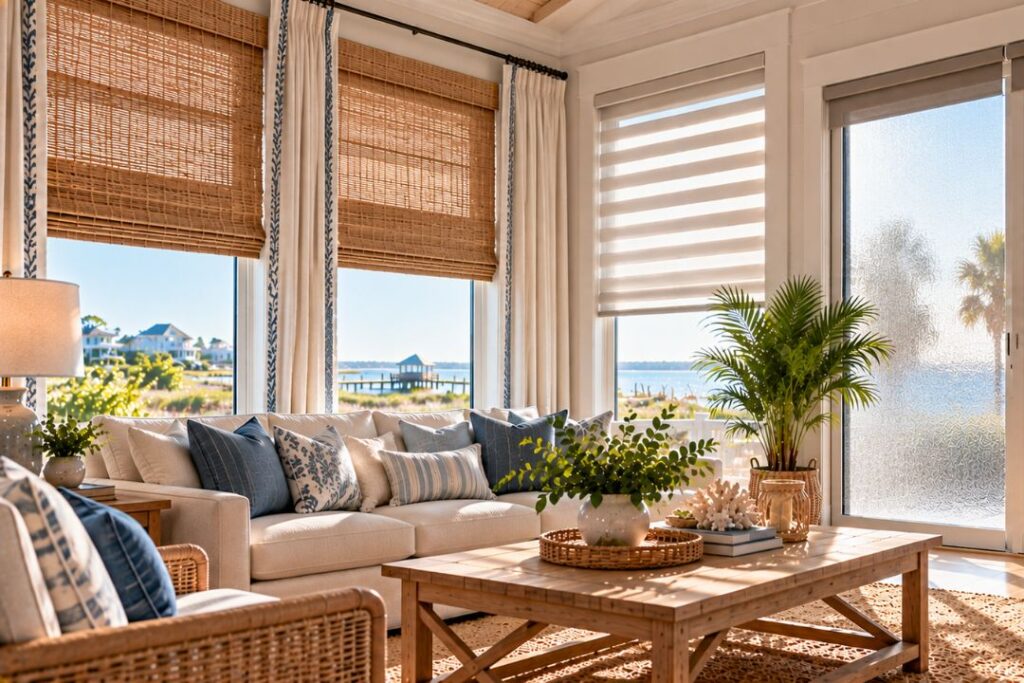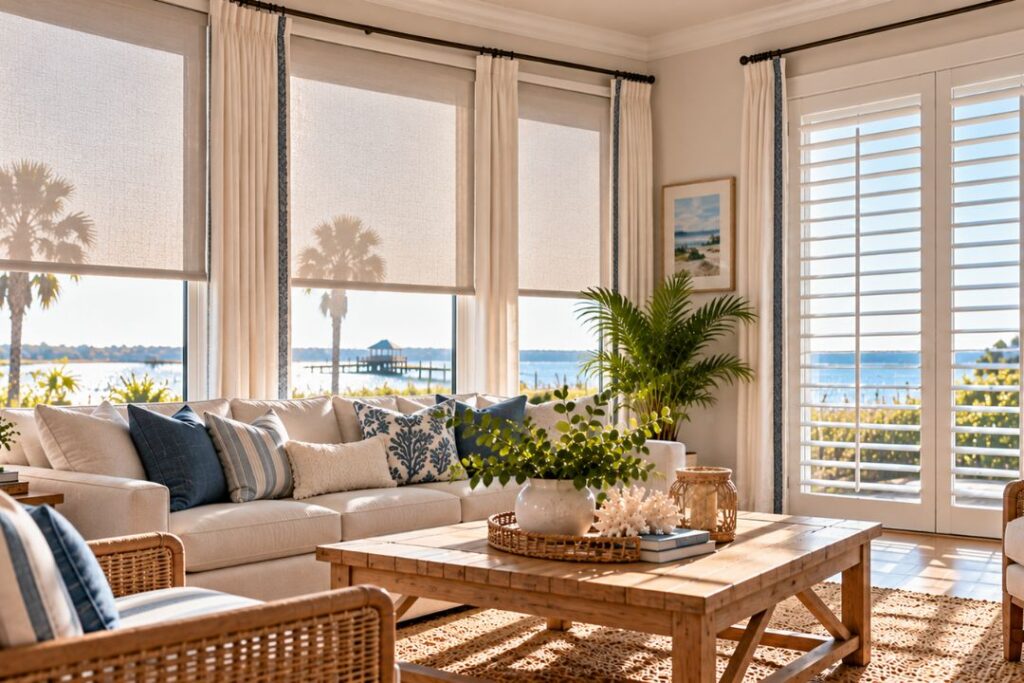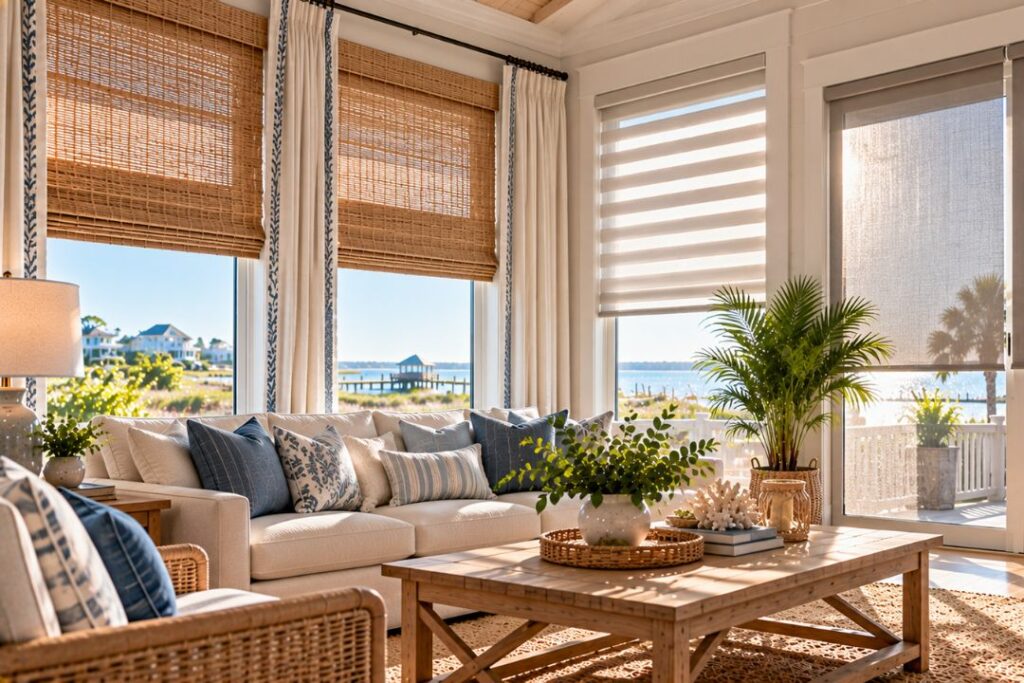
UV protection window treatments reduce fading by blocking or filtering sunlight that reaches your floors, furniture, and art. In Wilmington, where coastal sun is strong, the best options are solar or light-filtering shades, lined draperies, and shutters, chosen for each window’s exposure.
What Does UV Light Actually Do to a Home’s Interior?
UV light breaks down dyes and finishes, which fades fabric, flooring, and artwork over time. The change is gradual, so many homeowners only notice it when they move a rug.
- Fabrics and Upholstery: Sofa arms, curtains, and pillows facing the glass often lose color first. The sun side of a sofa can end up a different shade than the shaded side.
- Wood Floors and Furniture: Wood floors and tables can lighten or discolor where the sun hits them daily. A bright rectangle on the floor is a classic sign.
- Art and Photos: Prints, photographs, and paper fade quietly. Hanging them across from a bare window invites trouble.
How Can You Tell UV Damage Has Already Started?
Look for color differences between sun-facing and shaded areas. Faded patches, bleached edges, and lighter floor sections near windows are the usual signs.
Try a simple check. Lift a rug, move a picture frame, or look behind a curtain panel, then compare the color you find with the color that sat in the sun. A clear line means fading is underway. It is not a reason to panic, but it is a reason to act before the contrast grows.
Which UV Protection Window Treatments Work Best in Wilmington?
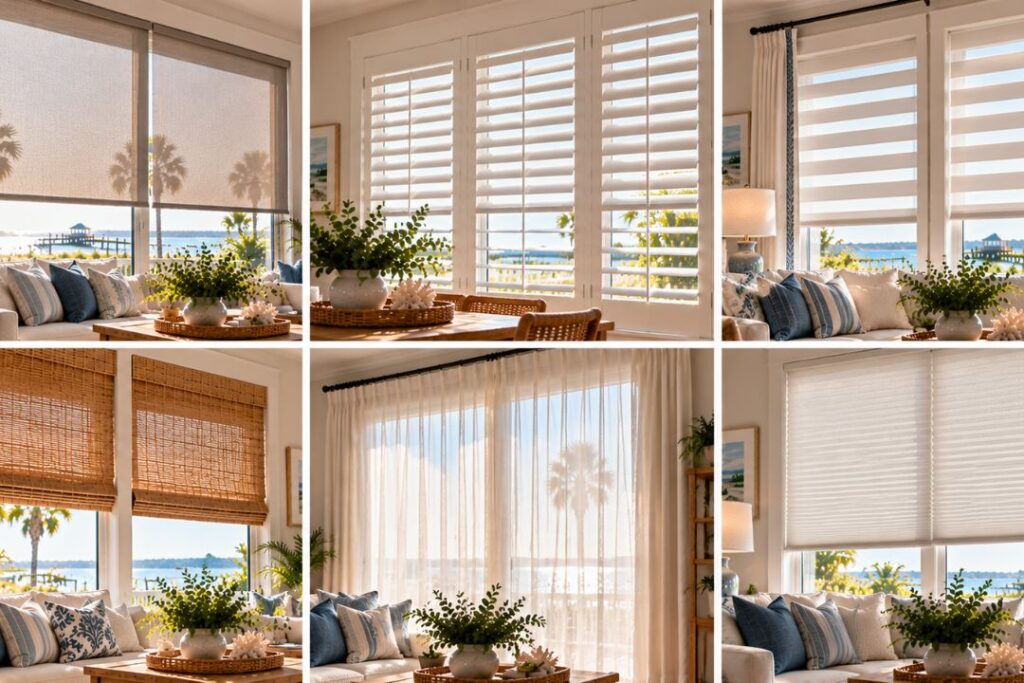
Solar shades, light filtering shades, lined draperies, and closed shutters all reduce the sun that reaches your rooms. The right pick depends on how much view and daylight you want to keep.
Solar Shades
Solar shades are woven to block UV and heat while still letting in some light and view. Our guide to solar shades for windows in NC explains that higher UV-blocking percentages mean less fading on furniture, flooring, and artwork.
Light Filtering Shades
Light filtering fabric diffuses sunlight and keeps rooms bright. Our light filtering shades use sheer fabric with different opacity levels, so you can choose how much light passes through.
Lined Draperies
Lining adds a barrier behind the decorative fabric, which helps protect it and the room. Our draperies in Wilmington include thermal linings, blackout options, and fade-resistant fabrics.
Plantation Shutters
Closed shutters stop direct sun, and angled louvers let in softer light. Our plantation shutters in Wilmington are made for coastal humidity, intense sunlight, and changing weather.
Roller and Roman Shades
Fabric shades come in light-filtering and blackout options. Browse our roller shades and Roman shades to compare opacity, texture, and color. Fabric shades also add texture and color, so protection does not have to look clinical. Ask for samples in your light.
How Does Wilmington’s Coastal Climate Raise the Stakes?
Wilmington adds humidity and salt air to strong sun, so a treatment has to resist all three. Shutters tend to hold up best against salt air, while fabric needs lining and fade resistance.
Wilmington’s long stretches of sun mean many hours of exposure, so fading can add up over a season. Our Wilmington pages note that shutters resist humidity and salt air better than fabric coverings. UV protection window treatments in fabric still work well, as long as the material is durable and rated to resist fading.
Installation matters too. Seasonal humidity can cause misalignment if treatments aren’t mounted correctly, and gaps let sun leak in. Our article on custom versus ready-made blinds explains why precise measurements control light better.
Do You Have to Choose Between UV Protection and Natural Light?
No. Light filtering fabrics and solar shades with a higher openness keep daylight and view while still cutting UV. Lower openness blocks more light but shows less of the outdoors.
Our comparison of light filtering and blackout shades explains how each handles glare and fading. For privacy plus softness, see our ideas for layering sheer curtains with blinds.
Which Windows Should You Protect First?
Start with the windows that get the most direct sun, then the rooms holding the pieces you care about most. UV protection window treatments pay off fastest there.
- South and west windows: These often take the strongest sun, especially late in the day.
- East windows: Morning sun can be strong, though it eases sooner than west sun.
- Sunrooms: Large glass areas let in the most light.
- Rooms with hardwood floors: Wood can lighten the space where the sun lands daily.
- Rooms with art or heirloom furniture: Protect what is hard to replace.
For insulation choices, read our guide to energy-efficient window treatments. Results vary by window and home, so we never promise exact savings.
Conclusion
Carolina Shutter and Blinds offers custom window treatments, precise measurements, and professional installation in Wilmington, NC. Book a free in-home window treatment consultation to compare fabrics and finishes in your home.
You can also contact our team to discuss your options. The right UV protection window treatments can help your floors, furniture, and artwork last longer in the Wilmington sun.
Frequently Asked Questions
What is the best window treatment for UV protection?
The best choice depends on the window. Solar shades suit big sunny windows, light filtering shades keep rooms bright, and shutters or lined draperies suit rooms that need more coverage.
Do window treatments block UV rays?
Many do, to different degrees. UV-protective fabrics reduce the sun that reaches your room, but no covering stops fading completely.
Do blackout curtains protect furniture from fading?
Yes, when closed, they block most light, which protects furniture and floors. Both blackout and light-filtering fabrics offer some UV defense, so the right choice depends on how much daylight you want.
Can I keep my view and still get UV protection?
Yes, solar shades with higher openness let in more of the view while still cutting UV. Lower openness blocks more light but shows less of the outdoors.
Do shutters block UV light?
Closed shutters block direct sun from entering the room. Angled louvers let in softer light, so you can balance protection and brightness through the day.