
Key Takeaways
- Types of window blinds = slatted products, not fabric shades.
- Wood and faux wood blinds bring warmth and durability.
- Mini (aluminum) blinds are lightweight and budget-friendly.
- Vertical and plantation blinds work best for wide windows and doors.
- Cordless and motorized blinds add safety, convenience, and a modern edge.
Introduction
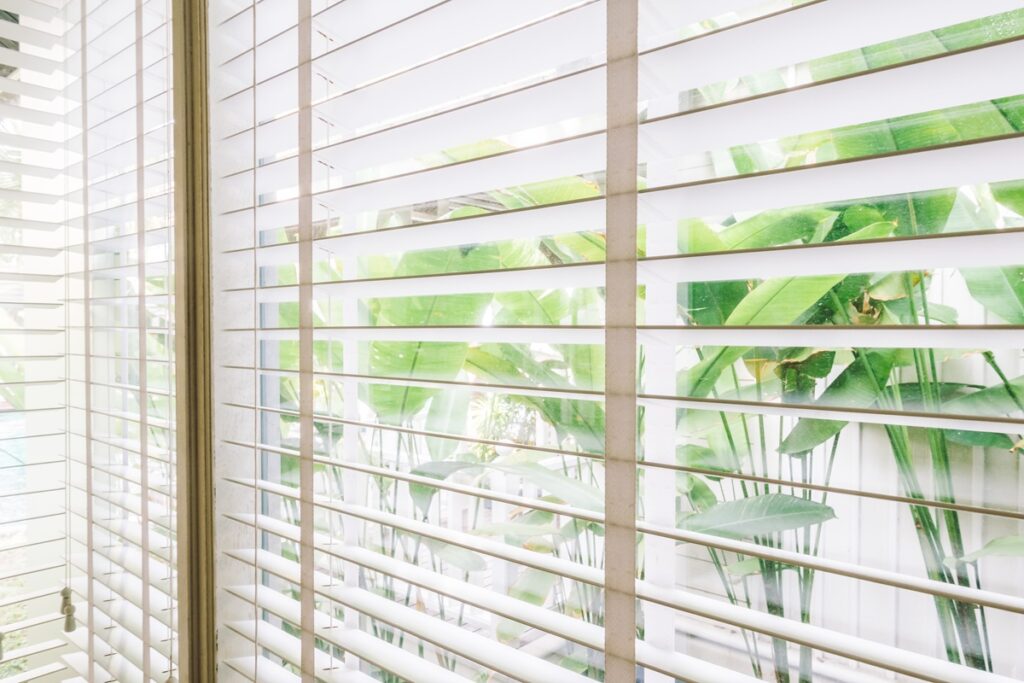
The right home window treatments don’t just block light and they give you privacy, and protect your furniture from fading. But here’s the tricky part: search for types of window blinds online, and you’ll find shades tossed in like they’re the same thing.
Here’s the reality. Blinds have slats. Shades are fabric. Once you know the difference, it’s way easier to shop without second-guessing. Let’s look at the real types of window blinds, how they work, and which rooms they shine in.
Different Types of Window Blinds for Every Room
Wood Blinds
Classic, warm, and always stylish wood blinds fit living rooms and dining areas perfectly. Go with wider slats for fewer gaps and a cleaner look. They’re the kind of upgrade that makes a space feel instantly put together. Explore our guide on how our professionals help – a complete how to clean window blinds easily guide for keeping them spotless year-round.
Faux Wood Blinds
Love the wood look but need something tougher? Faux wood blinds resist moisture and warping, making them ideal for kitchens, bathrooms, or laundry rooms. They’re low-maintenance too, just wipe and go.
Aluminum Mini Blinds
Mini window blinds (yep, the aluminum kind) are lightweight, affordable, and durable. They’re great for high-traffic spaces like offices, playrooms, or rentals. Slim slats mean precise light control without hogging the view.
Vertical Blinds
Got a sliding glass door or a wall of windows? Vertical blinds are built for that. They slide to the side when you want a clear view and close smoothly when you need privacy. Add textured vanes if you want a little design flair.
Plantation Blinds
Plantation blinds are all about wide slats and big style. They bring an upscale feel to bedrooms and living areas while giving you serious control over light and airflow. Think form and function working together.
Hunter Douglas Blinds
Hunter Douglas window blinds brings a designer touch. Whether you’re into wood, faux wood, or aluminum, these blinds come with smart features like motorization and cordless safety, plus sleek finishes that fit right into modern homes.
Motorized and Cordless Blinds
If convenience is your thing, these are the moves. Motorized blinds connect to remotes or smart home systems, while cordless window coverings offer a clean, modern look with added everyday convenience. Cordless blinds keep things neat, safe, and tangle-free, making them safer window blinds for families with children and pets.
Best Types of Window Blinds for Every Room
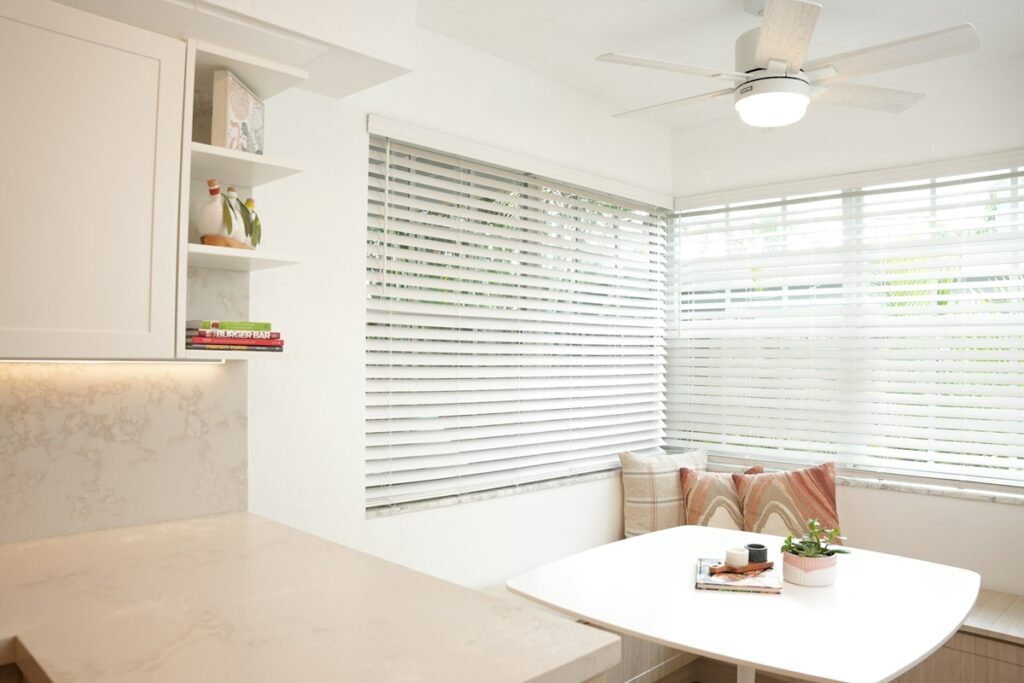
Living Rooms and Large Windows
Wood or plantation blinds add warmth and polish. For oversized windows or doors, vertical blinds keep things practical without crowding the space. Homeowners looking for window blinds in Wilmington, NC can choose from wood, faux wood, or plantation blinds based on their preferred style, privacy, and light control.
Bedrooms and Sleep Spaces
Plantation or faux wood blinds give you privacy and style. Want total blackout? Layer them with curtains for that hotel-suite vibe. If you’re comparing faux wood vs real wood blinds, faux wood is often the better choice for humid spaces because it resists moisture and warping.
Kitchens and Bathrooms
Steam and splashes don’t stand a chance against faux wood or aluminum blinds. They’re built to handle moisture and clean up in seconds.
Home Office and Study
Aluminum or Hunter Douglas blinds in Raleigh tilt easily to reduce screen glare. Cordless or motorized options keep your setup clean and distraction-free. Read more for best rated window blinds options. For window blinds in Greenville, SC, cordless or motorized options provide convenient light control while keeping a clean look in your home office.
Uses of Window Blinds
Light Control and Privacy
Tilt the slats to let in just the right amount of daylight. Unlike shades, blinds let you fine-tune privacy and brightness down to the angle.
Style and Aesthetic
Wood blinds feel classic, Faux wood window blinds balances style with durability, and aluminum gives a sleek, minimal look. Vertical and plantation blinds turn large windows into a statement.
Maintenance and Longevity
Weekly dusting keeps them fresh. For a deeper clean, most blinds can be wiped with mild soap and water. They’re built to last without a ton of upkeep.
Energy Efficient Window Blinds
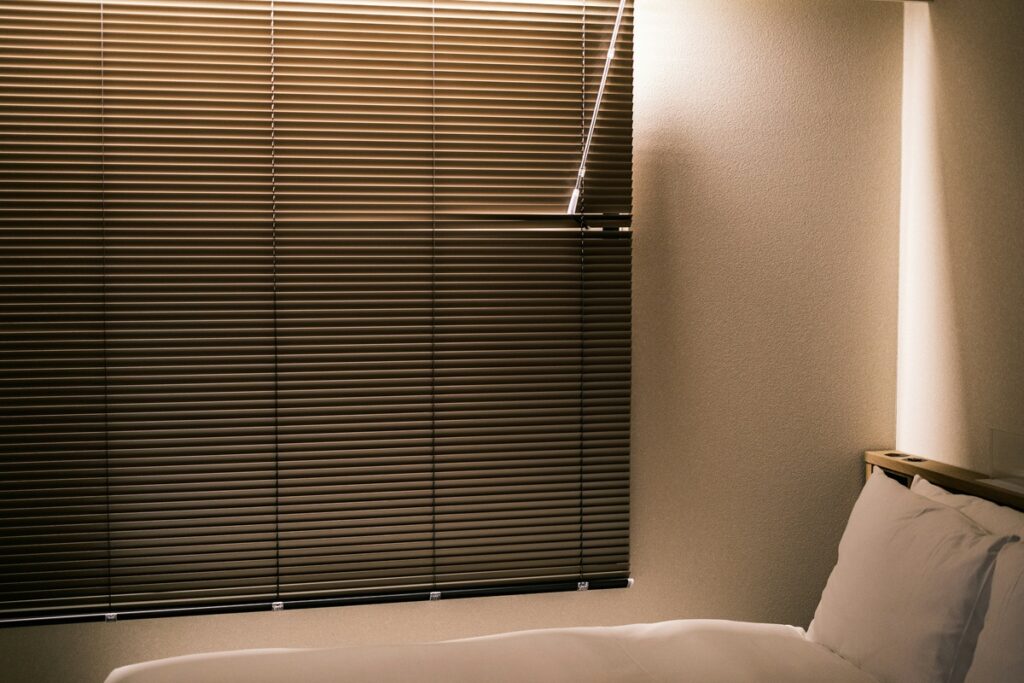
Blinds help with glare and solar gain, but when it comes to insulation, shades like honeycomb cellular do the heavy lifting. If saving energy is your top goal, check out our Window Coverings for the full rundown. Still, you can boost blind efficiency by choosing wider slats and making sure they fit snugly inside the frame. Check for cost of blind installation.
Often Confused With Blinds
Not every product labeled online as “types of window blinds” is actually a blind. Here’s the quick guide:
- Roller Shades – a single fabric panel that rolls up and down.
- Roman Shades – soft folds of fabric that stack neatly.
- Best Cellular Shades – honeycomb design that traps air for insulation.
- Panel Track Shades – wide fabric panels that slide across big openings.
All of these are shades, and not blinds. For the full breakdown, see our complete Window Coverings Guide.
Conclusion
The right types of window blinds depend on your room and goals. Whether you want custom window blinds or affordable blinds, they’re both décor and utility. Check our premium Hunter Douglas roller treatments and a window blind in home consultation can also help finalize your choice. With the right fit, your blinds deliver privacy, comfort, and energy efficiency while upgrading the look of every room.
Check out our full range of Window Blinds at Carolina Shutter & Blinds, and when you’re ready to update your space, just hit Contact Us to schedule a free design consultation.
To explore step-by-step guidance, check out our detailed blog on how to install blinds for a smooth and professional finish.
Frequently Asked Questions
What’s the difference between shades and blinds?
Blinds have slats that tilt for light control. Shades are fabric panels that lift or lower.
What blinds are best for large windows or sliding doors?
Vertical blinds and panel blinds are the best picks for wide windows and sliding glass doors.
Which blinds are best for bathrooms?
Faux wood or aluminum blinds. They resist moisture and clean easily.
What size slats should I pick?
Wider slats look cleaner on large windows, while narrow slats fit smaller spaces.