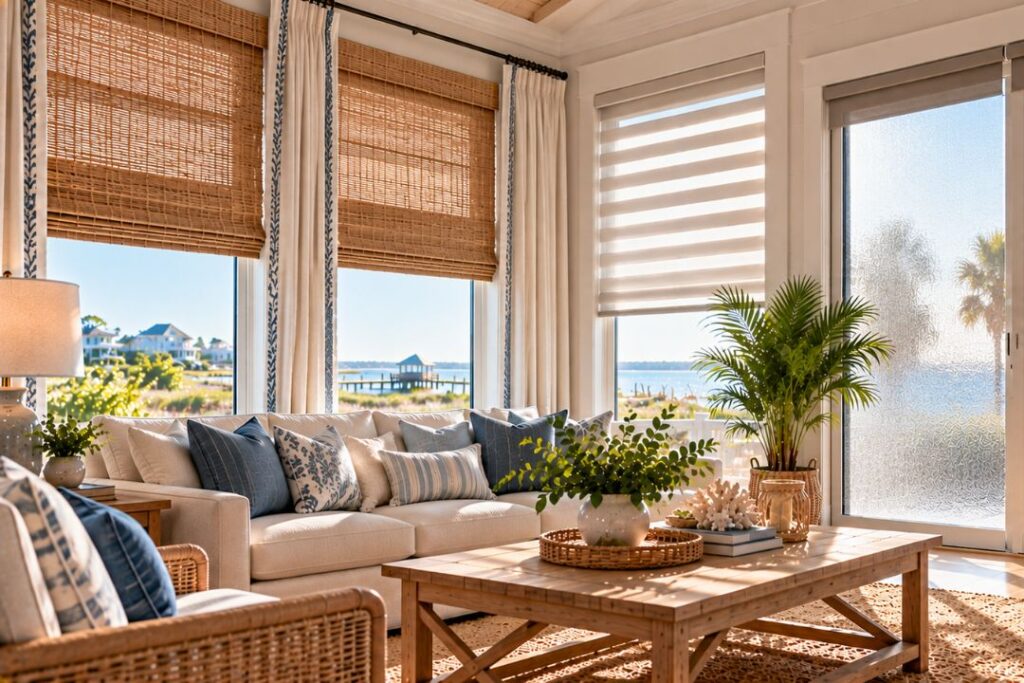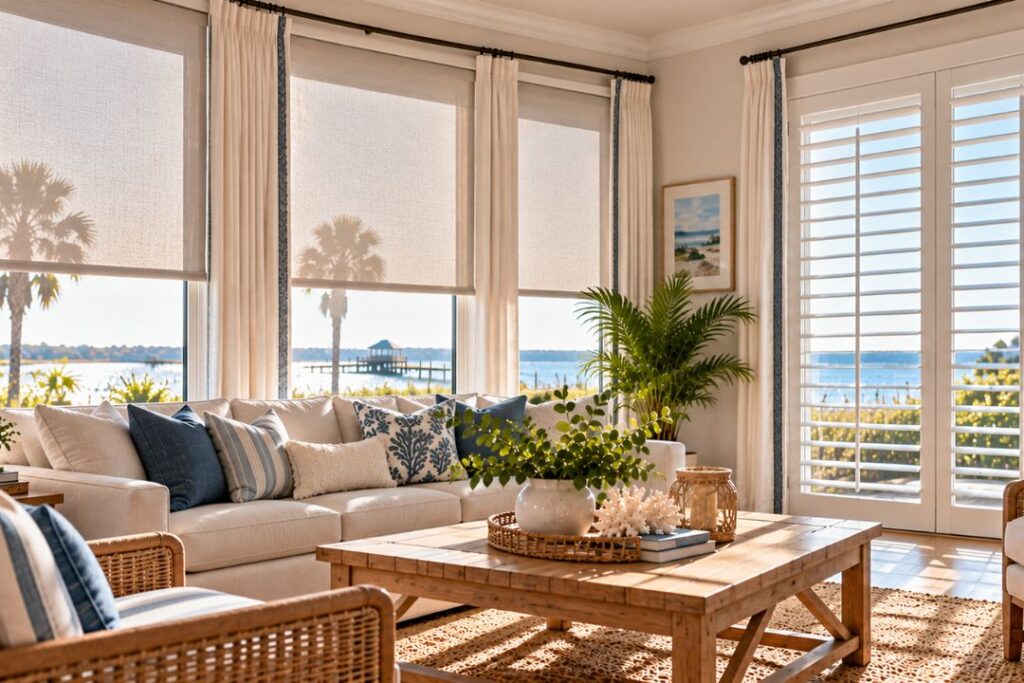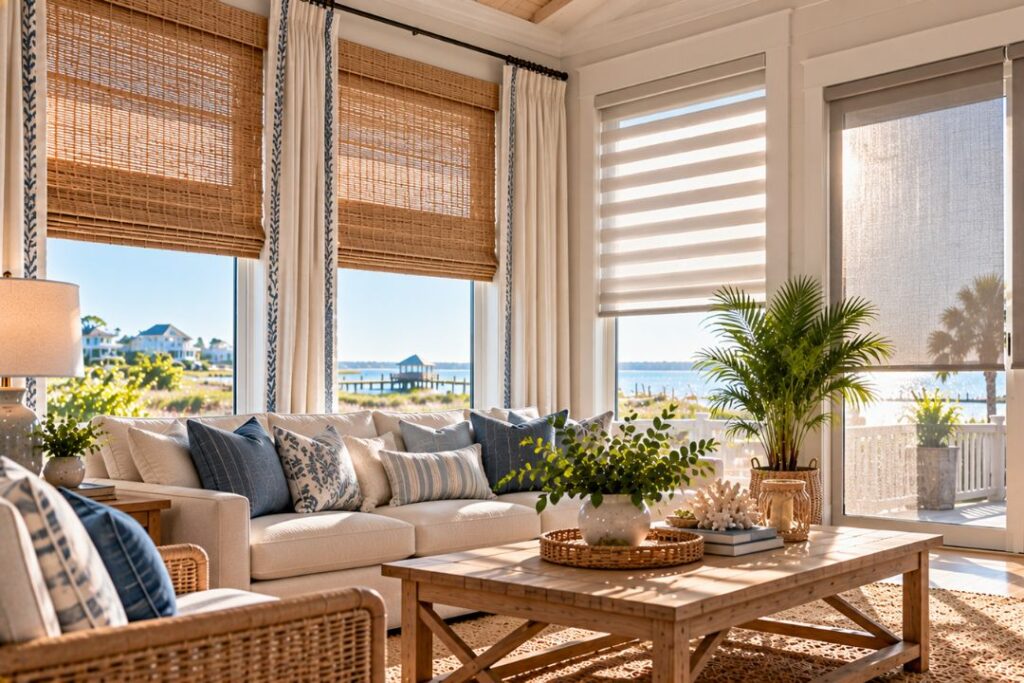
Sunrooms are one of the best features a Piedmont home can have, but they come with a unique challenge. All that glass makes the space feel bright and open, yet it also lets in intense heat, harsh glare, and enough UV rays to fade your favorite furniture. If you have been looking for practical window coverings for sunrooms in Greensboro, NC, you may have come across advice that sounds reasonable but does not always work in real homes. Whether you live in Greensboro, Winston-Salem, or High Point, NC, choosing the right window treatments can help keep your sunroom comfortable without sacrificing natural light or outdoor views. Let us clear up some common myths.
Myth One: Any Blind or Shade Will Handle the Heat
It is tempting to assume that whatever is hanging in your living room will work just fine in the sunroom. In reality, sunrooms face a much tougher job. With windows on three or four sides, the sun tracks across the room all day long, and a thin fabric or basic blind simply cannot keep up.
Tip: Look for materials built specifically for high heat and UV exposure. Cellular shades with a honeycomb structure trap air in their pockets, which slows heat transfer and keeps the room more comfortable during long Greensboro summers. A faux wood blind is another sturdy option since it resists warping in a way real wood cannot under constant sun and temperature swings.
Myth Two: Blocking the Sun Means Losing the View
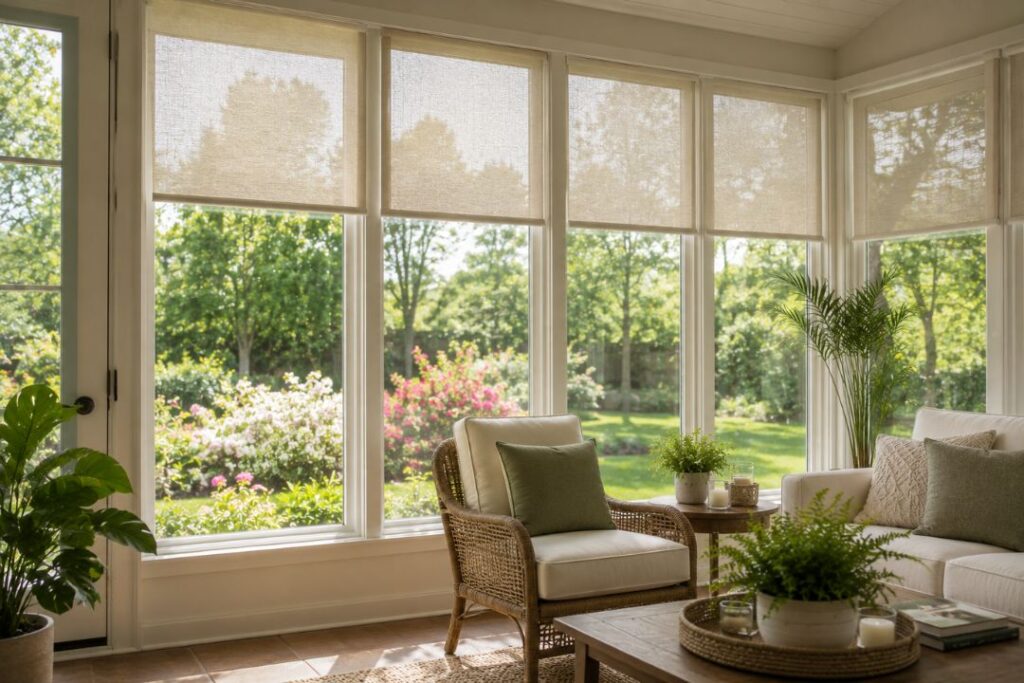
Many homeowners worry that protecting a sunroom from glare means covering the windows completely and losing the reason they built the room in the first place. That is not the case anymore.
Tip: Light filtering shades let you soften harsh rays while still allowing a soft glow and outdoor view to come through. If you want more flexibility, top down bottom up shades are worth exploring because they let you lower the top portion of the shade for privacy and shade while keeping the bottom clear for a view of the yard. This kind of sunroom window treatment approach gives you control without sacrificing the open feeling you were after.
Myth Three: Privacy Is Not a Real Concern in a Sunroom
Because sunrooms often face a backyard, some homeowners assume privacy does not matter as much as it does in a bedroom or living room. But plenty of sunrooms sit closer to neighbors, sidewalks, or shared fence lines than people realize, especially in tighter Greensboro neighborhoods with smaller lot sizes.
Tip: Sheer shading strikes a nice balance here. It diffuses direct light and creates a layer of privacy during the day while still letting the room feel bright rather than closed off. For evenings or moments when you want full privacy, pairing sheer shading with a blackout option in an adjoining space can round out the plan.
Myth Four: One Style Works for Every Window in the Room
A sunroom rarely has uniform windows. You might have tall standard panes on one wall, a slider leading to the patio, and an odd angled window near the roofline. Assuming one product will fit every opening is one of the most common planning mistakes.
Tip: This is exactly why custom window treatments for sunrooms matter so much. Specialty shape shades are designed for arched, angled, or oversized openings that standard sizes cannot cover properly. For sliding glass doors, a wider shade or blind track built for that specific opening keeps operation smooth and prevents gaps where sunlight and heat can sneak through.
Myth Five: Cheaper Materials Save Money Long Term
It is easy to assume that a budget blind will save you money since the upfront cost is lower. In a sunroom, though, cheaper materials often fade, warp, or wear out far faster than they would in a shaded room, which means you end up replacing them sooner.
Tip: Investing in materials rated for direct sun exposure protects your investment over time. Durable shades and blinds hold their color and shape even after years of Greensboro sunshine, which makes them more cost effective across the life of the product than a cheaper option you will replace in a year or two.
Putting These Sunroom Window Treatment Tips Into Practice
Once you look past the common myths, choosing coverings for a sun soaked space becomes far more manageable. Prioritize materials rated for heat and UV, keep flexibility in mind so you never lose your view, and treat every window as its own project rather than a one size fits all decision. These window treatment tips for sunrooms in Greensboro, NCapply whether your sunroom was part of the original build or added later as a renovation.
Frequently Asked Questions
What is the best window treatment for a sunny sunroom?
Cellular shades and faux wood blinds tend to perform best since they resist fading, warping, and heat damage better than lighter fabric options.
Do sunroom window treatments help lower energy costs?
Yes, insulating shades can reduce heat gain in summer and heat loss in winter, easing the load on your home’s cooling and heating systems.
Can I still enjoy natural light with these treatments?
Absolutely. Light filtering and sheer options soften glare while still allowing plenty of natural brightness to fill the room throughout the entire day.
How do I handle oddly shaped sunroom windows?
Specialty shaped shades are built for angled, arched, or oversized openings, giving every window in the room a proper custom fit.
Are motorized options available for hard to reach sunroom windows?
Many shade and blind styles offer motorized operation, which is especially useful for high or hard to reach sunroom windows near tall vaulted ceilings.
Final Thoughts
A sunroom should feel like a retreat, not a greenhouse. By choosing materials designed for heat, glare, and UV exposure instead of relying on whatever you already have on hand, you can keep the space comfortable through every Greensboro season. Ready to stop guessing and plan your sunroom the right way? Reach out to schedule a free in-home consultation and let a local design expert help you choose treatments built for how North Carolina sunshine actually behaves.