Yes, plantation shutters are energy efficient. Their solid construction and custom fit create an insulating barrier at the window that reduces heat gain in summer and heat loss in winter. This eases the load on your HVAC system, helping lower energy bills and keep indoor temperatures more stable year-round.
If certain rooms in your home feel too hot in summer or too cold in winter, your windows are a likely cause. Heat gain and loss through windows account for 25% to 30% of residential heating and cooling energy use, according to the U.S. Department of Energy. Plantation shutters are among the most effective window treatments for reducing that loss.
This guide explains how plantation shutters improve energy efficiency, how they compare to other window treatments, and why many homeowners treat them as a long-term investment.
Key Takeaways
- Plantation shutters reduce both summer heat gain and winter heat loss through windows.
- Their custom fit seals air gaps better than off-the-shelf blinds or curtains.
- Stable indoor temperatures mean your HVAC system runs less, lowering utility costs.
- Wood and composite are the most energy-efficient shutter materials; composite excels in humid climates.
- Professional installation is what locks in the seal and the savings.
Are Plantation Shutters Energy Efficient?
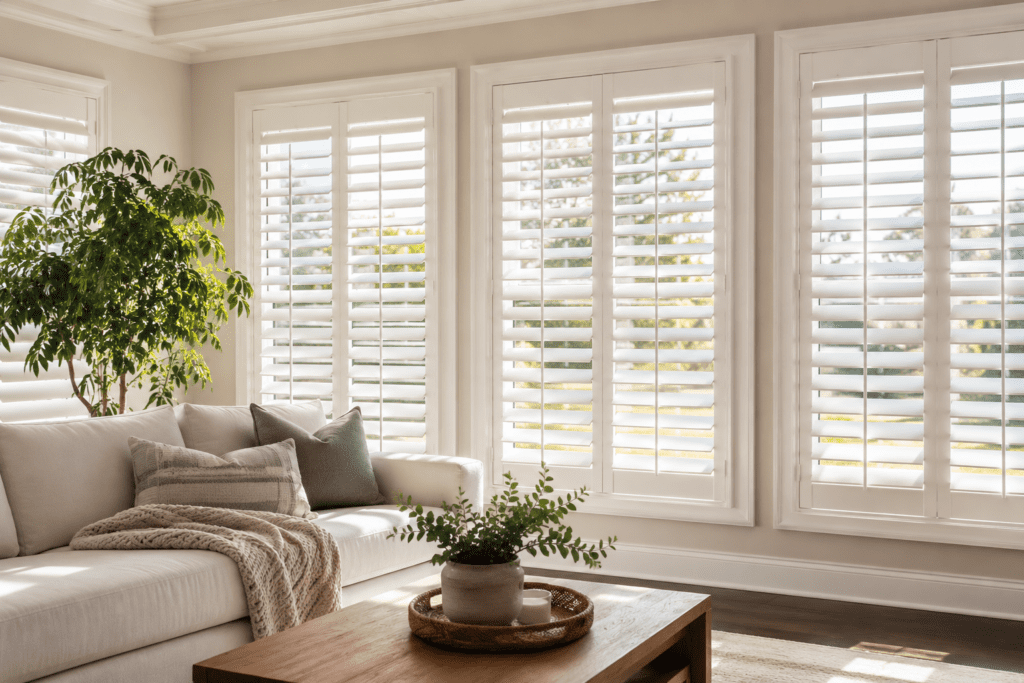
Yes. Plantation shutters are among the most energy-efficient window treatments available. Unlike standard blinds or lightweight curtains, they are built from solid materials and custom-fitted to each window, creating a barrier that reduces heat loss in winter and heat gain in summer.
Because they sit close to the window frame, plantation shutters limit drafts and improve temperature regulation throughout the home. Adjustable louvers let you control sunlight without giving up natural light entirely. For homes across North Carolina and South Carolina, where seasonal swings are significant, that translates to benefits in every season.
How Do Plantation Shutters Reduce Energy Costs?
Plantation shutters lower energy costs by reducing how much heat moves through your windows, which means your heating and cooling systems work less. They do this in three main ways: creating an insulating barrier, improving light control, and reducing HVAC strain.
They Create an Insulating Barrier
When closed, shutters form a protective layer between the glass and the room, limiting the extent to which outside air affects your indoor temperature.
In summer, this:
- Blocks excessive solar heat
- Reduces strain on air conditioning
- Helps maintain cooler indoor temperatures
In winter, this:
- Limits heat loss through the glass
- Helps rooms stay warmer longer
- Supports more efficient heating
They Improve Light Control
Direct sunlight raises indoor temperatures, especially in rooms with large windows. Adjustable louvers let you manage sunlight throughout the day while keeping visibility, reducing reliance on air conditioning and artificial lighting.
They Lower HVAC Usage
When indoor temperatures stay stable, heating and cooling systems cycle less often. Over time, that contributes to noticeable energy savings and lower utility bills.
Plantation Shutters vs. Other Window Treatments
Plantation shutters outperform most window treatments on energy efficiency because of their custom fit and solid construction. The table below compares them to common alternatives.
| Window Treatment | Insulation Performance | Fit | Typical Lifespan |
| Plantation shutters | High | Custom-fitted, tight seal | Decades |
| Standard blinds | Low to moderate | Off-the-shelf, gaps common | Several years |
| Cellular shades | Moderate to high | Inside-mount, good seal | Several years |
| Curtains and drapes | Low to moderate | Loose, drafts common | Varies |
Why the Custom Fit Matters
Unlike off-the-shelf blinds, plantation shutters are made for each specific window. That custom fit minimizes gaps where air can enter or escape, creating a tighter seal and improved insulation performance.
Durable Construction
Plantation shutters are typically made from hardwood, composite materials, or engineered wood. These insulate better than lightweight alternatives and continue to perform for many years.
Which Plantation Shutter Material Is Most Energy Efficient?
Both wood and composite plantation shutters offer strong insulation, but the best choice depends on your climate. Composite is often preferred in humid regions for its moisture resistance, while wood offers natural thermal performance and timeless appeal.
Composite Plantation Shutters
Popular in humid climates because they resist moisture, warping, and temperature swings. Benefits include:
- Excellent insulation
- Moisture resistance
- Easy maintenance
- Long-term durability
Wood Plantation Shutters
Real wood offers natural insulating qualities and classic style. Advantages include:
- Strong thermal performance
- Natural beauty
- Excellent light control
- Long lifespan with proper care
What Are the Comfort Benefits Beyond Energy Savings?
Beyond lower bills, plantation shutters improve daily comfort by reducing glare, increasing privacy control, and evening out hot and cold spots in a room.
- Reduced glare: Adjustable louvers manage harsh sunlight on screens without fully darkening the room.
- Improved privacy: Tilt the louvers to keep privacy while letting natural light in.
- More balanced rooms: Many homeowners notice fewer hot and cold spots after installation.
Do Plantation Shutters Add Home Value?
Plantation shutters are often viewed as a premium, value-adding upgrade. Because they are custom-built and typically considered a permanent fixture, buyers tend to appreciate the lower energy costs, custom craftsmanship, and lasting durability they offer.
This is one reason homeowners researching energy-efficient upgrades often choose shutters over temporary window treatments.
Why Professional Installation Matters
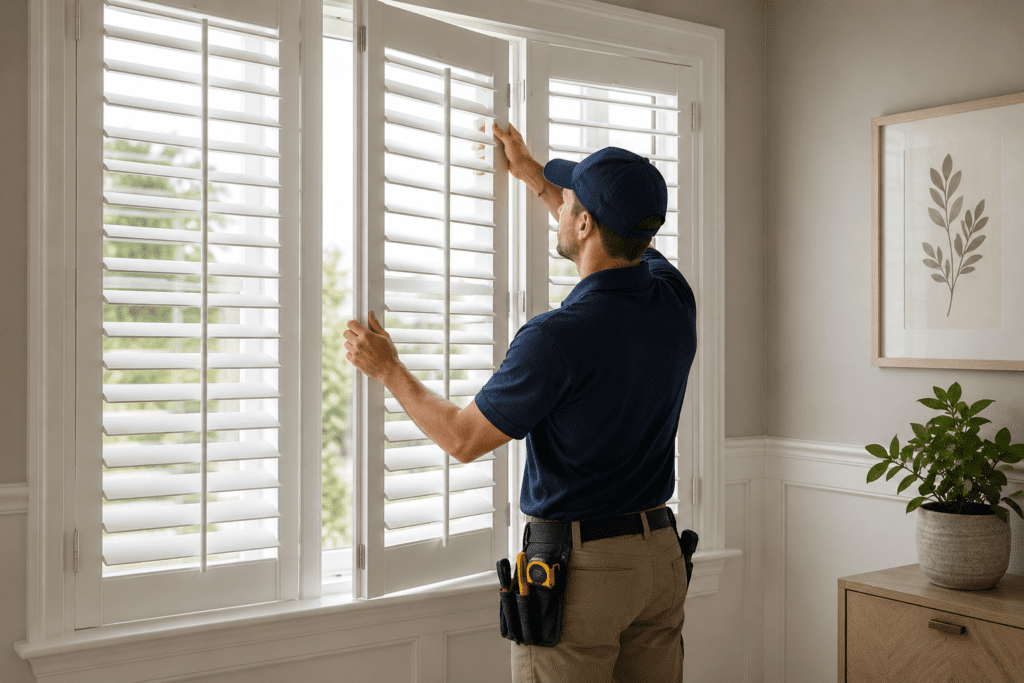
Even high-quality shutters underperform if installed incorrectly. Professional installation maximizes efficiency through accurate measurements, proper alignment, secure mounting, minimal air gaps, and smooth operation.
At Carolina Shutter & Blinds, every installation is tailored to the home’s exact dimensions, so shutters perform as intended and look clean and finished.
Are Plantation Shutters Worth the Investment?
For most homeowners, yes. Plantation shutters combine benefits few window treatments can match: energy savings, improved comfort, better light control, enhanced privacy, increased home appeal, and long-term durability. Because they keep delivering value year after year, they function as a practical investment rather than a purely decorative purchase.
Conclusion
Are plantation shutters energy efficient? Absolutely. Their custom-fit, insulating construction, and sunlight control make them among the most effective window treatments for improving comfort and reducing energy waste.
If you are considering shutters for your home, the team at Carolina Shutter & Blinds can help you explore options that fit your style, goals, and budget. Contact us today to schedule a consultation and find the right plantation shutter solution for your space.
Frequently Asked Questions
Do plantation shutters really help reduce energy bills?
Yes. Plantation shutters minimize heat gain and loss through windows, reducing the workload on heating and cooling systems and helping lower energy bills.
Are plantation shutters better than blinds for insulation?
In most cases, yes. Plantation shutters provide a more substantial barrier and a custom fit, which generally improves insulation compared to standard off-the-shelf blinds.
Which plantation shutter material is most energy efficient?
Both wood and composite offer strong insulation. Composite is often preferred in humid climates for its moisture resistance, while wood provides natural thermal performance.
Can plantation shutters help keep a house cooler in summer?
Yes. Adjustable louvers block direct sunlight and reduce solar heat gain, helping maintain cooler indoor temperatures.
How long do plantation shutters typically last?
With proper care and professional installation, plantation shutters can last for decades, making them one of the longest-lasting window treatment options available.