By July, most Raleigh patios go quiet by mid-morning. The furniture is beautiful, the grill is ready, and the sun makes the whole space unusable until the evening shadows finally roll in.
An umbrella helps for an hour or two. It doesn’t solve the bigger problem, which is why more homeowners are looking at exterior shades for patio spaces as a real fix rather than a temporary patch.
The difference shows up fast. A patio that used to sit empty from ten in the morning until dinner suddenly becomes usable for coffee, lunch, and everything in between.
Why Raleigh Patios Need More Than an Umbrella
Raleigh sits in that tricky zone where summer sun is intense, humidity holds heat in the air well past sunset, and afternoon storms roll through with little warning. A patio built for relaxing can end up used only a handful of hours a week.
Exterior shades solve three separate problems at once: they cut heat before it radiates off the concrete, they screen the space from neighbors and the street, and they block the UV exposure that fades furniture and makes long afternoons uncomfortable.
Comfort: Cutting the Heat Before It Ever Reaches You
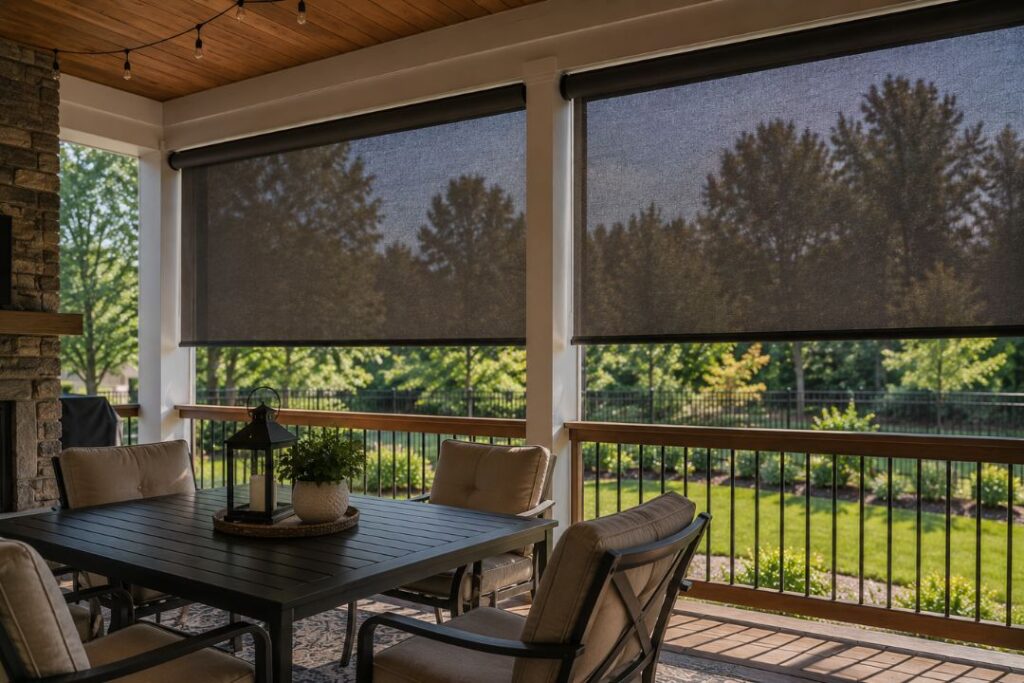
The biggest difference between an indoor shade and exterior shades for patio installations is timing. Interior blinds block sun after it has already passed through the glass and heated the room. Exterior shades stop that heat before it ever reaches the space.
Quality solar fabric can block a large majority of solar heat, which changes a patio from unbearable by noon into a space that’s still comfortable well into the afternoon. That difference alone is often what convinces homeowners to make the investment.
A Simple Way to Picture It
Think of exterior shades as a sunglasses layer for your whole patio rather than a single window. The same sun exposure, dramatically softened before it ever touches your skin, furniture, or flooring.
This is the piece most homeowners underestimate when comparing exterior shades for patio options against simply adding a bigger umbrella or a shade sail. Coverage from a fixed shade stays consistent no matter where the sun sits throughout the day.
Privacy: Screening Your Space Without Boxing It In
Many Raleigh homes sit close enough to neighbors or a busy street that patio privacy becomes its own challenge. Fencing helps, but it’s permanent, often requires approval, and can block airflow along with an open view.
Exterior shades solve this differently. Lowered partway or fully, they screen sightlines from outside while many fabrics still let you see out, keeping the space from feeling closed in the way a solid wall or full fence often does.
This works especially well for homes with patios facing a shared side yard, a walking path, or a pool area where a bit of separation matters without losing the open feel of outdoor living.
Sun Protection: What Blocking UV Actually Means Out Here
Sun protection on a patio isn’t only about comfort in the moment. UV exposure fades outdoor furniture cushions, warps wood finishes, and breaks down fabric on umbrellas and cushions faster than most homeowners expect.
Exterior shades reduce that UV exposure significantly, which extends the life of everything sitting under them. For homeowners who’ve invested in nice patio furniture, that protection often pays for itself over a few seasons of reduced fading and wear.
Choosing the Right Fabric Openness for Your Patio
Fabric openness determines how much you can see through the shade when it’s lowered, and it’s one of the most overlooked decisions homeowners make. A tighter weave blocks more heat, glare, and view. A more open weave lets in more light and visibility while still cutting a meaningful amount of sun.
Patios that double as an outdoor living room, where you want to relax without feeling shut off from the yard, generally do better with a mid-range openness. Patios facing intense afternoon sun or a busy street often benefit from a tighter weave instead.
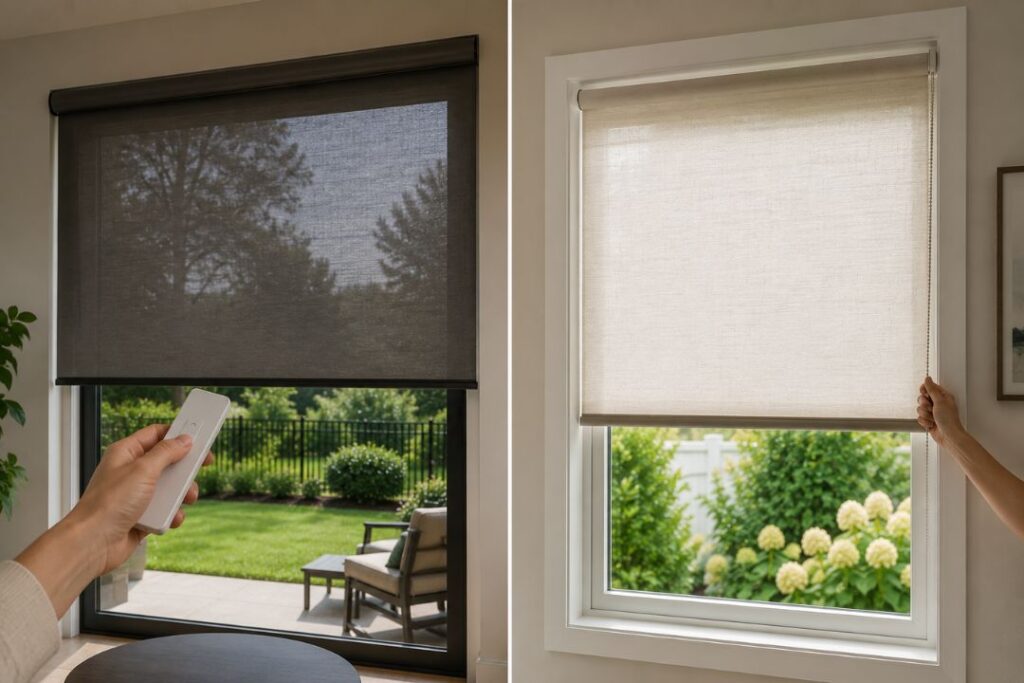
Motorized vs Manual: Which Fits Your Routine
Manual exterior shades cost less and work well for patios where the shade stays in roughly the same position most of the season. They’re simple, reliable, and require no wiring or app setup.
Motorized options make sense for larger openings, higher mounting points that are hard to reach by hand, or homeowners who want the shade to respond automatically to sun and wind conditions throughout the day.
Either way, the lift mechanism doesn’t change the core performance. Comfort, privacy, and protection come from the fabric and installation, not whether you’re reaching for a crank or a remote.
Frequently Asked Questions
Do exterior shades actually keep a patio noticeably cooler?
Yes, quality solar fabric blocks a large share of heat before it reaches the space, making a real difference on hot Raleigh afternoons.
Can I still see my yard with the shades down?
Depending on fabric openness, many exterior shades let you see through while screening direct sightlines from outside for added privacy.
Are exterior shades durable enough for NC weather?
Yes, quality weatherproof fabrics are built to handle sun, humidity, wind, and rain without losing shape or color over time.
Do I need motorized shades, or is manual enough?
Manual works well for most patios. Motorized suits larger openings or hard-to-reach mounting points where daily adjustment isn’t practical.
Will exterior shades protect my patio furniture from fading?
Yes, reducing UV exposure significantly slows fading and wear on cushions, wood finishes, and umbrella fabric over time.
Making Your Patio Work for the Whole Season
The right exterior shades for patio spaces turn a beautiful but unusable area into somewhere you actually spend your evenings, weekends, and dinners outside. Comfort, privacy, and sun protection all come from the same simple upgrade.
If your patio has been sitting empty most of the summer, we’re glad to come take a look and show you exactly how much of that changes with the right shade in place.