
Two homeowners can walk into the same showroom with the exact same window measurements and leave with completely different shades. One picks a soft honeycomb texture. The other picks a clean, flat roll of fabric.
Neither choice is wrong, but they solve different problems. This breakdown puts cellular shades vs roller shades side by side so you can see exactly where each one pulls ahead.
Rather than picking a favorite upfront, we’ll go category by category, since the right answer depends on the specific room, window, and priority you’re solving for.
The Short Answer First
If insulation and energy performance matter most, cellular shades usually come out ahead. If a clean, minimal look and simple operation matter most, roller shades typically win.
Most NC homeowners land somewhere in between, which is exactly why the details below matter more than a single blanket recommendation.
How Each One Is Actually Built
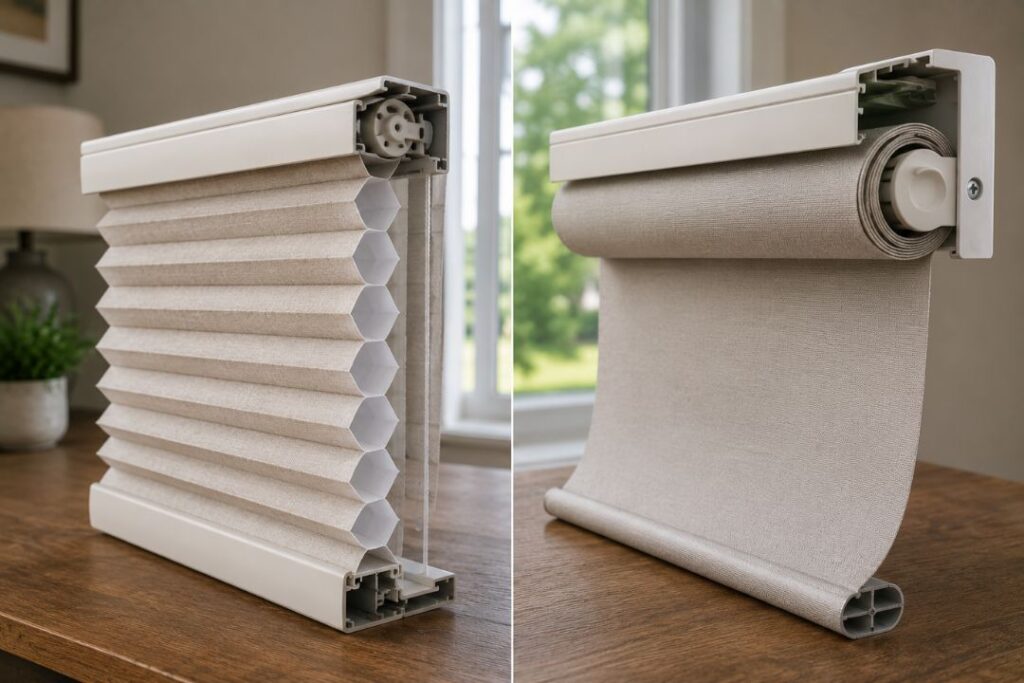
Cellular shades fold into rows of hexagonal pockets that trap air between the fabric layers. That structure is what gives them their nickname, honeycomb shades, and their insulating properties.
Roller shades are a single flat piece of fabric that winds around a tube at the top of the window. There’s no air pocket involved, just one continuous layer that raises and lowers in a straight sheet.
That structural difference explains nearly every other comparison point that follows.
It also explains why the two products often get grouped together in showrooms despite performing so differently once installed. On the surface, both simply raise and lower over a window. Underneath, they solve the light and insulation problem in almost opposite ways.
Round One: Insulation and Energy Performance
This is where cellular shades vs roller shades stops being close. The trapped air inside cellular shades acts as a buffer against heat and cold, which matters in NC homes facing both humid summers and occasional winter cold snaps.
Roller shades offer some light blocking and mild insulation depending on fabric thickness, but they don’t trap air the way a honeycomb structure does. For west-facing rooms or older windows with weaker seals, that difference shows up directly on the energy bill.
Winner: Cellular shades, especially for rooms with heavy sun exposure or drafty older frames.
Round Two: Light Control and Privacy
Roller shades come in a wide range of opacities, from sheer to full blackout, giving homeowners precise control over exactly how much light enters a room. The flat fabric also blocks sightlines cleanly when fully lowered.
Cellular shades offer similar opacity ranges and add one advantage: many styles are available in top-down bottom-up configurations, covering the bottom of a window for privacy while keeping the top open for light.
Winner: Tie, with cellular shades pulling ahead specifically for windows that need privacy and daylight at the same time.
Round Three: Style and Room Fit
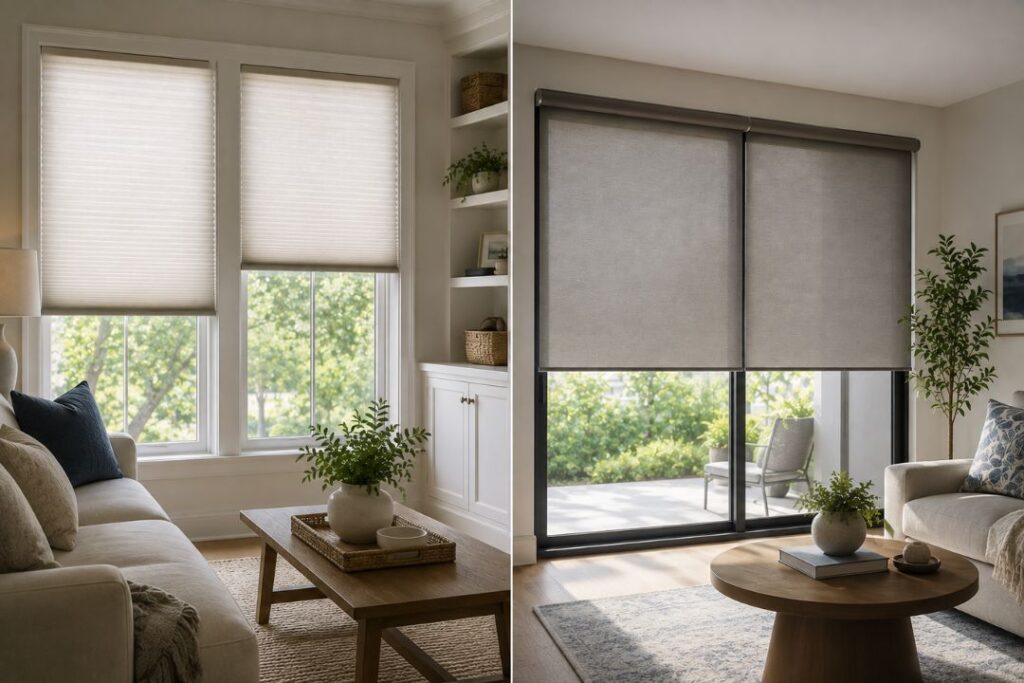
Roller shades bring a clean, tailored look that fits modern and minimalist interiors particularly well. Their flat profile stays nearly invisible against the window frame when raised.
Cellular shades bring texture and a slightly softer visual, which tends to suit traditional or transitional rooms. Their pleated structure also stacks more compactly at the top when fully raised than many people expect.
Winner: Personal preference, since this category comes down to the room’s existing style more than performance.
Round Four: Price and Long-Term Value
Roller shades generally cost less upfront, especially in simpler fabric grades and manual lift styles. They’re a strong option for homeowners furnishing several rooms on a set budget.
Cellular shades often cost more per window, particularly in double cell or blackout configurations, but the insulation benefit can offset part of that cost through lower heating and cooling expenses over time.
Winner: Depends on your priority, upfront savings versus long-term energy value.
It’s worth running both scenarios for your actual windows rather than assuming one option is cheaper. Window size, fabric grade, and lift style can shift the math more than the base material choice does.
Which One Actually Fits Your NC Home
Homes with older, single-pane windows or rooms that run hot in summer tend to benefit most from cellular shades. The insulation gain is simply more noticeable where the existing window performs poorly on its own.
Newer construction with efficient windows has more flexibility to prioritize roller shades for their clean look and simpler price point, since the energy gap between the two options narrows in better-built homes.
That said, even efficient homes have exceptions, particularly sunrooms, bonus rooms, or additions where insulation was an afterthought during construction.
Many homeowners end up mixing both, choosing cellular shades for bedrooms and sunrooms while using roller shades in living areas and kitchens where style takes priority over insulation.
Frequently Asked Questions
Which is better for reducing energy bills, cellular or roller shades?
Cellular shades generally perform better here due to their insulating air pockets, especially in rooms with significant heat gain.
Are roller shades easier to clean than cellular shades?
Yes, their flat surface makes dusting and spot cleaning simpler compared to the pleated folds of cellular shades.
Can I use both styles in the same home?
Absolutely. Many homeowners choose cellular shades for bedrooms and sunrooms while using roller shades in living spaces.
Do cellular shades really block more heat than roller shades?
In most cases, yes, thanks to the trapped air layer, though thick blackout roller fabric can partially close that gap.
Which option works better for large picture windows?
Roller shades often handle large expanses more smoothly, while cellular shades add insulation value worth considering for west-facing exposures.
Making the Final Call
Choosing between cellular shades vs roller shades really comes down to what your home needs most, whether that’s energy performance, a clean aesthetic, or some balance of both. Neither option is a wrong turn.
Bring us your windows and your priorities, and we’ll help you land on the option that actually fits how each room in your home is used every single day.