If you’ve started shopping for window treatments, you’ve probably run into the term honeycomb more than once. It shows up everywhere, but the details behind it rarely get explained clearly.
Between different cell sizes, fabric opacities, and lift mechanisms, comparing honeycomb shades for windows across a few showrooms can start to feel more confusing than helpful. This guide is meant to clear that up before you make a purchase.
This guide breaks down exactly what honeycomb shades for windows are, the styles available, and what North Carolina homeowners can expect to pay before making a decision.
What Honeycomb Shades Actually Are
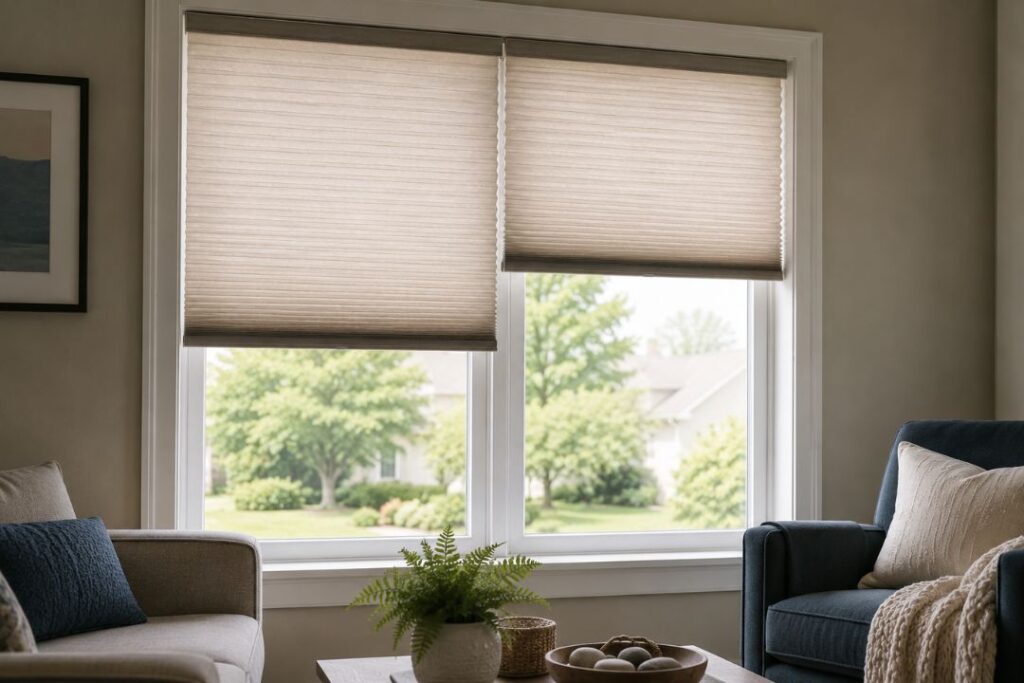
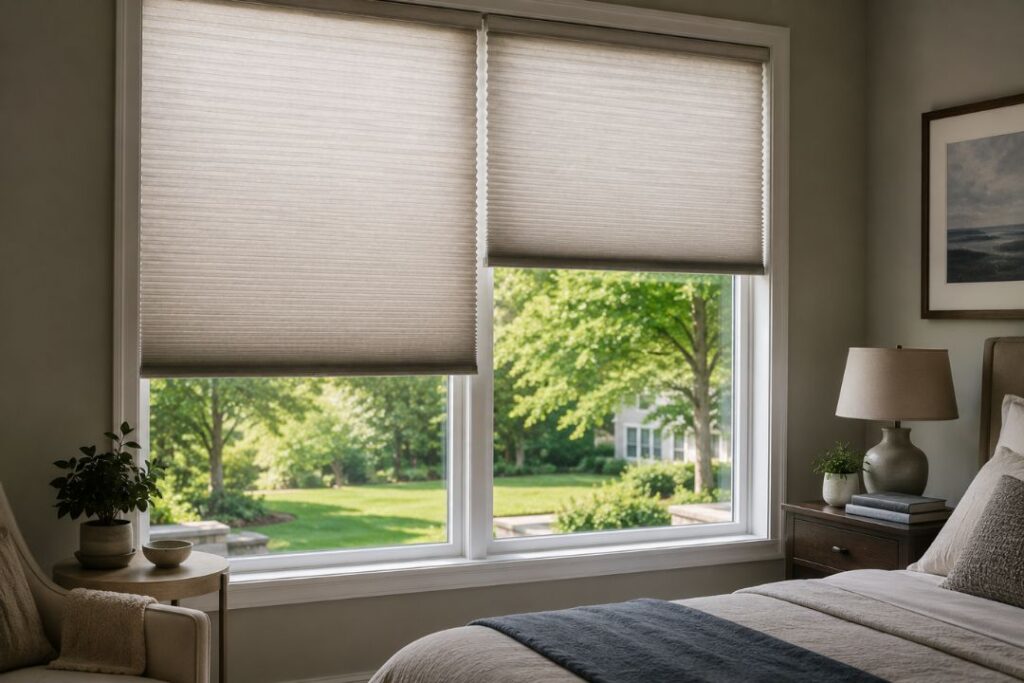
The name comes from the shape, not a marketing gimmick. Fabric is pleated and sealed into rows of hexagonal cells that trap a layer of air between the glass and the room.
That trapped air acts as insulation, which is why honeycomb shades are also called cellular shades. For North Carolina homes dealing with humid summers and cold snaps in winter, this insulating layer does real work beyond light control.
Unlike a flat fabric roller shade, the pleated structure gives honeycomb shades a built-in air gap that keeps working even after years of daily use. That’s a meaningful difference for homeowners comparing options purely on their first look in a showroom.
Styles Worth Comparing Before You Buy
Not all honeycomb shades are built the same way. Three main choices shape how they perform and what they cost.
Single Cell vs Double Cell
Single cell shades have one row of hexagonal pockets and offer a slimmer, lower-profile look. Double cell shades stack two rows, adding more trapped air and noticeably better insulation.
For rooms with large windows or poor existing insulation, such as sunrooms or older additions common in NC homes, double cell construction usually earns back its higher price through comfort alone.
Light Filtering vs Blackout
Light filtering fabric softens harsh sun while still letting the room stay bright, which works well in living rooms and kitchens. Blackout fabric blocks light almost entirely, making it a better match for bedrooms and media rooms.
Some homeowners choose light filtering for most of the house and blackout only where full darkness matters, rather than picking one fabric type for every room.
Lift Style: Standard, Top-Down Bottom-Up, or Motorized
Standard lift shades raise fully from the bottom, similar to most blinds. Top-down bottom-up versions can drop from the top instead, covering a window for privacy while still letting light in above.
Motorized honeycomb shades add remote or app control, which is popular for hard-to-reach windows, skylights, or homeowners who simply prefer not to manage cords by hand.
What Honeycomb Shades for Windows Typically Cost
Pricing depends heavily on cell type, fabric, and lift system, so there’s no single number that fits every home. As a general range, expect somewhere between roughly $70 and $350 per window installed for standard single cell or double cell options.
Larger windows, blackout fabric, or motorization can push individual shades toward the higher end of that range or beyond it. A whole-home project with a dozen or more windows typically sees per-window pricing drop slightly through combined labor and material efficiencies.
The most accurate number always comes from an in-home measurement, since window size, mounting depth, and fabric choice all shift the final total.
It’s worth treating any online price range as a starting point rather than a quote. Two homes with the same number of windows can land on very different totals once mounting style, fabric grade, and lift preferences enter the picture.
What to Check Before You Commit
A few details separate a good honeycomb shade purchase from one you’ll want to redo within a year or two.
- Confirm whether the fabric is light filtering, room darkening, or true blackout
- Ask about cordless or motorized options if there are children or pets in the home
- Check the mounting depth needed, especially for shallow window frames
- Compare warranty coverage on the fabric and lift mechanism, not just the frame
Skipping any of these details is usually where buyer’s remorse comes from later, particularly around fabric opacity and mounting clearance issues that only show up after installation.
Are Honeycomb Shades Right for Your NC Home
Honeycomb shades tend to make the most sense for homeowners who want genuine energy performance alongside light control, not just a decorative window covering. Older homes with single-pane windows often see the clearest comfort improvement.
Newer, well-insulated homes still benefit, particularly in rooms with large glass or western exposure that takes on heavy afternoon heat. For homeowners weighing several window treatment options at once, honeycomb shades usually offer the strongest combination of insulation and everyday light control.
Frequently Asked Questions
Are honeycomb shades worth the extra cost over blinds?
For rooms needing insulation and light control together, yes. The energy savings and comfort often offset the higher upfront price.
Do honeycomb shades work well in humid NC climates?
Yes, quality fabric resists moisture damage better than many blind materials, making them a solid choice for humid regions.
Can honeycomb shades block a room out completely?
Blackout fabric options can fully block light, while light filtering versions soften sun without eliminating natural brightness in the room.
Is motorization worth adding to honeycomb shades?
It’s most valuable for hard-to-reach windows, skylights, or households prioritizing convenience and cordless safety for children or pets.
How long do honeycomb shades typically last?
Quality custom shades often perform well for a decade or more with proper care and minimal exposure to direct moisture.
Making the Right Choice for Your Windows
Choosing among honeycomb shades for windows comes down to matching cell type, fabric, and lift style to how each room in your home actually gets used. There’s rarely a single right answer for every window.
We’re happy to walk through samples, mounting options, and pricing specific to your windows so you can make this decision with real numbers in hand rather than guesswork, room by room.