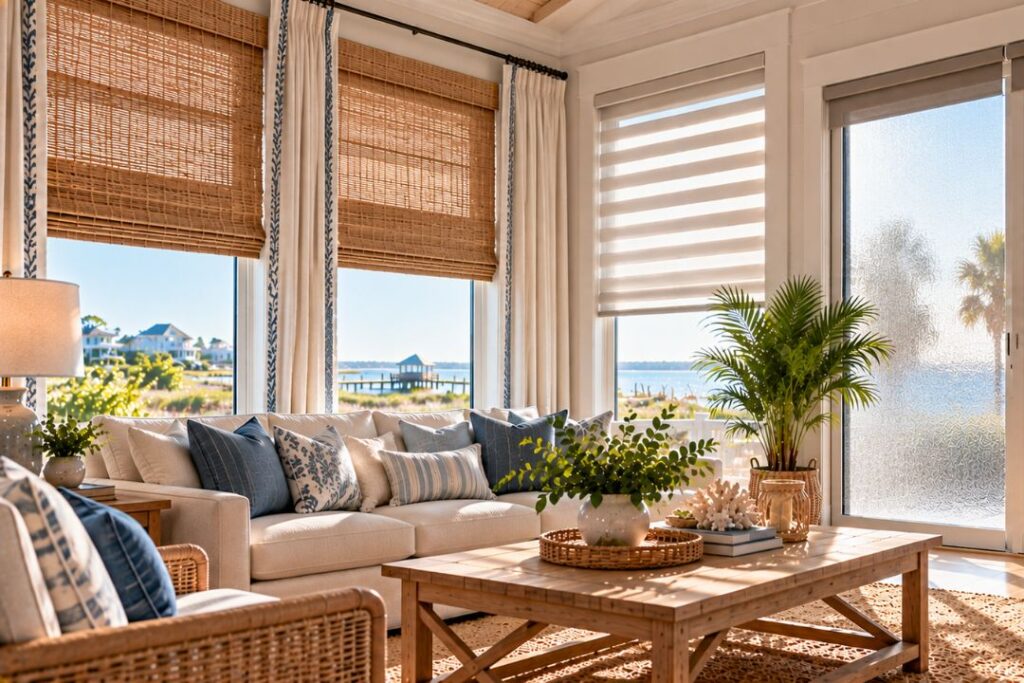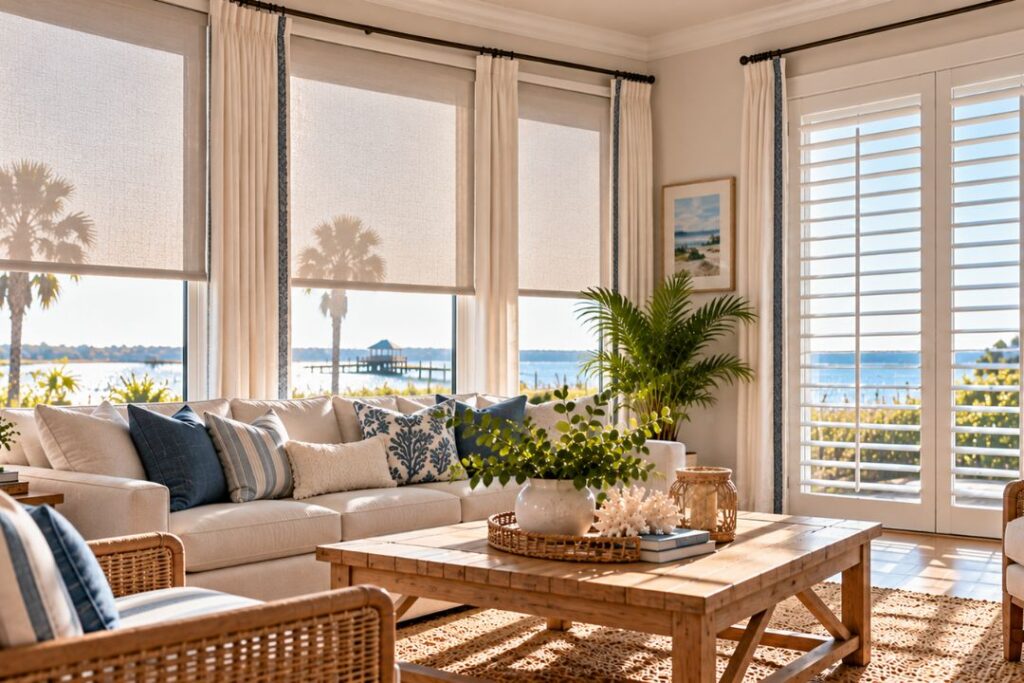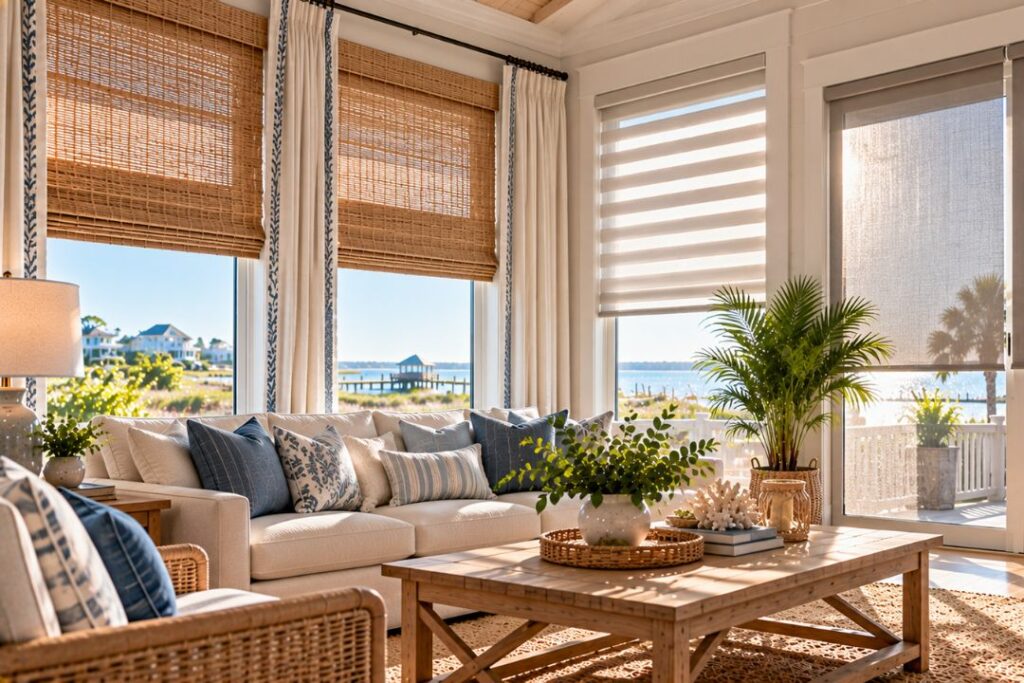
Learning how to reduce window glare comes down to softening light instead of blocking it. Choose light-filtering shades, solar shades, or adjustable shutters, then layer sheers or tilt louvers as the sun moves. Wilmington homes get long sunny stretches, so fabric density and openness matter.
What Causes Window Glare in Wilmington Homes?
Glare happens when direct or reflected sunlight is much brighter than the rest of the room. Low sun, glossy surfaces, and large glass doors all make it worse.
Our Wilmington window shades page notes that coastal humidity, salt air, and long stretches of sun put real demands on window treatments. For homeowners, that often means squinting at a screen or fading furniture long before the afternoon is over.
How Do You Find the Source of Your Glare?
Watch the room at three times of day and note which window, surface, or screen is affected. The right fix depends on whether the glare is direct, reflected, or on a screen.
Direct Sun at the Window
Low morning or evening sun hits east and west glass at a sharp angle. When covering windows exposed to direct sun, tilting louvers or a light-filtering shade can soften harsh sunlight and reduce glare without closing the room off.
Reflected Light
Glossy floors, mirrors, and glass tables bounce light across a room. Lowering a shade a few inches often helps more than covering the whole window.
Screen Glare
A monitor or TV facing a window needs controlled light, not darkness. Our guide to solar shades for NC windows explains how they cut glare while keeping the view.
Which Window Treatments Reduce Glare Without Darkening a Room?
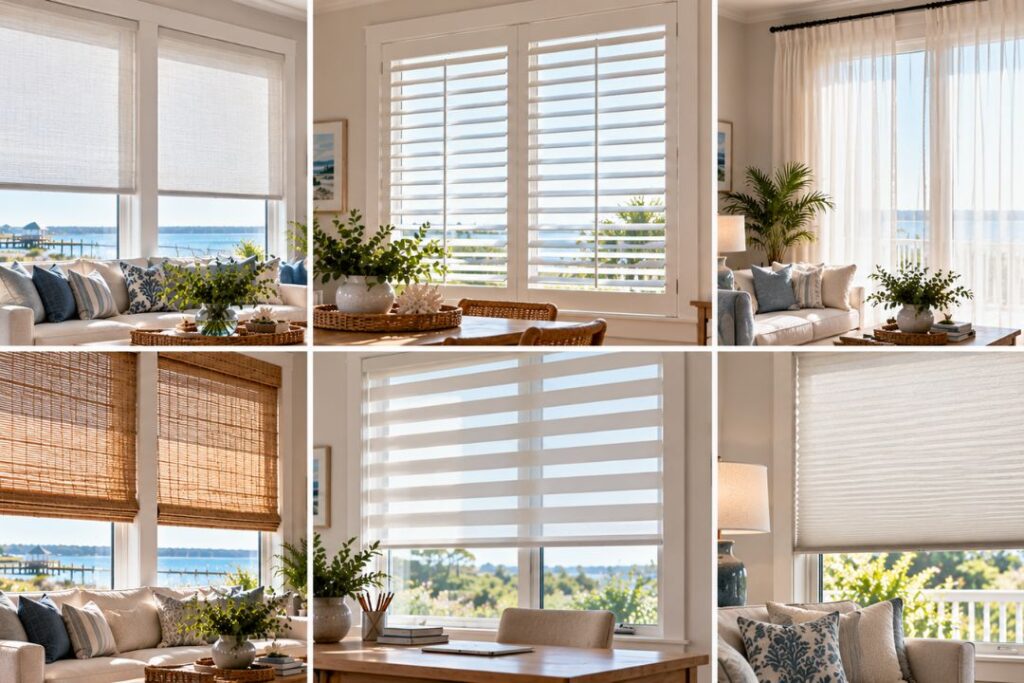
Light-filtering shades, solar shades, and adjustable shutters or blinds reduce glare while keeping daylight. Blackout fabric works against that goal in daytime rooms.
Light-Filtering Shades
These shades use sheer fabric with different opacity levels to diffuse sunlight, creating soft ambient light without complete darkness. Our light-filtering shades are a strong fit for living rooms and kitchens. If you are unsure which fabric to pick, compare light filterilight-filtering shades.
Solar Shades
Solar shades are rated by openness factor. A lower number blocks more light and adds privacy, while a higher number preserves more of the view and daylight. Match the rating to the room, not just the window.
Plantation Shutters
Tilting louvers let you aim light where you want it, and you can open them fully on cloudy days. Our plantation shutters in Wilmington are offered in PVC and wood, built with coastal conditions in mind.
Blinds
Blinds give precise slat control, so you can angle light toward the ceiling and away from eyes and screens. Our window blinds in Wilmington include faux wood, wood, aluminum, and mini-blind options.
Can You Layer Treatments for Better Glare Control?
Yes, layering is one of the most flexible fixes. A sheer panel softens daytime light, while a shade or drapery behind it handles harsher sun and privacy.
Anyone wondering how to reduce window glare in a room that changes through the day should consider layers first. Our ideas for layering sheer curtains with blinds show the combinations. Our custom draperies in Wilmington include sheers and linens, with lining options.
Sliding doors need extra thought, since they are large and used daily. See our guide to window treatments for sliding glass doors.
What Should You Check Before Choosing a Glare Solution?
Check the window’s direction, how you use the room, and the fabric’s openness or opacity. Then test a sample at your own window at different times of day.
- Direction: East windows peak in the morning, and west windows in the late day.
- Room use: Home offices and media rooms need steadier light than hallways.
- Privacy: More open fabrics keep the view but can show more at night.
- Care: Fabrics and finishes clean differently, so ask before you order.
Knowing how to reduce window glare also means knowing what you want to keep: the view, the daylight, or the privacy.
Ready to Get the Glare Under Control?
Carolina Shutter and Blinds offers a free in-home window treatment consultation, where we measure your windows and talk through shades, shutters, and fabrics. You can also see our Wilmington window treatment page for local options.
Questions first? Contact our team to discuss your options. Once you know how to reduce window glare in each room, bright afternoons become far easier to enjoy.
Frequently Asked Questions
Can I cut glare without fully closing my blinds?
Yes, tilting slats or louvers upward cuts direct glare while keeping daylight. Light-filtering shades and sheers also soften light without blocking it completely.
What is the best window treatment for glare?
Light-filtering shades and solar shades are among the best choices for glare. They diffuse or filter sunlight while keeping the room bright. Adjustable shutters work well when you want to change the angle through the day.
Do solar shades reduce glare?
Yes, solar shades reduce glare while keeping most of the outside view. The openness factor decides how much light and view remain.
How do I reduce glare on a TV or monitor without making the room dark?
Use a light-filtering or solar shade on the window facing the screen. These soften incoming light instead of blocking it. Adjustable slats or louvers can also redirect light away from the screen.
Will light-filtering shades make my room dark?
No, light-filtering shades soften sunlight rather than blocking it. The room stays bright, with less harsh glare. Blackout shades darken a room.