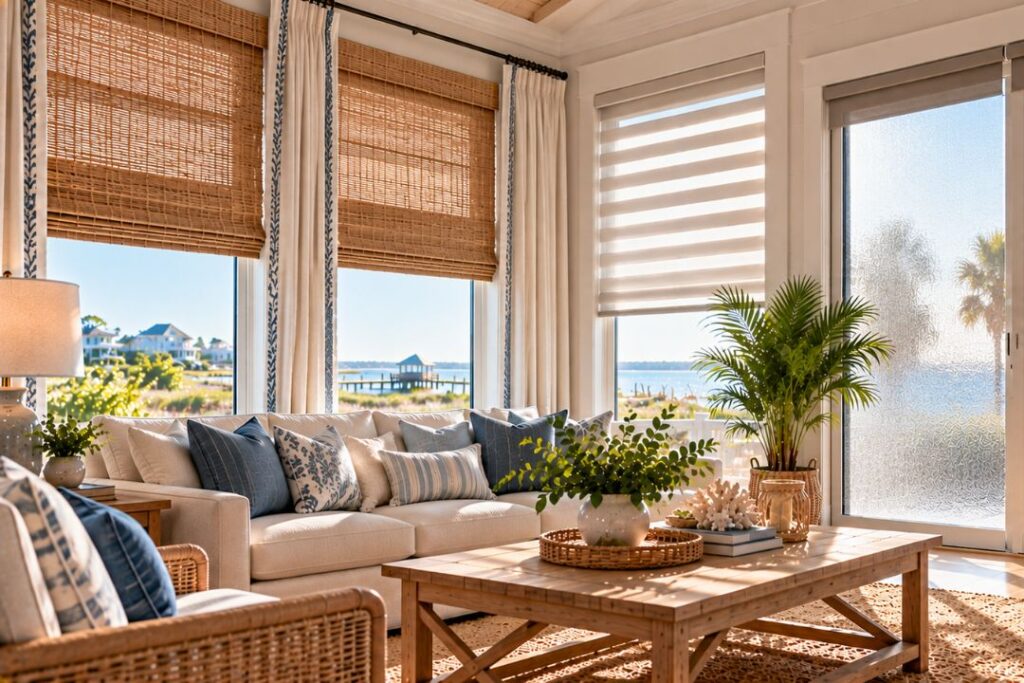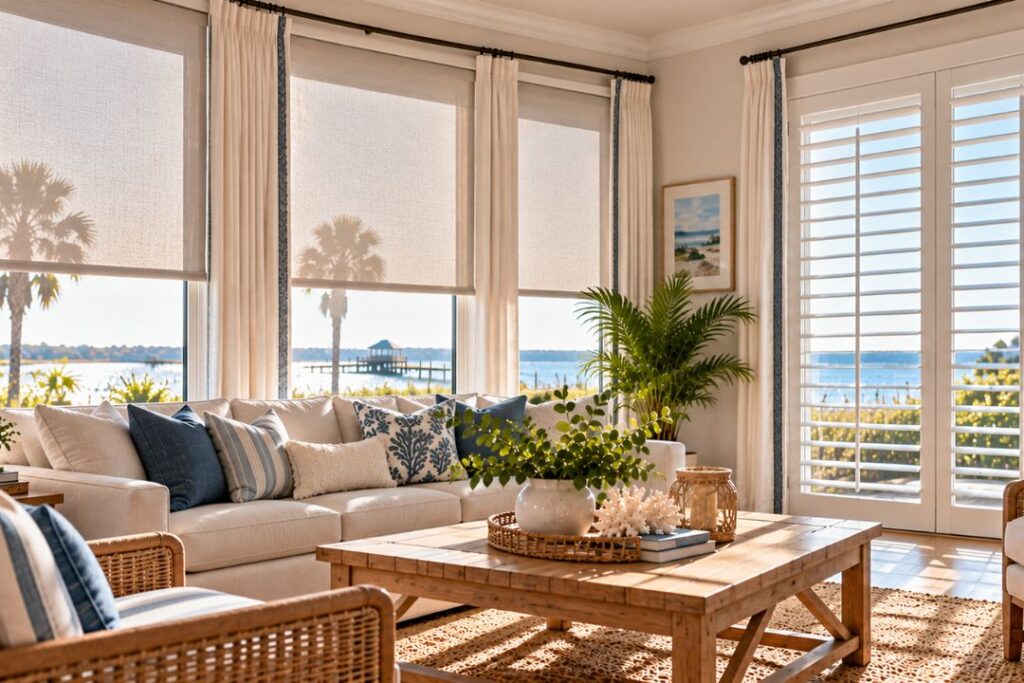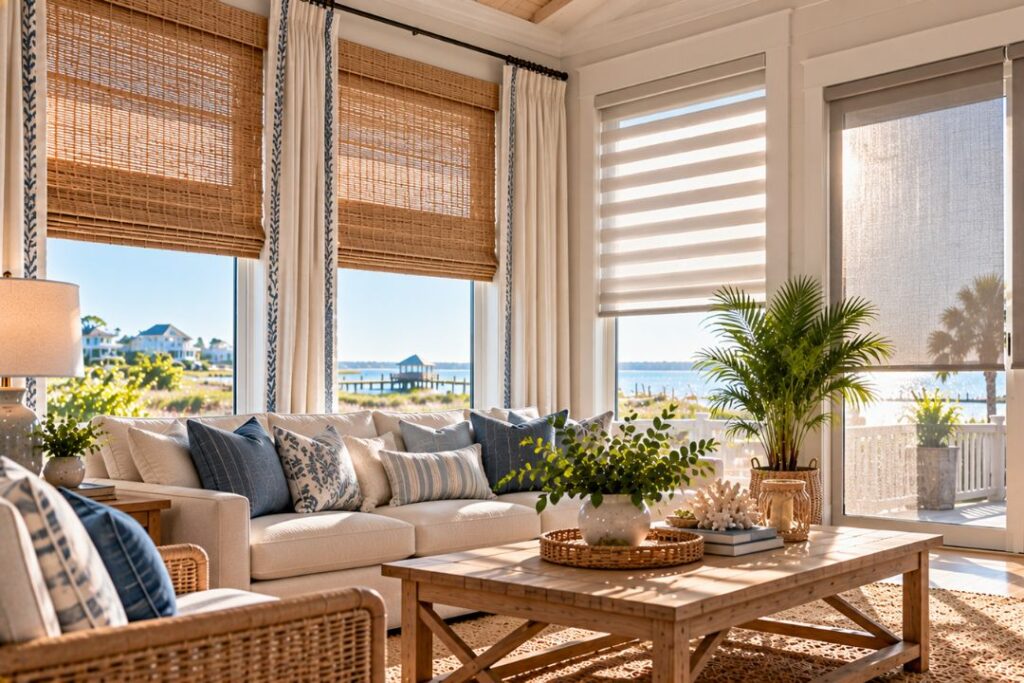
Charleston humidity is not like humidity anywhere else. Between salt air rolling in off the harbor, thick summer air that barely breaks overnight, and the occasional tropical storm rolling through the Lowcountry, coastal homes face a level of moisture that inland properties rarely see. If you are researching the best window coverings for humid climate conditions like these, the material you choose matters just as much as the style. Here is how to think about it based on exactly how close you live to the water.
Why Coastal Humidity Behaves Differently
Inland humidity is mostly about air moisture and temperature swings. Coastal humidity adds salt into the equation, and salt air is far more aggressive on natural materials than plain moisture alone. It accelerates warping, clouds finishes faster, and can even affect certain metal hardware and mechanisms over time. That combination is exactly why a window covering that performs fine in Charlotte or Raleigh will not always hold up the same way a few blocks from the Charleston harbor, where the air itself works against a treatment every single day.
Zone One: Waterfront and Direct Salt Air Exposure
Homes right along the water or within a few blocks of it face the harshest conditions Charleston has to offer. For these properties, composite plantation shutters are typically the strongest performer available. Their engineered material resists warping, cracking, and clouding far better than natural wood. They hold their finish even with regular direct exposure to salty coastal air blowing straight off the harbor.
Faux wood blinds are a solid secondary option for these homes as well, particularly in secondary rooms, guest bedrooms, or spaces where a full shutter upgrade is not part of the current budget but moisture protection still matters.
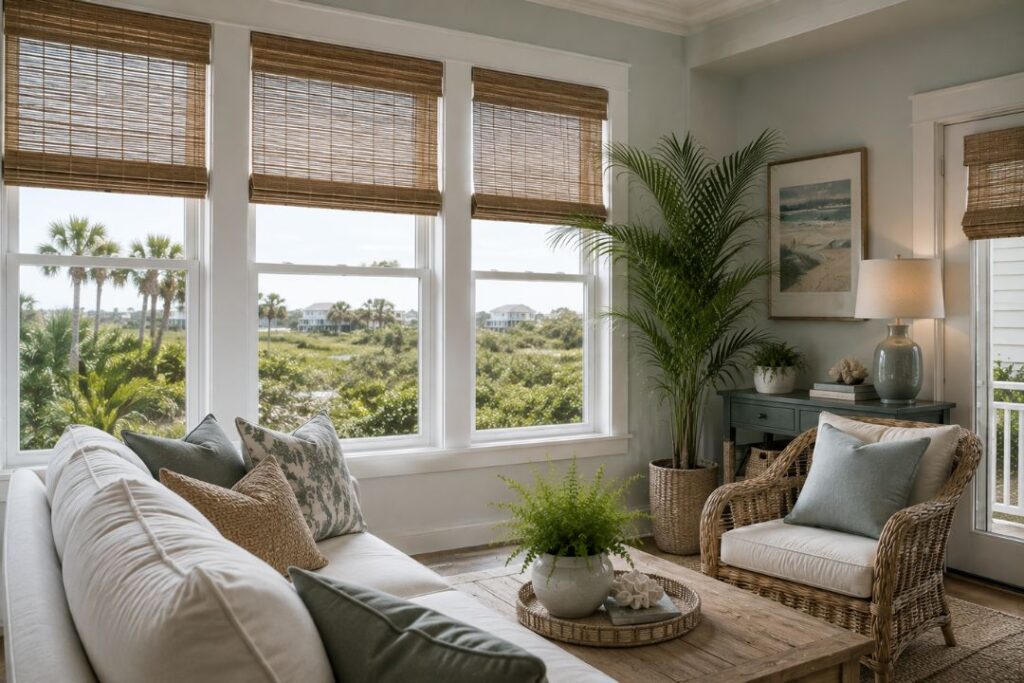
Zone Two: Near-Coast Neighborhoods With Heavy Humidity
Slightly further inland, homes still deal with consistently high humidity even without the direct salt exposure of a waterfront property. This is where moisture-resistant blinds made from faux wood or PVC composite really shine, offering the classic look of wood without the risk of swelling or bowing during Charleston’s long, sticky summers that seem to stretch from April well into October.
Cellular shades with moisture-friendly fabrics are another strong option in this zone, particularly in kitchens and bathrooms where daily steam and cooking moisture add an extra layer of exposure beyond the outdoor climate alone, compounding what the humidity is already doing to the room.
Zone Three: Historic Charleston Interiors
Charleston’s historic homes bring their own considerations. Original windows are often taller and older, and homeowners frequently want to preserve as much of the original character as possible while still living comfortably day to day. When choosing window coverings for coastal interiors, composite shutters finished to resemble traditional wood tones let you keep that classic Lowcountry look while gaining real protection against the humidity that natural wood cannot handle long-term.
For rooms where a softer look is preferred, moisture-resistant fabric shades in a light-filtering or room-darkening style can complement historic trim without the maintenance headaches of delicate natural fibers that were never designed for a Lowcountry summer.
The Materials That Perform Best Across the Board
Regardless of exactly where your home sits, a few materials consistently rise to the top for Charleston’s climate.
- Composite or PVC plantation shutters resist warping, cracking, and mildew better than any natural material.
- Faux wood blinds offer a budget-friendly, moisture-resistant alternative to real wood.
- Moisture-friendly cellular and roller shades work well in kitchens, bathrooms, and sunrooms when made from the right fabric.
What to Avoid in a Humid Coastal Climate
Untreated real wood blinds and shutters are the clearest example of a poor fit for coastal Charleston. Even high-quality wood will eventually absorb ambient moisture in this climate, leading to warped slats, sticking louvers, and a finish that dulls faster than it would inland. If you love the look of natural wood, reserve it for climate-controlled interior rooms away from exterior doors, covered porches, and the most humid parts of the house.
Frequently Asked Questions
Why does salt air affect window treatments more than regular humidity?
Salt particles in coastal air are more corrosive than plain moisture, which can accelerate wear on natural materials and certain hardware over time.
Are composite shutters really better than real wood for Charleston homes?
Yes, for humidity and salt exposure specifically. Composite materials resist warping and clouding in ways natural wood cannot match over the long term.
Can fabric shades work in a humid coastal home?
Yes, as long as they are made with moisture-resistant fabrics and kept out of the most humid rooms like bathrooms without proper ventilation.
Do window treatments near the water need more frequent maintenance?
Generally less than expected if the right materials are chosen from the start. Composite and faux wood options require only occasional light cleaning.
Is it worth mixing materials throughout a coastal home?
Often, yes. Many homeowners use composite shutters in high-exposure rooms and reserve real wood for protected, climate-controlled interior spaces.
Built for the Lowcountry, Not Just the Look
Choosing window coverings for a coastal Charleston home means thinking beyond style alone. The right materials protect your investment against salt air, humidity, and the occasional tropical storm while still giving you the classic Lowcountry look you love throughout every room. Reach out to schedule a free in-home consultation, and let our team help you choose coverings built actually to last in Charleston’s coastal climate.