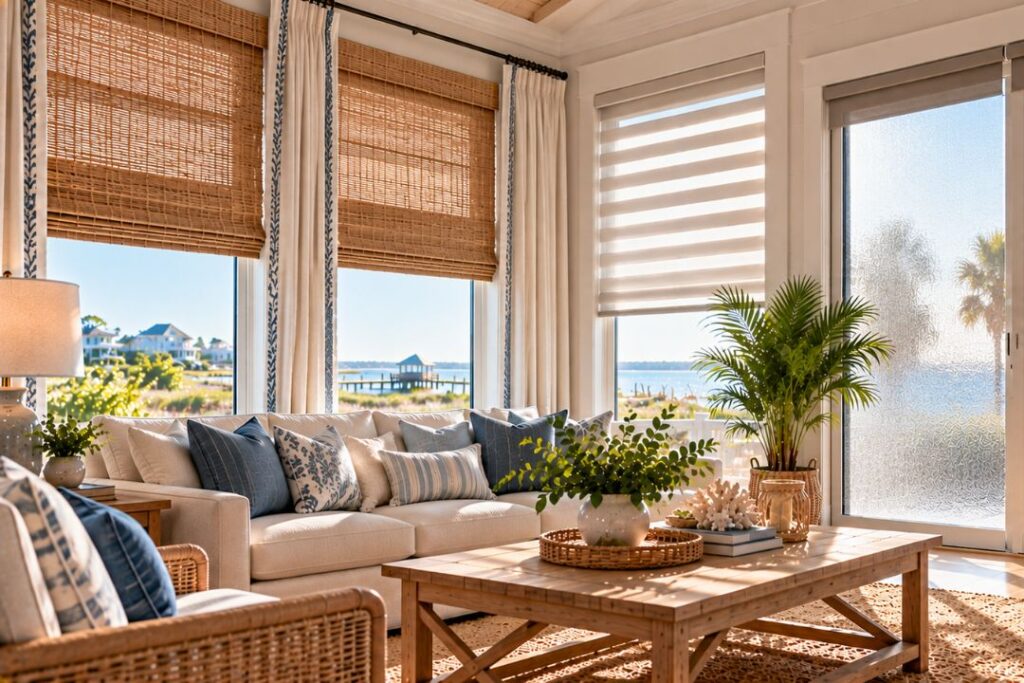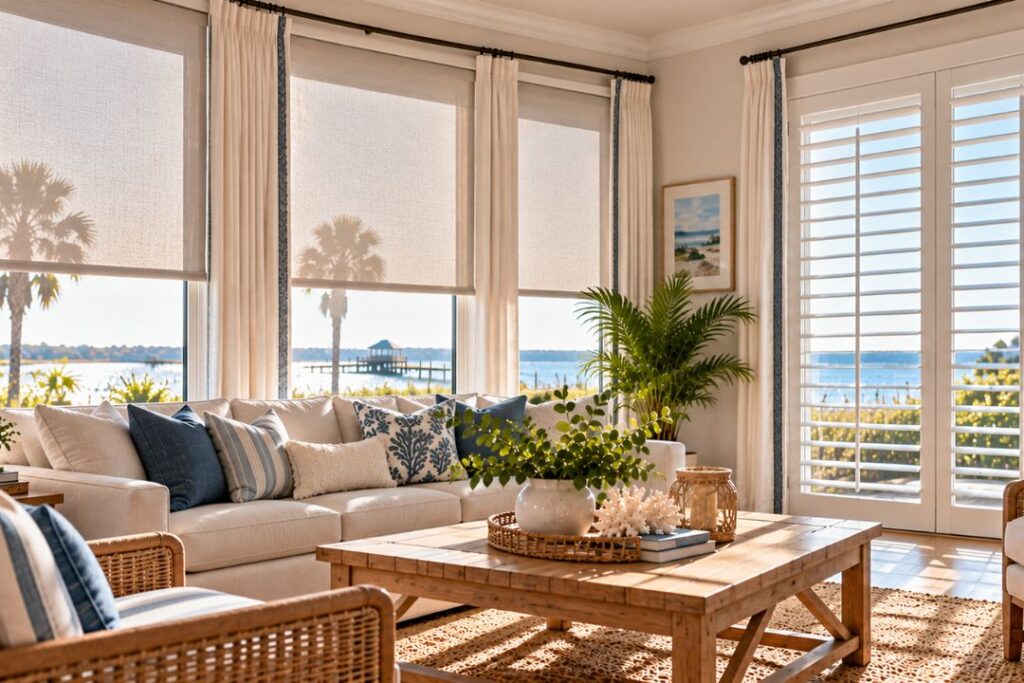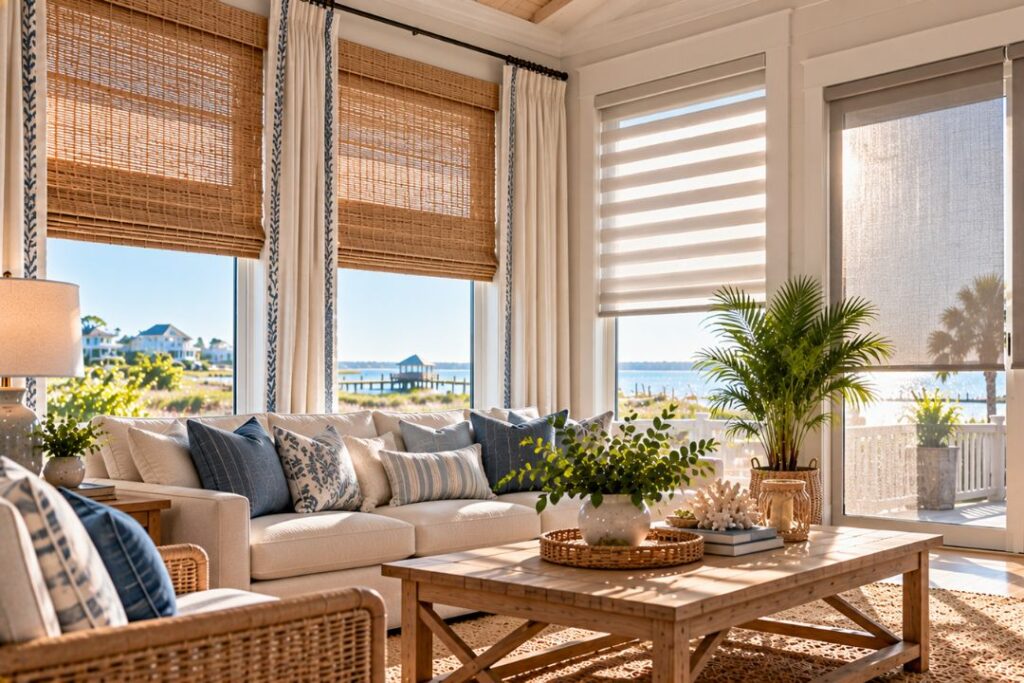
If your energy bills climb every summer without a clear explanation, your windows may be doing more harm than you think. Single-pane glass, south-facing rooms, and poorly insulated window frames all contribute to heat gain that your air conditioner has to constantly compensate for.
Energy-efficient window coverings are one of the most cost-effective ways to address that problem without replacing your windows entirely. The right treatments can meaningfully reduce heat gain in summer, retain warmth in winter, and bring your utility costs down in a lasting way. This guide covers everything a North Carolina homeowner needs to know to make the smartest choice. Homeowners comparing window blinds for Charlotte homes often focus on products that improve insulation without sacrificing natural light.
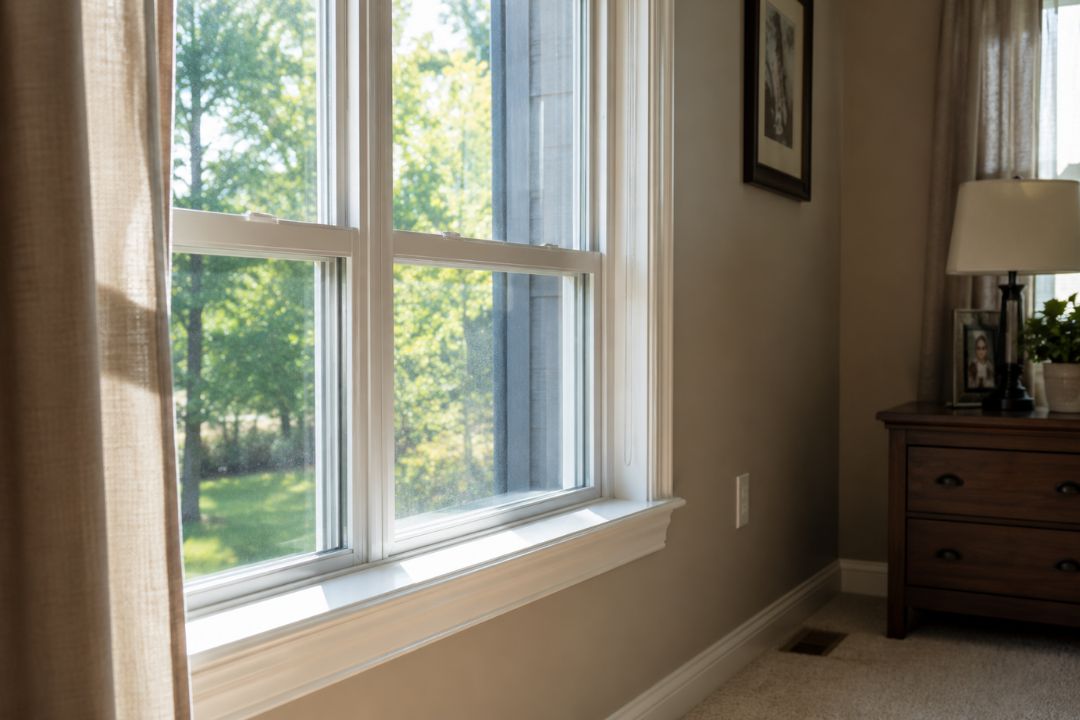
Why Windows Are a Major Energy Loss Point in NC Homes
According to the U.S. Department of Energy, windows account for up to 30% of a home’s heating and cooling energy use. In North Carolina’s climate, which brings hot, humid summers alongside cooler winter months, that percentage translates into real, recurring costs.
The challenge is twofold: in summer, solar heat radiates through the glass and raises indoor temperatures. In winter, warm indoor air escapes through poorly insulated window surfaces. Energy-efficient window coverings work on both ends of that equation.
Best Energy-Efficient Window Coverings for NC Homes
1. Cellular Shades (Honeycomb Shades)
Cellular shades are the benchmark for energy efficiency in the window treatment industry. Their honeycomb structure traps air in individual pockets between the glass and the room, creating an insulating barrier that slows both heat gain and heat loss.
Key benefits:
- Single cell for basic insulation, double or triple cell for maximum performance
- Available in light filtering, room darkening, and blackout fabrics
- Effective in both hot NC summers and cooler winter months
- Clean, tailored appearance in every room
Our cellular shades and honeycomb shades collection at Carolina Shutter & Blinds is specifically suited to NC’s mixed climate demands.
2. Solar Shades
Solar shades are among the most effective window coverings that help block UV rays before sunlight enters the room and contributes to heat gain. They are available in varying openness factors, with tighter weaves generally blocking more solar energy while still maintaining an outward view.
Key benefits:
- Blocks up to 99% of UV rays, depending on the openness factor
- Reduce glare on screens and surfaces significantly
- Preserve views while managing solar heat gain
- Ideal for south and west-facing windows in NC homes
3. Plantation Shutters
Plantation shutters provide a rigid barrier between the window glass and the interior space. When louvers are fully closed, they create a layer of trapped air that functions as insulation. Their solid panel construction also helps block drafts from older or single-pane windows, which are common in NC’s historic neighborhoods.
They are a long-term investment that delivers both energy performance and lasting aesthetic value. Wood Shutters Winston-Salem NC homeowners choose remain popular for their timeless craftsmanship and ability to complement both historic and modern homes.
4. Blackout Shades and Room-Darkening Shades
Blackout shades use densely coated fabrics that block solar heat transmission through the window. In west and south-facing rooms that receive intense afternoon sun in Raleigh and Charlotte, blackout shades can noticeably reduce the interior temperature spike that occurs without any window covering.
Room-darkening options offer similar benefits with slightly greater light filtration, making them a flexible middle ground.
5. Roman Shades with Thermal Lining
Standard Roman shades are stylish but offer moderate insulation on their own. Adding a thermal or room-darkening lining to the back of a Roman shade significantly improves its energy performance by adding a reflective or insulating layer between the fabric and the glass.
This is a smart option for NC homeowners who want the look of Roman shades without sacrificing energy performance.
6. Wood and Composite Shutters
Both wood shutters and composite shutters create a solid insulating layer in front of the window. When louvers are fully closed, they trap a pocket of air against the glass, reducing heat transfer in both directions. In NC’s variable climate, this dual-season performance makes shutters one of the most versatile energy-efficient options available.
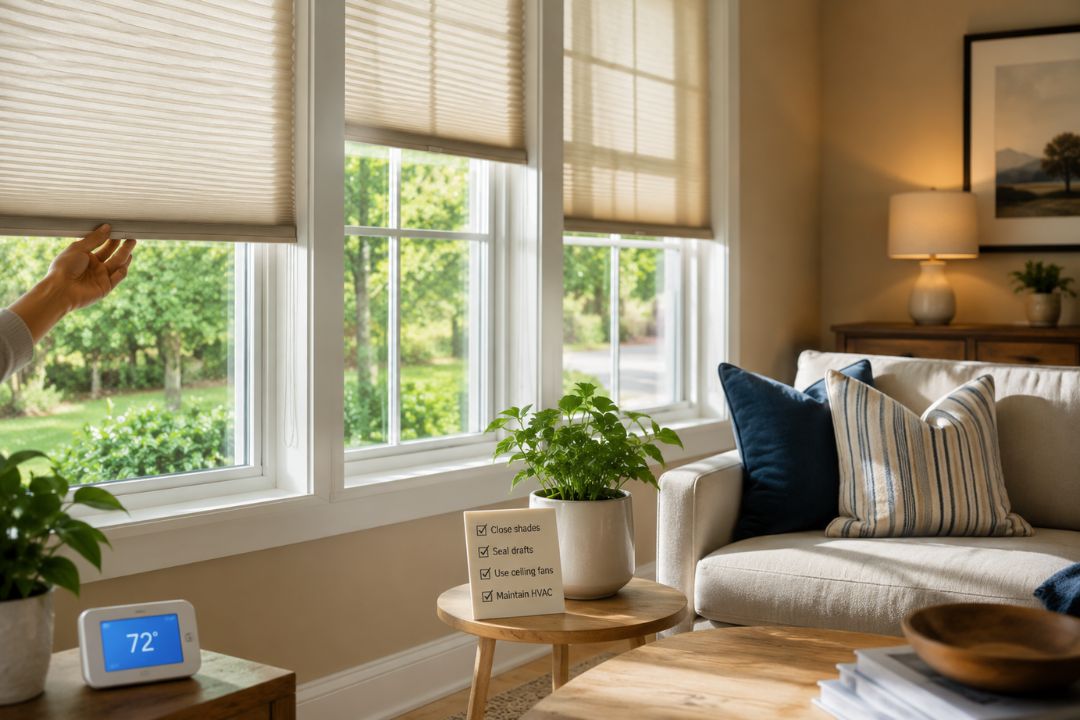
Tips for Maximizing Energy Savings in NC Homes
- Close coverings on south and west-facing windows during peak summer afternoon hours
- Open south-facing coverings in winter to allow passive solar heat gain
- Use blackout or thermal-lined treatments in your highest sun-exposure rooms
- Pair insulating window coverings with weatherstripping for the best overall result
Conclusion
The right energy-efficient window coverings do real, measurable work in NC homes. Whether you choose cellular shades for maximum insulation, solar shades to combat glare and UV heat, or energy-efficient interior shutters like plantation shutters for year-round performance, every option covered here is a meaningful upgrade that pays for itself over time. Carolina Shutter & Blinds also provides Window Shades Services Charlotte, NC, helping homeowners select custom energy-efficient solutions for every room.
Stop letting your windows undermine your comfort and your budget. Get a free energy-focused window treatment consultation from Carolina Shutter & Blinds and find out exactly which products will make the biggest difference in your NC home. Reach out to our team now, and we will handle the rest.
Frequently Asked Questions
Which window covering provides the best insulation for NC homes?
Cellular shades, particularly double- or triple-cell configurations, provide the best insulation of any window treatment. Their honeycomb structure traps air and slows heat transfer in both directions, making them effective in both NC’s hot summers and cooler winters.
Do plantation shutters help with energy efficiency?
Yes. When louvers are fully closed, plantation shutters create a rigid insulating layer that traps air between the glass and the room. They also block drafts effectively, making them a strong energy-efficient choice alongside their aesthetic benefits.
How much can energy-efficient window coverings reduce utility bills in NC?
According to the U.S. Department of Energy, window treatments with insulating properties can reduce heat loss through windows by up to 40%. Actual savings vary based on window size, orientation, and the number of windows treated.
Are solar shades effective in reducing summer heat in North Carolina?
Yes. Solar shades block a significant percentage of UV radiation before it enters the room and converts to heat. They are especially effective on south and west-facing windows that receive the most direct sun exposure in NC summers.
Does Carolina Shutter & Blinds offer energy-efficient window treatments across NC?
Yes. Carolina Shutter & Blinds provides a full range of energy-efficient window coverings, including cellular shades, solar shades, shutters, and blackout options, with professional consultation and installation across Winston-Salem, Raleigh, Charlotte, Greensboro, and Asheville.