Heating and cooling bills are one of the biggest recurring expenses for homeowners across North Carolina, and a surprising amount of that energy loss happens right at your windows. If your window treatments are not helping with insulation, you are essentially leaving money on the table every single month.
Cellular shades offer benefits beyond a clean look. These are purpose-built window coverings designed to trap air and create a thermal barrier between your living space and the outside temperature. In this blog, we cover why cellular shades are among the smartest energy-saving upgrades NC homeowners can make and what you can realistically expect from them.
What Are Cellular Shades?
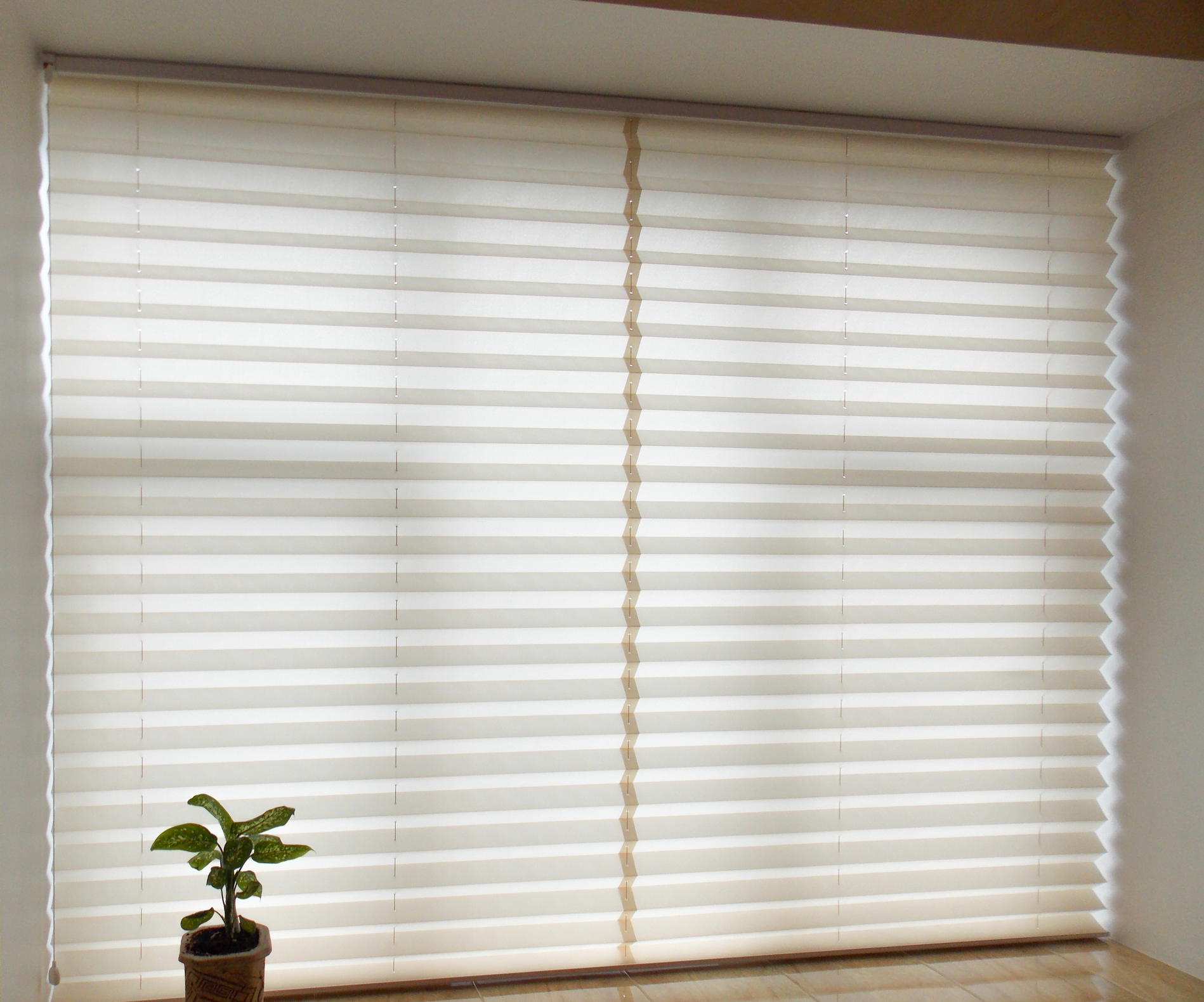
Cellular shades, also called honeycomb shades, are made from a pleated fabric that forms individual air pockets when the shade is lowered. These air pockets act as insulation, slowing the transfer of heat and cold through the window surface.
They come in two main configurations:
- Single cell: One layer of air pockets, providing basic insulation at a lower price point
- Double cell: Two layers of air pockets stacked together for enhanced insulation performance
- Triple cell: Three layers for maximum energy efficiency, ideal for rooms with large windows or extreme temperature exposure
At Carolina Shutter & Blinds, our cellular shades are available in all three configurations along with a wide selection of fabric opacities and colors.
Top Cellular Shades Benefits for NC Homeowners
1. Genuine Energy Savings
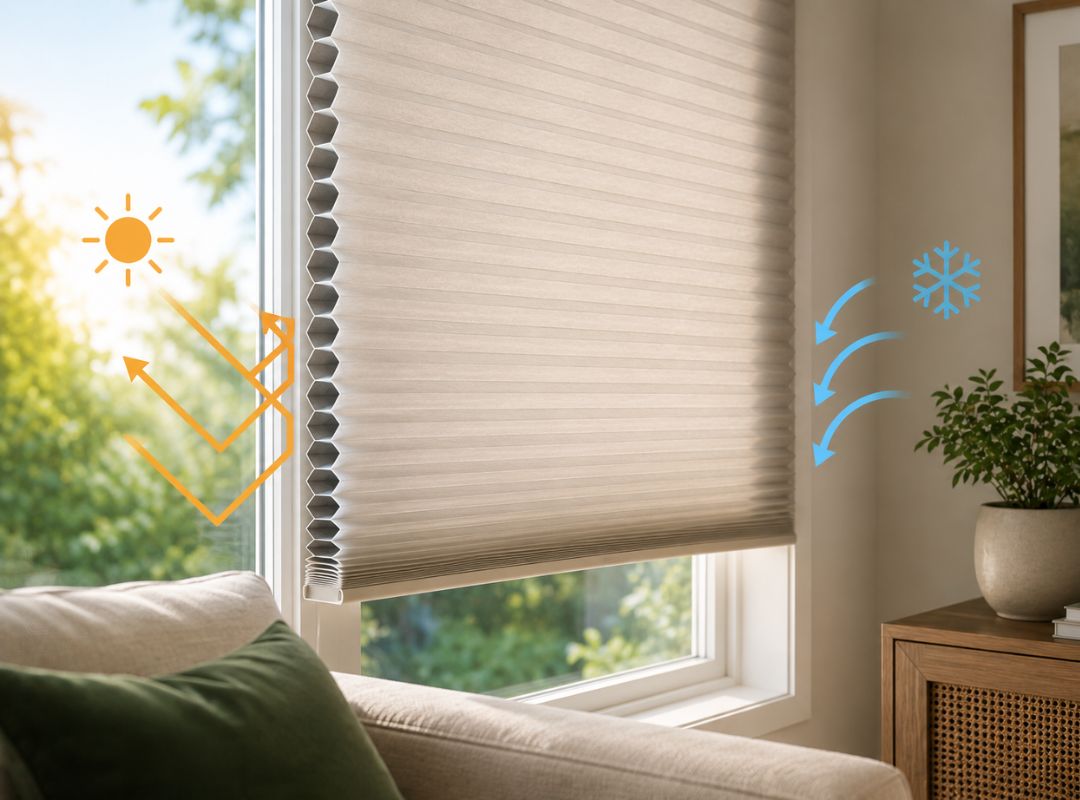
The honeycomb structure does real work. By trapping air between the window glass and your living space, cellular shades reduce the rate at which your home gains heat in summer and loses heat in winter. For NC homeowners facing both humid summer heat and chilly winter months, that insulation is active on both ends of the year.
Studies by the U.S. Department of Energy have found that window treatments with insulating properties can reduce heat loss through windows by up to 40%, which translates directly into lower utility bills.
2. Year-Round Comfort
In summer, cellular shades block radiant heat from the sun before it warms your interior air. In winter, they hold warm air inside instead of letting it escape through cold glass. The result is a home that maintains a more stable, comfortable temperature with less effort from your HVAC system year-round.
3. Light Control Flexibility
One of the standout benefits of cellular shades is the range of fabric options available. You can choose from:
- Sheer or light-filtering fabrics for softened natural light in living areas
- Room darkening fabrics for bedrooms and spaces needing more privacy
- Blackout fabrics for nurseries, home theaters, or shift workers
This flexibility means the same great insulating structure works in every room of your home, regardless of your light-control needs.
4. UV Protection for Your Interior
Cellular shades filter UV radiation from windows, a major cause of fading in hardwood floors, upholstered furniture, rugs, and artwork. For NC homeowners who have invested in quality interior finishes, this protection adds real long-term value.
5. Quiet and Clean Aesthetics
Cellular shades have a soft, tailored appearance with no visible cords or bulky hardware when ordered in cordless configurations. They fold neatly at the top when raised and lie flat when lowered, creating a clean, refined look that complements modern and traditional NC homes equally well.
6. Sound Dampening Properties
The air pockets in cellular shades do not just insulate against temperature. They also absorb sound, providing a modest reduction in outside noise. For homes near busy Raleigh roads, commercial areas, or neighborhoods with heavy foot traffic, this is a welcome secondary benefit.
7. Top-Down Bottom-Up Functionality
Many cellular shades are available with top-down/bottom-up operation, which lets you lower the top of the shade while keeping the bottom raised for privacy. This allows natural light in from above while maintaining privacy in the lower half of the window. It is a feature that homeowners consistently love once they experience it.
Check out our top-down, bottom-up shades and our full honeycomb shades selection for more details.
Conclusion
The benefits of cellular shades make a compelling case for any NC homeowner who wants to improve energy efficiency, reduce utility costs, and enhance the comfort of their living spaces. From their insulating honeycomb structure to their flexible light control and clean aesthetics, cellular shades are one of the most practical window treatment investments available.
Let our team show you what they can do in your home. Book a complimentary in-home estimate with Carolina Shutter & Blinds and explore our full cellular shade collection in person. Reach out and schedule your visit here, and we will take care of everything from selection to installation.
Frequently Asked Questions
How much can cellular shades reduce energy costs in NC?
According to the U.S. Department of Energy, insulating window treatments can reduce heat loss through windows by up to 40%. The exact savings depend on window size, orientation, and the number of shades installed.
What is the difference between single-cell and double-cell shades?
Single cell shades have one layer of air pockets and provide basic insulation. Double cell shades add a second layer, improving insulation performance and making them more effective for rooms with high heat or cold exposure.
Are cellular shades good for humid climates like North Carolina?
Yes. Cellular shades are made from moisture-resistant fabrics and hold up well in humid conditions. They are a practical and durable choice for NC’s mixed climate of hot summers and mild winters.
Can I get cellular shades in blackout fabric for a bedroom?
Yes. Cellular shades are available in sheer, light-filtering, room-darkening, and blackout fabrics, making them suitable for every room, including bedrooms, nurseries, and media rooms.
Does Carolina Shutter & Blinds install cellular shades across North Carolina?
Yes. Carolina Shutter & Blinds provides professional cellular shade consultation and installation across multiple NC locations, including Raleigh, Winston-Salem, Charlotte, Greensboro, and Asheville.