Eco-Friendly Window Coverings are becoming a practical choice for homeowners who want better comfort, lower energy bills, and smarter home upgrades. Many homes across North Carolina and South Carolina deal with heat, humidity, and seasonal temperature changes, making energy-efficient solutions more important than ever.
Homeowners often start by researching the best window treatments for energy efficiency to understand how window coverings can reduce energy loss and improve indoor comfort. The challenge is knowing which options actually deliver results and which are just marketed as sustainable without real benefits.
The right eco-friendly window coverings can reduce solar heat gain, improve insulation, support long-term savings, and create a more comfortable home throughout the year. This guide explains what they are, how they work, and which options are worth considering.
What Are Eco-Friendly Window Coverings and Why Do They Matter?
Eco-friendly window coverings are designed to improve home energy efficiency while using sustainable or environmentally responsible materials. These coverings help control heat, light, and airflow, reducing the need for artificial heating and cooling.
Why They Matter for Homeowners
Many homes lose energy through windows. Without proper coverings, indoor temperatures fluctuate, leading to higher energy usage.
Eco-friendly window coverings help by:
- Reducing solar heat gain during summer
- Retaining indoor warmth during winter
- Supporting passive cooling and heating
- Minimizing UV exposure on interiors
These benefits contribute to energy-saving window solutions that improve comfort while lowering utility costs.
For homeowners comparing different options, reviewing a blinds vs shades vs shutters comparison can provide a clearer understanding of how each type performs.
Best Eco-Friendly Window Coverings
Choosing the right option depends on your home layout, climate, and daily use. Below are some of the most effective eco-friendly window coverings available today.
Cellular Shades for Insulation
Cellular shades are designed with a honeycomb structure that traps air and improves insulation.
Key benefits:
- Strong thermal insulation
- Effective for both hot and cold climates
- Reduces energy loss through windows
These are among the most efficient energy-saving window coverings for maintaining indoor temperature.
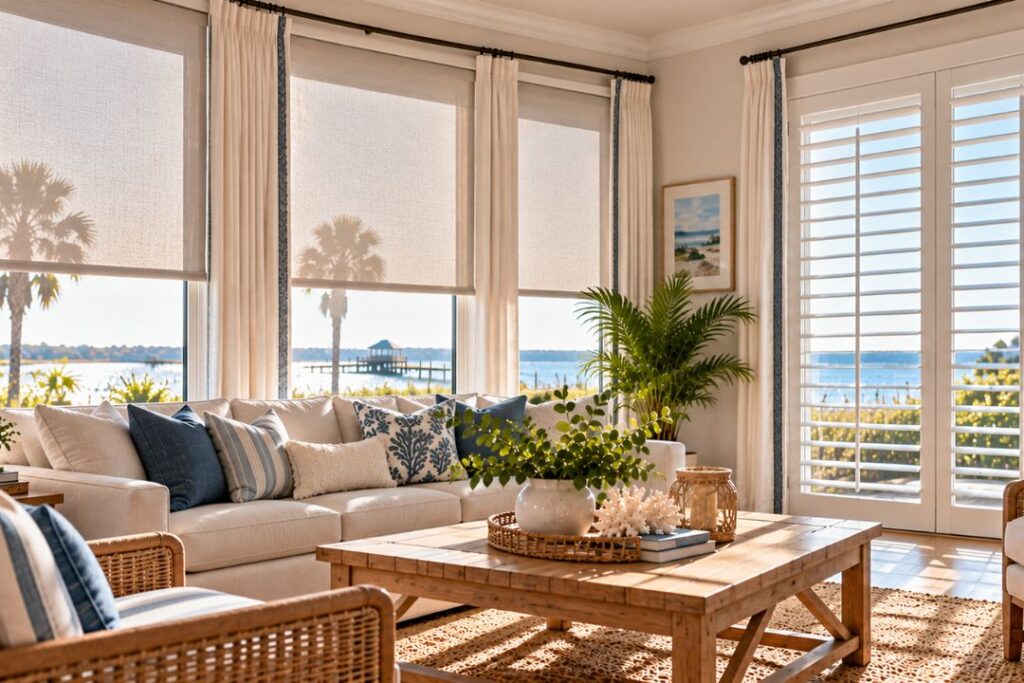
Solar Shades for Heat and Glare Reduction
Solar shades are designed to reduce sunlight intensity without blocking the view.
Key benefits:
- Controls glare and brightness
- Reduces solar heat gain
- Provides UV protection for furniture
They are ideal for living rooms and spaces with large windows.
Plantation Shutters for Long-Term Efficiency
Plantation shutters provide a durable and energy-efficient solution that works across different climates.
Key benefits:
- Excellent light control
- Long lifespan
- Improved insulation when closed
Homeowners often evaluate plantation shutters long-term value and ROI to understand their cost effectiveness over time.
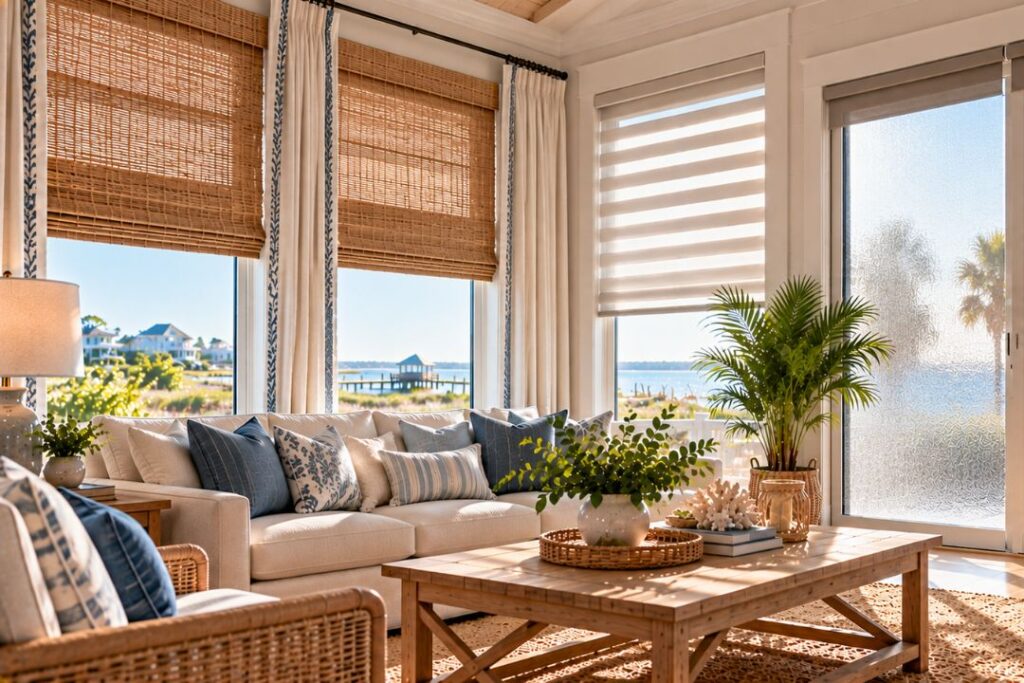
Bamboo and Natural Fiber Shades
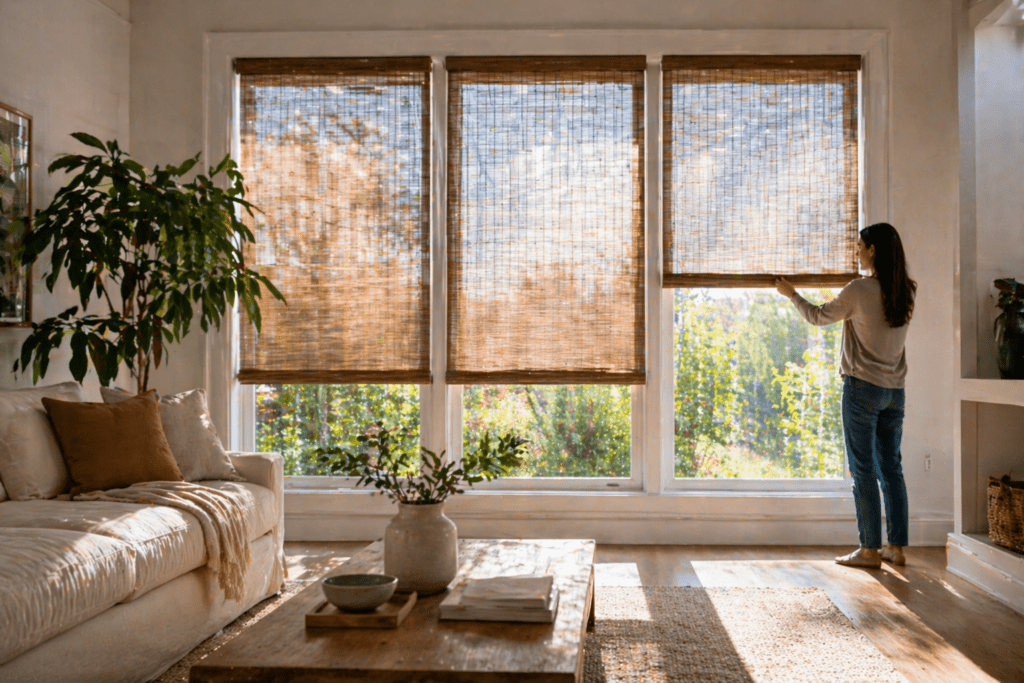
Bamboo shades and woven wood options use renewable materials.
Key benefits:
- Environmentally safe materials
- Natural aesthetic
- Light filtering capabilities
These are suitable for homeowners looking for green home improvement ideas.
Cost of Eco-Friendly Window Coverings
Cost is often a deciding factor when choosing sustainable window coverings. While eco-friendly options may have a higher upfront cost, they often provide long-term savings.
What Influences Cost
Several factors affect pricing:
- Material type and sustainability
- Custom-fit installation
- Window size and shape
- Motorized or manual operation
Homeowners comparing options often refer to a window coverings cost breakdown to evaluate upfront investment versus long-term savings.
Long-Term Savings
Eco-friendly window coverings reduce energy usage, which can lead to:
- Lower cooling costs in summer
- Reduced heating expenses in winter
- Extended lifespan of furniture due to UV protection
Over time, these savings can offset the initial investment.
Sustainable Materials Used in Eco-Friendly Window Treatments
The materials used in window coverings play a major role in their environmental impact.
Common Sustainable Materials
Eco-friendly window coverings often use:
- Bamboo and natural fibers
- Recycled fabrics
- Composite materials with reduced waste
- Low-emission coatings
These materials support environmentally safe home upgrades while maintaining durability.
Benefits of Sustainable Materials
Using sustainable materials offers:
- Reduced environmental impact
- Improved indoor air quality
- Long-term durability
- Lower maintenance requirements
These materials are especially useful in homes where moisture resistance and longevity are important.
How to Choose the Right Eco-Friendly Window Coverings for Your Home
Selecting the right solution depends on how each room is used and how much control you need over light, privacy, and temperature.
Consider Your Climate
Homes in North Carolina and South Carolina experience heat and humidity, so window coverings should focus on:
- Solar heat gain reduction
- Moisture resistance
- UV protection
Evaluate Room Function
Different rooms require different solutions:
- Living rooms need glare reduction and natural light control
- Bedrooms require blackout or room darkening options
- Kitchens and bathrooms need moisture-resistant materials
Focus on Custom Fit
Custom-fit window coverings improve performance by eliminating gaps and ensuring proper coverage.
Homeowners exploring latest window treatment trends for modern homes often find that custom solutions offer better results than standard options.
Professional Installation Matters
Proper installation ensures the window coverings perform as intended.
Benefits include:
- Accurate measurements
- Secure mounting
- Improved energy efficiency
- Clean and finished appearance
Working with a trusted provider like Carolina Shutter & Blinds ensures that your eco-friendly window coverings are tailored to your home.
Conclusion
Eco-Friendly Window Coverings offer more than just a sustainable upgrade. They provide practical benefits such as energy savings, improved comfort, and better control over light and temperature.
From cellular shades to plantation shutters and natural fiber options, there are solutions available for every room and budget. The key is selecting the right material, design, and installation approach based on your home’s needs.
If you are planning to upgrade your window coverings, you can Contact Us to explore eco-friendly solutions that improve performance, reduce energy costs, and fit your home perfectly.
FAQ
What are the most eco-friendly window coverings available today?
Cellular shades, bamboo shades, solar shades, and plantation shutters are among the most eco-friendly options available.
Do eco-friendly window coverings really reduce energy bills?
Yes. They improve insulation and reduce heat transfer, which lowers heating and cooling costs.
Which window coverings provide the best insulation for homes?
Cellular shades are considered one of the best options for insulation due to their honeycomb structure.
Are eco-friendly blinds more expensive than regular options?
They may have a higher upfront cost, but they often provide long-term savings through energy efficiency.
What materials are used in sustainable window treatments?
Common materials include bamboo, natural fibers, recycled fabrics, and composite materials.
How do window coverings improve energy efficiency in homes?
They reduce heat transfer, control sunlight, and improve indoor temperature stability.
What is the best eco-friendly option for hot and cold climates?
Cellular shades and plantation shutters work well in both climates due to their insulation properties.
Are bamboo shades and wooden shutters environmentally friendly?
Yes. Bamboo is a renewable material, and responsibly sourced wood can also be an eco-friendly option.