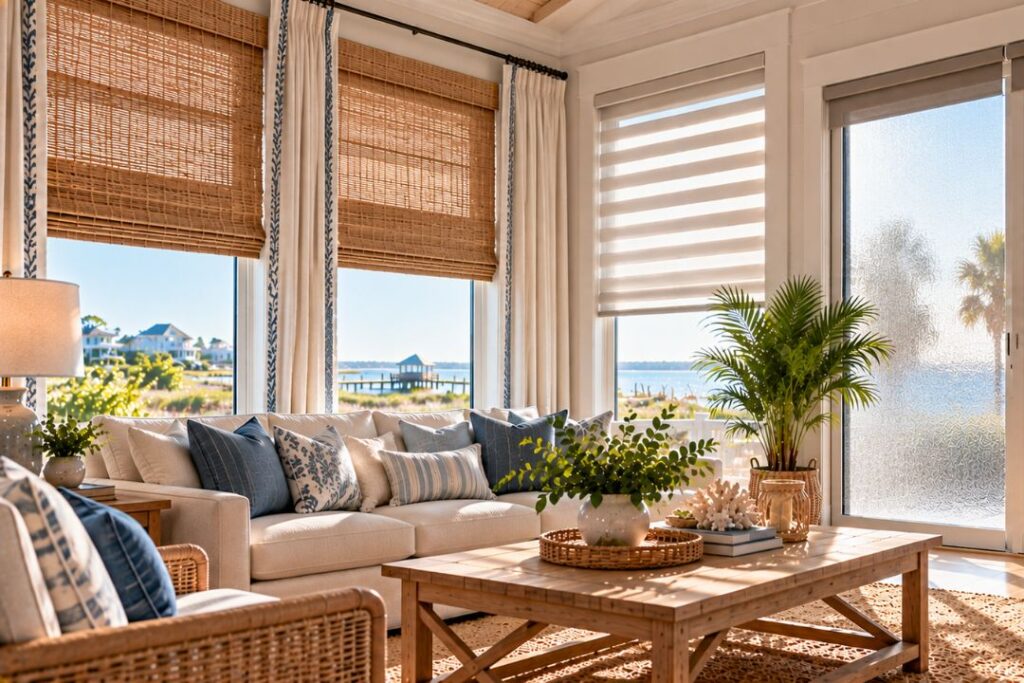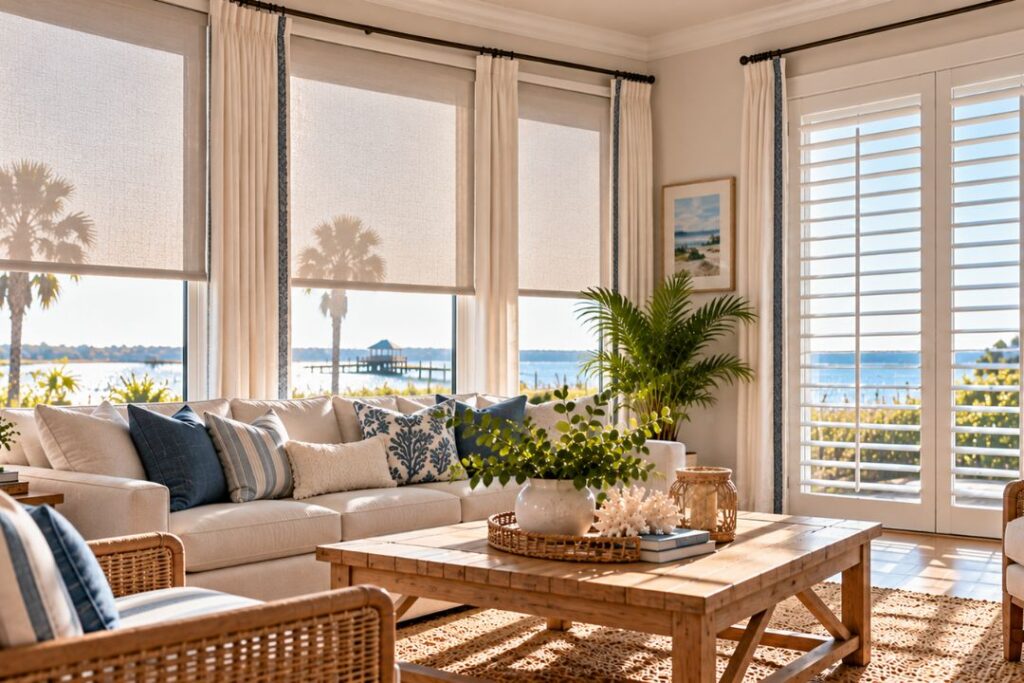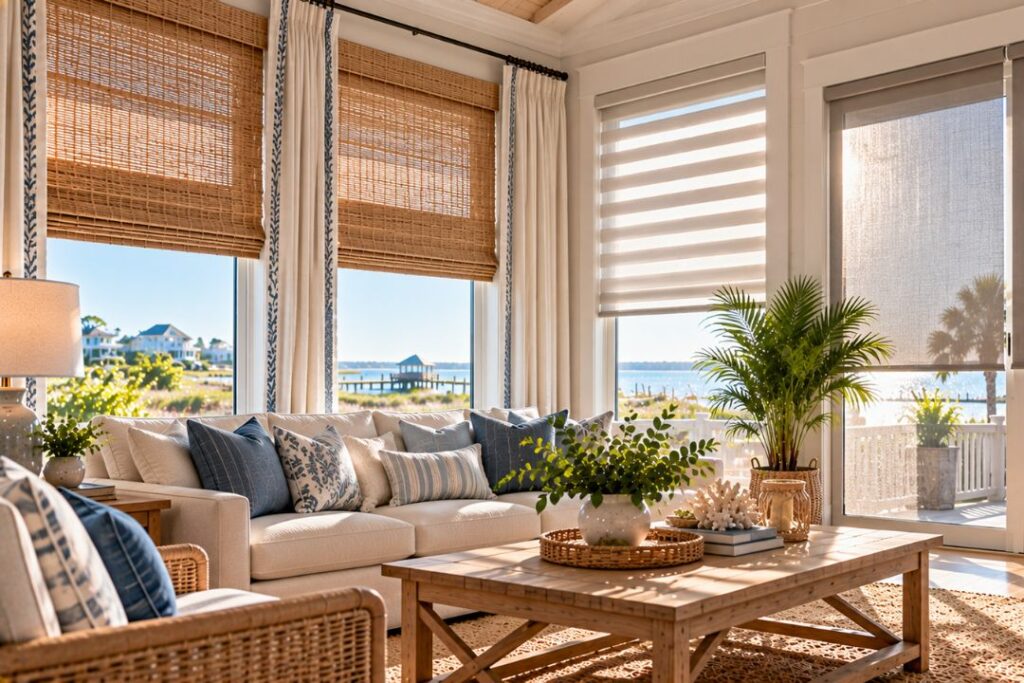
This window treatment fabric guide comes down to four checks: the room’s use, how much light and privacy you need, how the fabric handles humidity and sun, and how much upkeep you’re willing to accept. Match fabric weight, color, and lining to those four, and the right choice usually becomes clear.
What Should You Consider Before Choosing Fabric?
Start with the room’s purpose, the window’s size, and your privacy needs. These three factors quickly narrow your options. Answering common window treatment questions for homeowners about light control, privacy, fabric durability, maintenance, and budget can also help you make a more informed decision.
A good window treatment fabric guide starts with the glass, not the sample. Wide windows can handle heavier fabric without looking crowded, while small windows often look best in lighter weights. Then decide how much light control you want, from a soft glow to full darkness.
Which Fabrics Work Best in Different Rooms?
Bedrooms suit lined, heavier fabrics that block light. Living rooms suit medium weights that filter sun. Kitchens and bathrooms need fabrics that tolerate moisture and clean up easily.
Our guide to the difference between curtains and draperies explains weight, lining, and formality. For kitchens, washable Roman shade fabric is practical, and our post on Roman shades for kitchen windows covers heat and moisture.
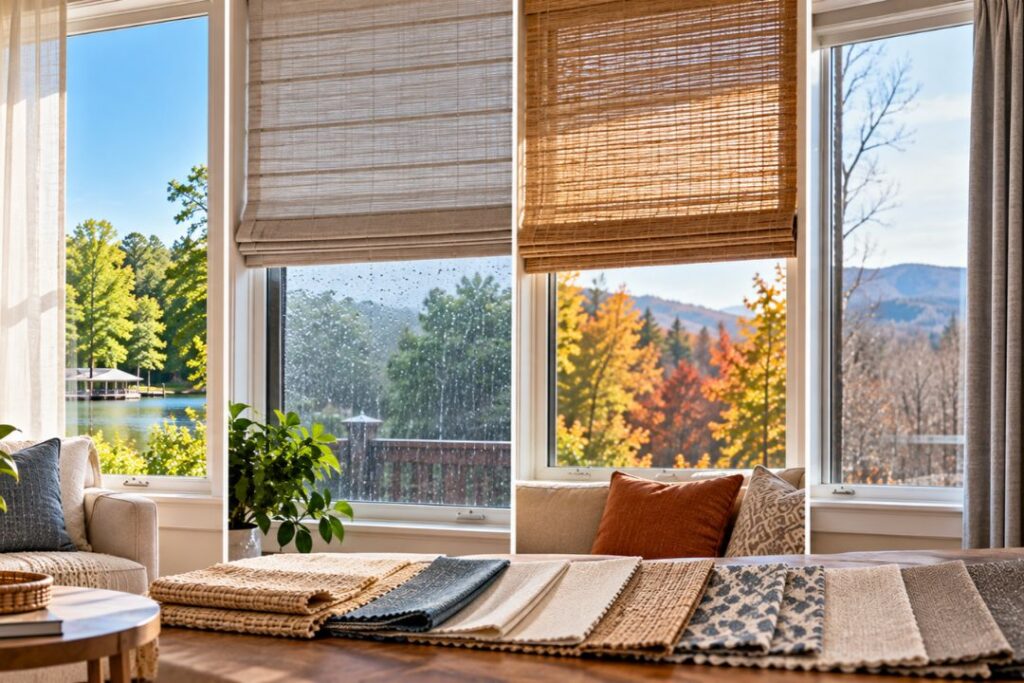
How Does North Carolina’s Climate Affect Fabric Choice?
North Carolina homes face humid summers, bright afternoon sun on west-facing glass, and seasonal temperature swings. Fabrics that handle moisture and fade slowly tend to last longest in those conditions.
Humidity strains kitchens and bathrooms, but UV exposure is the slower problem because it fades color over time.
Layered window treatments also improve comfort, since fabric at the glass slows heat transfer. Our guide to energy-efficient window treatments covers the options. Results vary by window and home, so we never promise exact savings.
How Do Color and Texture Affect a Room?
Light colors make a room feel larger and brighter. Dark colors add depth and a cozier mood. Texture adds warmth, so linen and woven fabrics soften hard surfaces. For window covering color inspiration, consider your existing wall colors, flooring, furniture, and natural light to find a combination that complements the room.
Pattern pulls the eye, so save it for a focal point. Check samples in morning and evening light, because color shifts through the day. Our guide to choosing window treatment colors shows how to match or contrast your palette.
How Durable and Easy to Maintain Is the Fabric?
Durability depends on the weave, the fiber, and the sun a window gets. Tight weaves and lined panels usually hold their shape longer.
Any window treatment fabric guide should cover upkeep, so weigh these before you buy:
- Spills: Choose washable fabric near food, pets, and children.
- Heavy drapery: Lined panels often need professional care. We offer drapery cleaning in Winston-Salem that checks each fabric first.
How Much Light and Privacy Do You Need?
Sheer fabrics soften light but offer little privacy. Light-filtering fabrics keep rooms bright while offering moderate privacy. Lined or blackout fabrics block most light and give the most privacy.
Layering settles the usual tug-of-war: a sheer handles daytime, and a heavier panel closes at night. See our ideas for layering sheer curtains with blinds, and compare light filtering and blackout shades.
Should You Choose Custom or Ready-Made Treatments?
Custom treatments fit your exact window and offer more choices in fabric, lining, and hardware. Ready-made options come in set sizes, so gaps and uneven hems are more likely.
Our article on custom versus ready-made blinds explains why precise measurements matter. Heavy fabric also needs sturdy hardware and careful installation, because the weight pulls on the wall.
How Can You Match Fabric With Your Home’s Style?
Pull one color and one texture from the room, then choose a fabric that echoes them without copying them. Floors, walls, and furniture set the palette. The home’s architecture sets the formality.
Tall traditional windows suit full-length drapery, while modern rooms often suit clean-lined fabric shades. Browse our window treatment services to see what fits.
Ready to See Fabrics at Your Own Windows?
Book a free in-home window treatment consultation with Carolina Shutter and Blinds, a Winston-Salem company serving homes in North Carolina and South Carolina. We will measure your windows and talk through fabric options in your own light. For more guidance, visit our contact us page. Keep this window treatment fabric guide handy as you compare samples.
Frequently Asked Questions
What is the best fabric for window treatments?
The best fabric depends on the room, not on one universal winner. Linen blends suit living rooms, lined cotton suits bedrooms, and washable fabric suits kitchens. A simple window treatment fabric guide starts with light, privacy, and upkeep needs.
How do I choose the right fabric for my windows?
Choose fabric that matches the room’s light, privacy, and cleaning needs. Measure the window, pick a weight that suits its size, and test samples in your own light.
Which window treatment fabrics are easiest to maintain?
Washable and tightly woven fabrics are usually the easiest to maintain. Textured weaves hide dust better than flat, dark cloth.
What fabric is best for privacy and light control?
Lined or blackout fabric gives the most privacy and light control. Light-filtering fabric keeps a room bright while limiting views in from outside.
Do window treatment fabrics fade in sunlight?
Yes, many fabrics fade over time with steady UV exposure. Lining and lighter colors can slow visible fading, though no fabric is fully fade-proof.