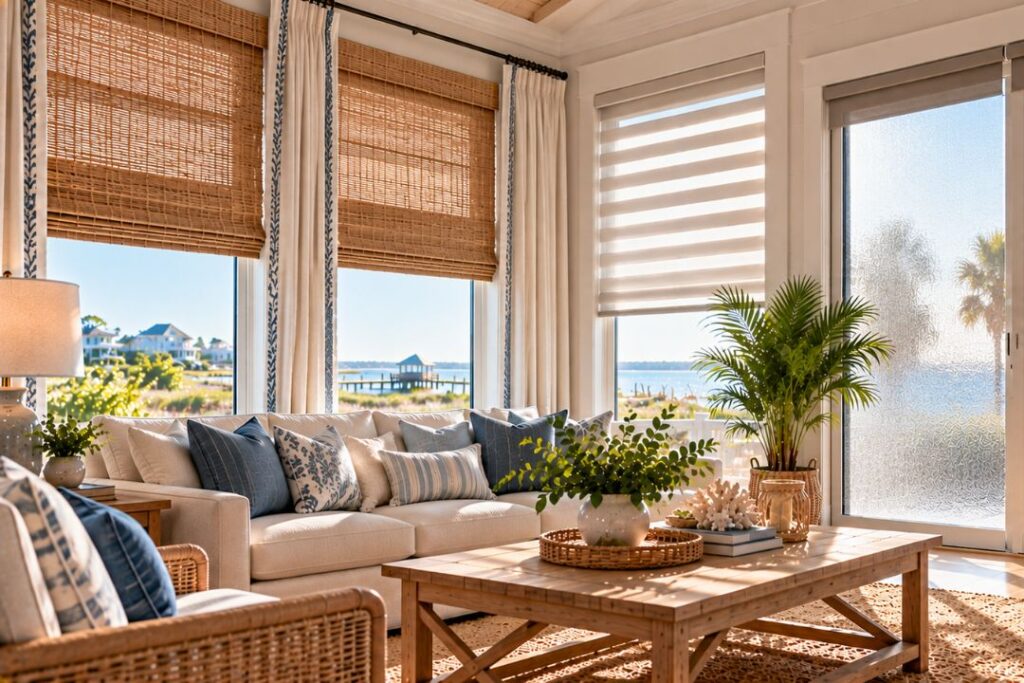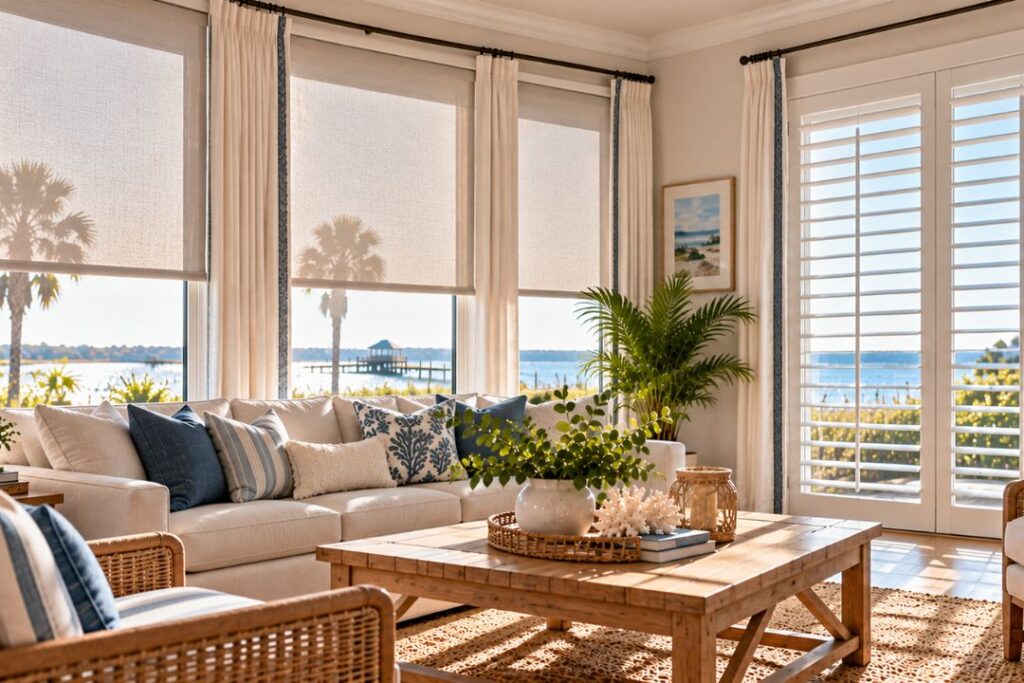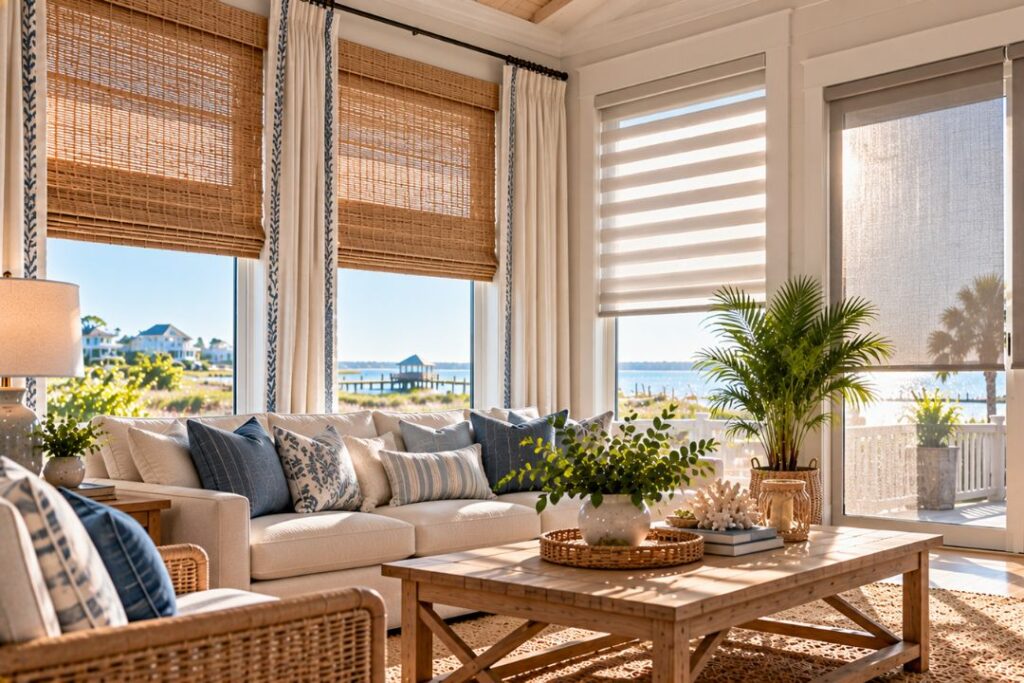
Best window treatments for energy efficiency are not just about improving appearance. They play a major role in how your home retains heat in winter and stays cool in summer. Many homeowners across North Carolina and South Carolina face rising energy bills due to heat loss and solar gain through windows.
If you are exploring ways to improve home performance, starting with a complete guide to eco-friendly window coverings can help you understand how modern solutions reduce energy waste without sacrificing comfort. The challenge is choosing the right option that actually delivers measurable savings.
The right window treatments act as a thermal barrier. They reduce heat transfer, improve insulation, and support passive heating and cooling. This guide explains which options work best and how to choose based on your home and climate.
Most Energy Efficient Window Treatments for Homes
Not all window coverings offer the same level of performance. Some are designed specifically to improve insulation and reduce energy loss.
Cellular Shades for Maximum Insulation
Cellular shades for energy efficiency are widely considered one of the most effective window treatment options because their honeycomb structure helps reduce heat transfer year-round.
Why they work:
- Honeycomb structure traps air and creates insulation
- Reduces heat loss in winter
- Limits heat entry during summer
These shades are ideal for homeowners looking for strong thermal window treatments that perform year-round.
Plantation Shutters for Long-Term Efficiency
Plantation shutters provide a durable and effective solution for energy control.
Key benefits:
- Solid barrier against heat and cold
- Adjustable louvers for light control
- Long lifespan with consistent performance
Many homeowners evaluate plantation shutters worth the investment when considering both energy savings and home value.
Thermal Curtains and Drapes
Thermal curtains are designed with insulating layers that help block heat transfer.
Benefits include:
- Reduced drafts near windows
- Improved indoor temperature stability
- Enhanced privacy and light blocking
They are a practical option for bedrooms and living spaces where insulation and comfort are priorities.
Solar Shades for Heat Reduction
Solar shades help control sunlight without completely blocking visibility.
Key advantages:
- Reduces solar heat gain
- Protects interiors from UV damage
- Maintains outdoor view
These are especially effective for large windows and sun-facing rooms.
Energy Efficient Blinds vs Shades vs Shutters: Which Saves More?
Choosing between blinds, shades, and shutters can be confusing. Each option offers different levels of insulation and energy performance.
Blinds
Blinds are versatile and allow adjustable light control.
Pros:
- Affordable and widely available
- Good for controlling sunlight
- Works well in combination with other treatments
However, standard blinds provide limited insulation compared to other options.
For a deeper understanding, many homeowners refer to a blinds vs shades vs shutters comparison guide before making a decision.
Shades
Shades are generally more effective for insulation, especially cellular and layered designs.
Pros:
- Better heat retention and blocking
- Variety of materials for different needs
- Strong performance in energy efficiency
Shades are often the preferred choice for reducing energy bills with window coverings.
Shutters
Shutters provide a more permanent and durable solution.
Pros:
- Strong insulation when closed
- Long-lasting performance
- Adds value to the home
They are ideal for homeowners looking for both efficiency and durability.
How to Choose Energy Efficient Window Treatments for Your Climate
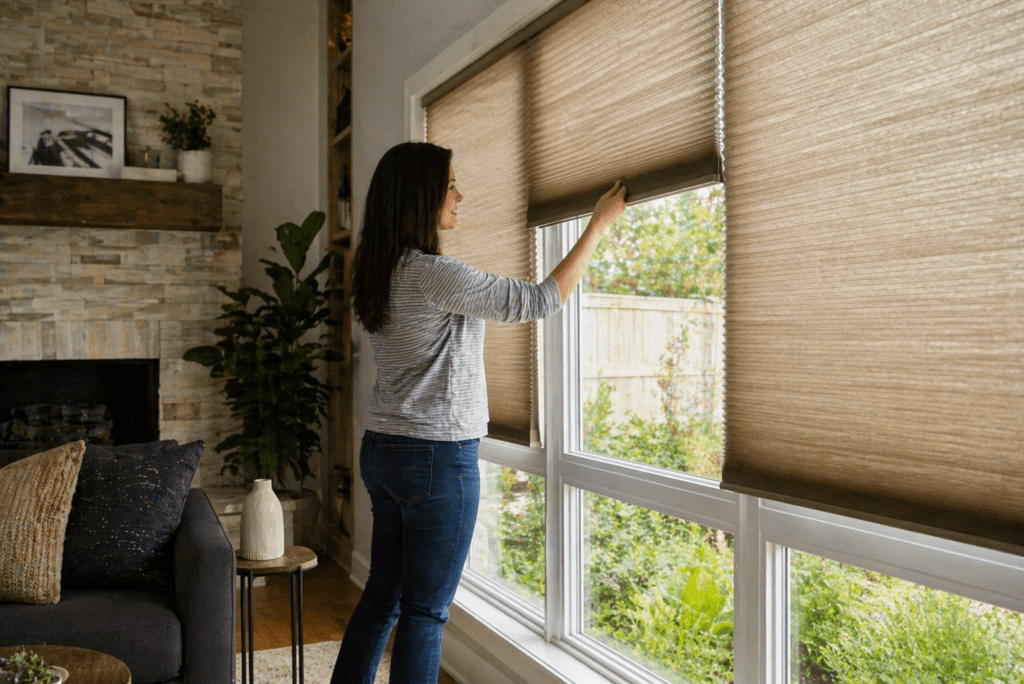
Your location plays a major role in selecting the right window coverings.
For Hot Climates
Homes in warmer regions need to focus on blocking heat and sunlight. Choosing the right window treatments for intense sunlight can help reduce solar heat gain, control glare, and protect indoor furnishings from UV damage.
Recommended options:
- Solar shades for glare reduction
- Cellular shades for insulation
- UV blocking window treatments
These solutions help reduce cooling costs and improve comfort.
For Cooler Seasons
In colder months, retaining indoor heat becomes the priority.
Best choices:
- Thermal curtains
- Insulated window coverings
- Plantation shutters
These options reduce heat loss and improve indoor warmth.
For Mixed Climates
Regions like North Carolina and South Carolina experience both heat and cold throughout the year.
Balanced solutions include:
- Layered window treatments
- Cellular shades combined with drapes
- Adjustable shutters
Homeowners exploring the latest window treatment trends for modern homes often find that combining treatments provides better year-round performance.
Top Materials That Improve Window Insulation Performance
Material selection directly impacts how well your window coverings perform.
Insulating Fabrics
Thermal fabrics are designed to reduce heat transfer.
Benefits:
- Improved insulation
- Reduced energy consumption
- Enhanced comfort
These fabrics are commonly used in curtains and drapes.
Composite and Wood Materials
Used in shutters, these materials provide a solid barrier against temperature changes.
Advantages:
- Durable and long-lasting
- Effective insulation
- Low maintenance
Multi-Layered Designs
Layered window treatments combine different materials to enhance performance.
Examples include:
- Cellular shades with blackout lining
- Drapes layered over blinds
- Dual shade systems
For homeowners evaluating costs, reviewing a detailed cost breakdown of window blinds helps balance performance with budget.
Why Energy Efficient Window Treatments Are a Smart Investment
Many homeowners focus only on upfront cost, but energy efficient window treatments offer long-term benefits.
Key Advantages
- Lower heating and cooling costs
- Improved indoor comfort
- Reduced strain on HVAC systems
- Protection against UV damage
These benefits make window insulation solutions a practical part of energy efficient home design.
Conclusion
The best energy-efficient window coverings provide a practical way to reduce energy loss, improve comfort, and lower utility bills. From cellular shades to plantation shutters and thermal curtains, each option offers unique benefits depending on your home and climate.
The key is choosing the right combination of materials, design, and installation to maximize performance. If you are planning to upgrade your window coverings, working with experts like Carolina Shutter & Blinds ensures you get solutions that are tailored, efficient, and built for long-term results.
To explore the right energy-saving window coverings for your home, you can Contact Us and get guidance based on your space, budget, and comfort goals.
FAQ
1. What are the most energy efficient window treatments?
Cellular shades, plantation shutters, and thermal curtains are among the most energy efficient options.
2. Do cellular shades really reduce energy bills?
Yes. Their honeycomb structure traps air, improving insulation and reducing heating and cooling costs.
3. Are plantation shutters good for insulation?
Yes. They create a solid barrier that helps maintain indoor temperature.
4. What window coverings keep heat out in summer?
Solar shades, UV blocking window treatments, and cellular shades are effective for reducing heat.
5. Which window treatments are best for winter insulation?
Thermal curtains and insulated shades are ideal for retaining indoor warmth.
6. Do blackout curtains help with energy efficiency?
Yes. They reduce heat transfer and improve insulation, especially in colder months.
7. How much can window treatments reduce heating and cooling costs?
Savings vary, but properly installed treatments can significantly reduce energy usage over time.
8. Are blinds or shades better for energy savings?
Shades, especially cellular designs, are generally more effective than standard blinds for energy efficiency.